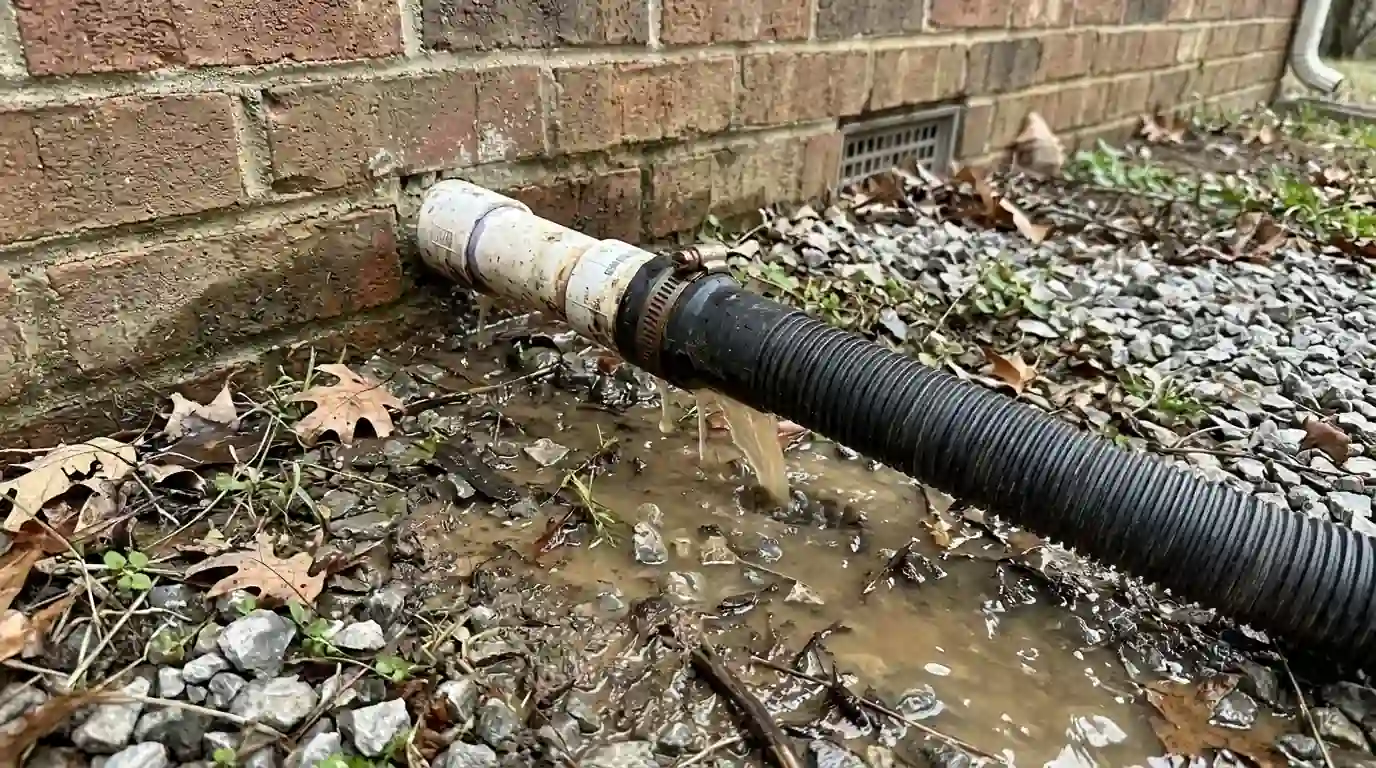
AC drain line repair in Nashville usually means clearing algae and sludge from the condensate line before water overflows the pan. A technician vacuums and flushes the line, cleans the trap, checks the slope and tests the float switch that shuts the AC off. A cracked or rusted pan gets replaced. Call (615) 412-2815 at any hour.
Where the water from your AC is supposed to go
An air conditioner pulls a lot of water out of the air on a humid day. That water drips off the indoor coil into a pan and runs through a PVC line to a floor drain, a pump or the outside wall. When algae, dust and sludge build up in the trap or the line, the water has nowhere to go.
On a well-built install, a float switch shuts the AC off before the pan overflows. On an older one the water simply spills onto the floor or through the ceiling. We clear the line, find the cause and make sure the safety switch works.
Signs the condensate drain is backing up
Puddles form around the base of the furnace or air handler.
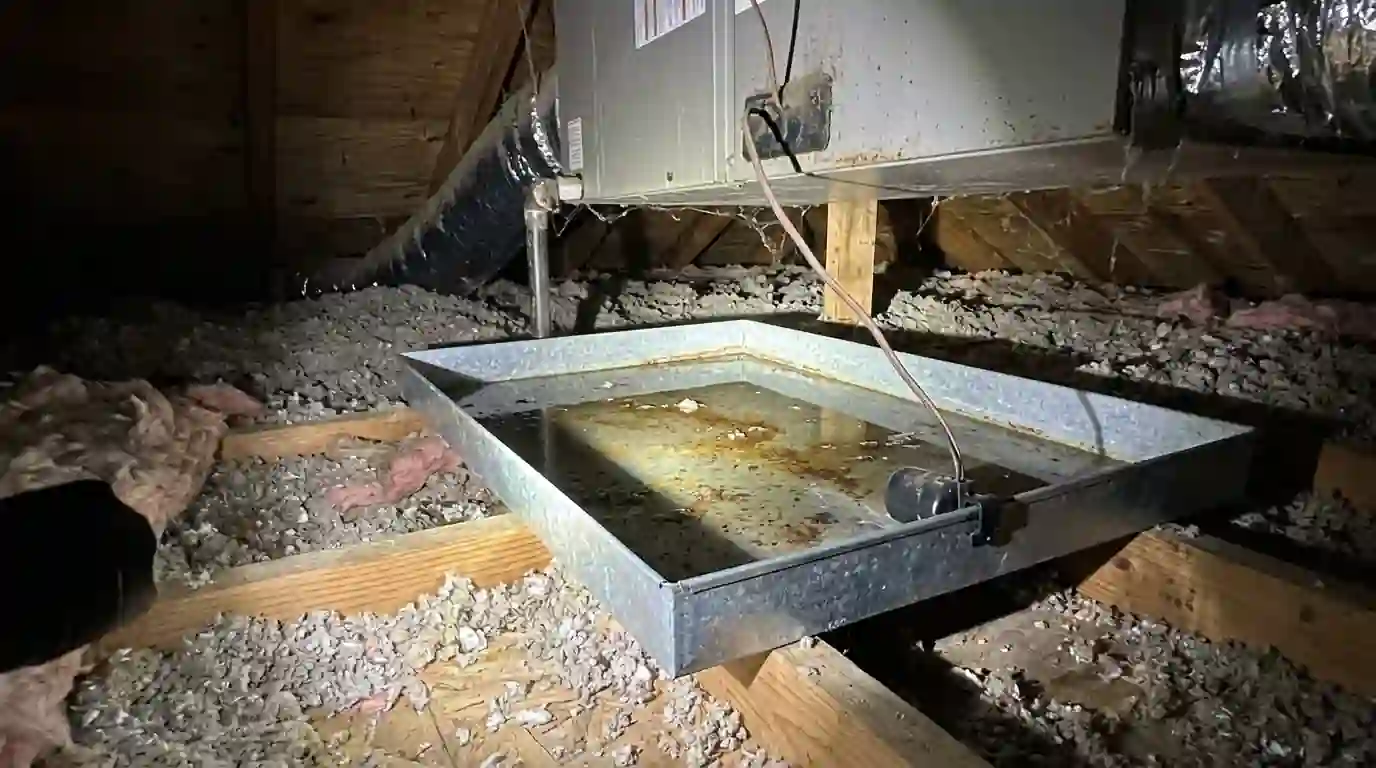
A brown ring appears below an attic air handler.
A tripped float switch stops cooling while the fan may keep running.
Standing water and algae sit in the pan or trap.
The backup pan should stay dry all summer.
The outside end stays dry on a humid afternoon.
Clogged condensate line
A clog usually forms in the trap, the U-shaped bend near the indoor unit, where water sits and algae grows. The first signs are a gurgle, a musty smell or a slow drip from the pan's overflow. Left alone, it backs up until the pan fills.
We clear it with a wet vacuum from the outside end, flush it with water through the access tee and check that the line keeps its downward slope the whole way. Sagging or unsupported pipe gets re-hung, and a trap with no cleanout gets one so the next flush is easy.
Float switch shutoff
If the AC stops cooling while the thermostat shows it calling, check the drain pan. A float switch in the pan or on the drain line breaks the cooling circuit when water rises, which protects the ceiling and the floor. The switch is doing its job, but the water still has to go somewhere.
We clear the drain, empty the pan and confirm the switch resets and trips at the right level. If there isn't a switch at all, we add one. A switch that never trips is as much of a problem as a clog.
Rusted or cracked drain pan
Metal primary pans under older coils rust through, and plastic pans crack with age and heat. Water then drips outside the pan into the furnace or air handler cabinet, where it rusts the parts below. Under an attic unit, a rusted secondary pan lets water through the ceiling.
A secondary pan under an attic air handler can usually be replaced on its own. A failed primary pan inside a coil cabinet may mean pulling the coil, and on an old coil we price a coil replacement with it.
How we clear and protect the drain
- 1
Stop the water
We shut off cooling, empty the pan and protect the area below.
- 2
Clear the line
The line is vacuumed and flushed until water runs freely at the outlet.
- 3
Fix the cause
We correct the trap, slope or support, and replace a failed pan or pump.
- 4
Test the switch
The float switch is tripped by hand to confirm it shuts the AC off, then reset.
Long Nashville summers keep the drain working overtime
Nashville once went 34 straight days at 90 degrees or hotter, from July 26 to August 28, 2007, and that August had 15 days at 100 degrees or more. A coil running that hard sends water down the drain line nearly every hour for weeks. Warm, wet and dark, the trap is ideal for algae, and late summer is when a slow line finally backs up. A flush in spring and a quick check in midsummer keep the water moving.
Drain checks you can do yourself
A slow drain is one of the few AC problems a homeowner can often clear. Electrical parts and pans inside the cabinet are for a technician.
| Task | Safe to do yourself | Leave to a technician |
|---|---|---|
| Outside drain end | Hold a wet vacuum on the outlet for a minute or two. | A line that refills right away. |
| Access tee | Pour a cup of vinegar down it in early summer. | A cracked or missing tee or cap. |
| Secondary pan | Empty standing water and look for the source. | A rusted or cracked pan. |
| Air filter | Replace a dirty filter so less dust reaches the drain. | A wet filter or soaked insulation. |
What a drain line repair costs
Most drain calls are a clearing and a flush, and the price climbs only when parts or pans are involved.
For planning, HomeGuide puts typical national pricing for this kind of job at $75 to $250 for a drain line flush (HomeGuide, August 2025). That is a market range, not our quote; the figure for your home comes after we see the equipment.
- Where the clog is. A clog at the trap clears faster than one deep in a long run through a wall or slab.
- Unit location. Attic units take longer to reach and work around than closet units.
- Float switch. Adding or replacing a safety switch adds a part and a little labor.
- Pan replacement. A secondary pan is a modest part, while a primary pan inside the coil cabinet is a bigger job.
- Condensate pump. A failed pump in a basement or closet install needs replacing, not just clearing.
AC drain questions from Nashville homeowners
Algae and dust grow in the trap, especially through long humid summers. A dirty filter sends more dust into the water, so regular flushing and a clean filter cut down repeat clogs.
Often, yes. A wet vacuum on the outside end and a cup of vinegar in the access tee clear many clogs. If the water keeps coming back, call.
The float switch shut it off to prevent an overflow. Once the drain is cleared and the pan is dry, the system can run again.
In summer, usually. The coil sits on top of the furnace, so a clogged drain or cracked pan drips down onto it.
Most do, because the blower creates suction that can hold water in the pan without one. The trap also needs a way to be cleaned out.