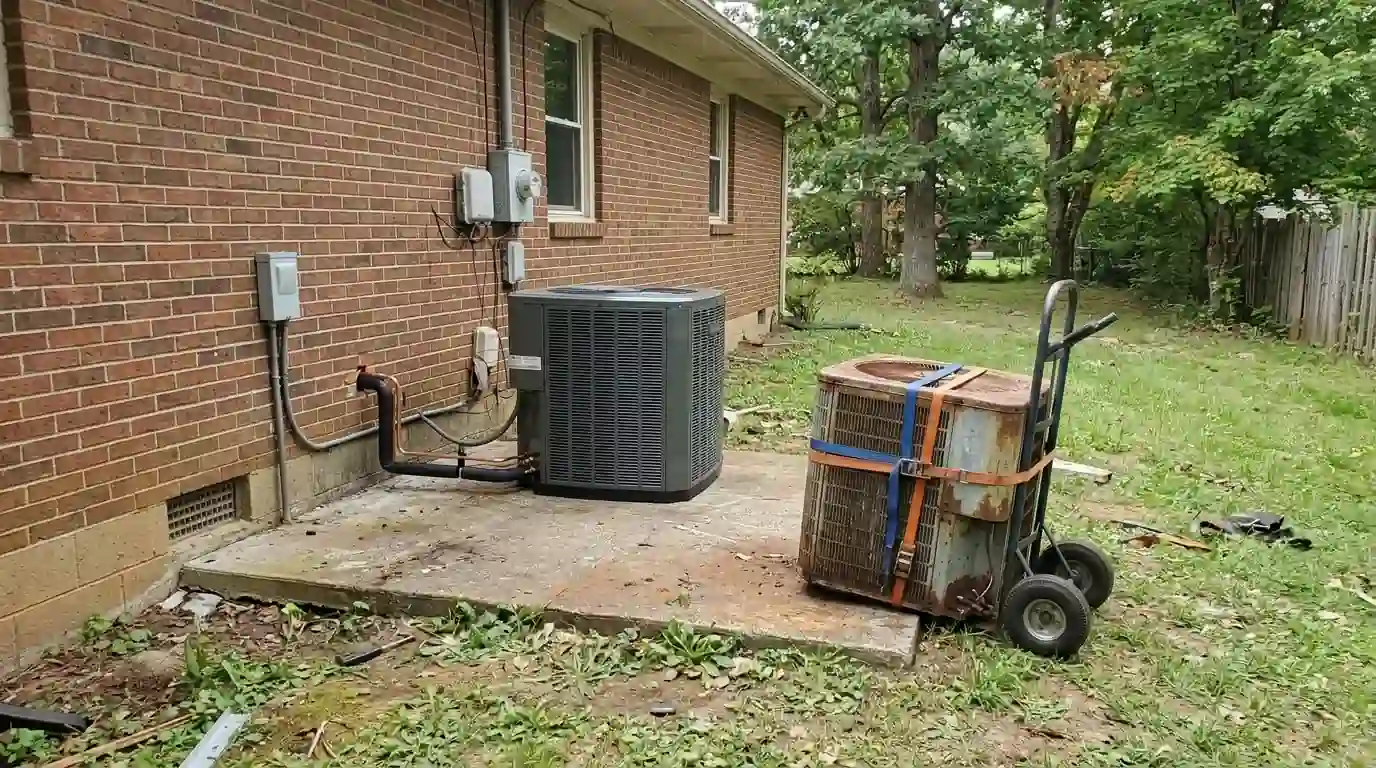
AC replacement in Nashville usually means a matched condenser and indoor coil, not the outdoor unit alone. As of January 1, 2025, most new systems run on R-454B instead of R-410A, so the old coil cannot stay. We recover the old charge, size the new system, flush or replace the line set and charge it to spec. Call (615) 412-2815 at any hour.
Why a replacement covers both the condenser and the coil
Replacing an air conditioner is more than a swap of the box in the side yard. The indoor coil has to match the new condenser for the system to reach its rating, and with the move to R-454B the old coil is built for the wrong refrigerant. So both halves are replaced together, and we check the line set, the drain and the electrical disconnect at the same time.
We also re-check the size. The house may have new windows or insulation since the old unit went in, and that unit may have been sized by guesswork in the first place. A load calculation shows whether the same tonnage is still right.
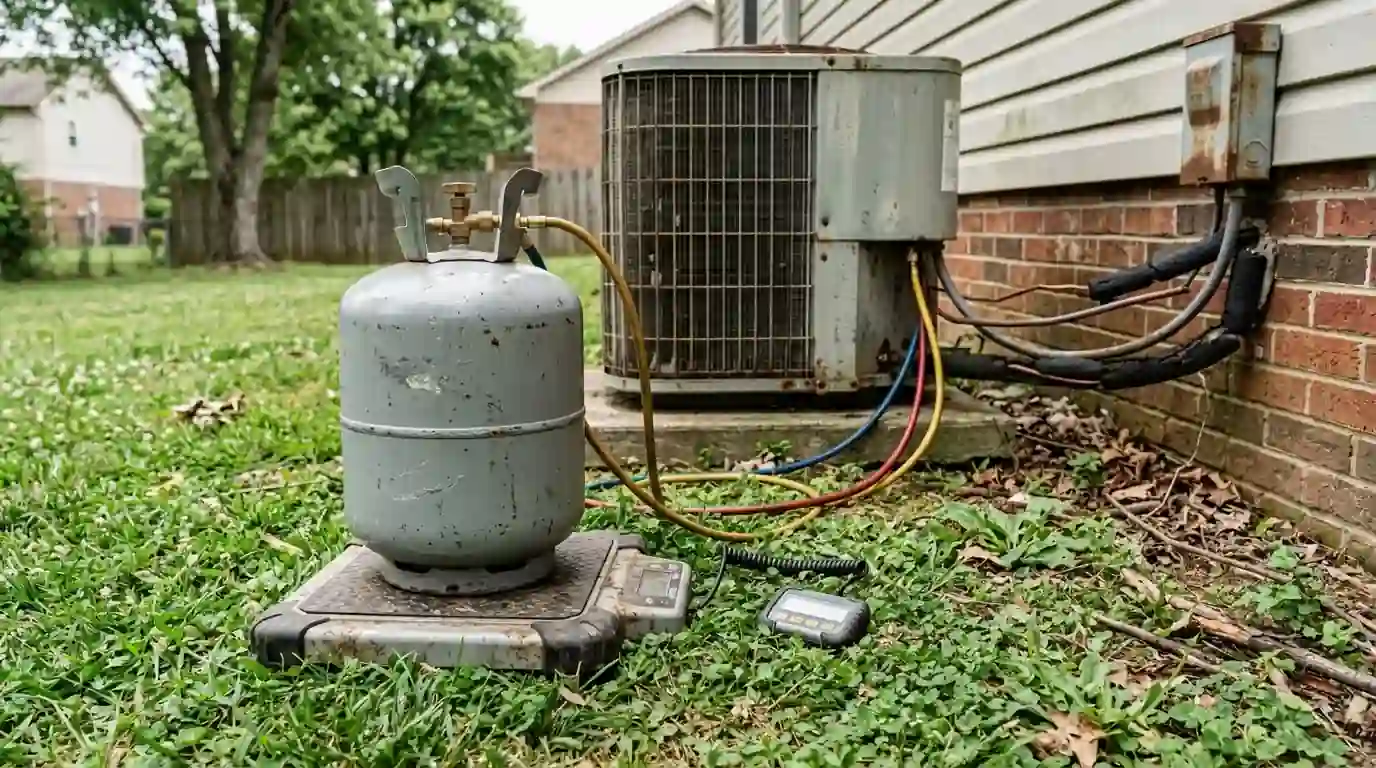
Matched condenser and coil replacement
When a condenser fails after many summers, the indoor coil is the same age and has spent every one of them cold and wet. A new condenser on an old coil can leave a mismatched pair that never reaches its rating. A coil leak a year later would mean opening the system all over again.
We replace both, set the new coil on the furnace or in the air handler, and braze the connections under nitrogen so no scale forms inside the copper. Then the system is pressure-tested, evacuated and charged by weight. It's the only way the efficiency on the label shows up on the power bill.
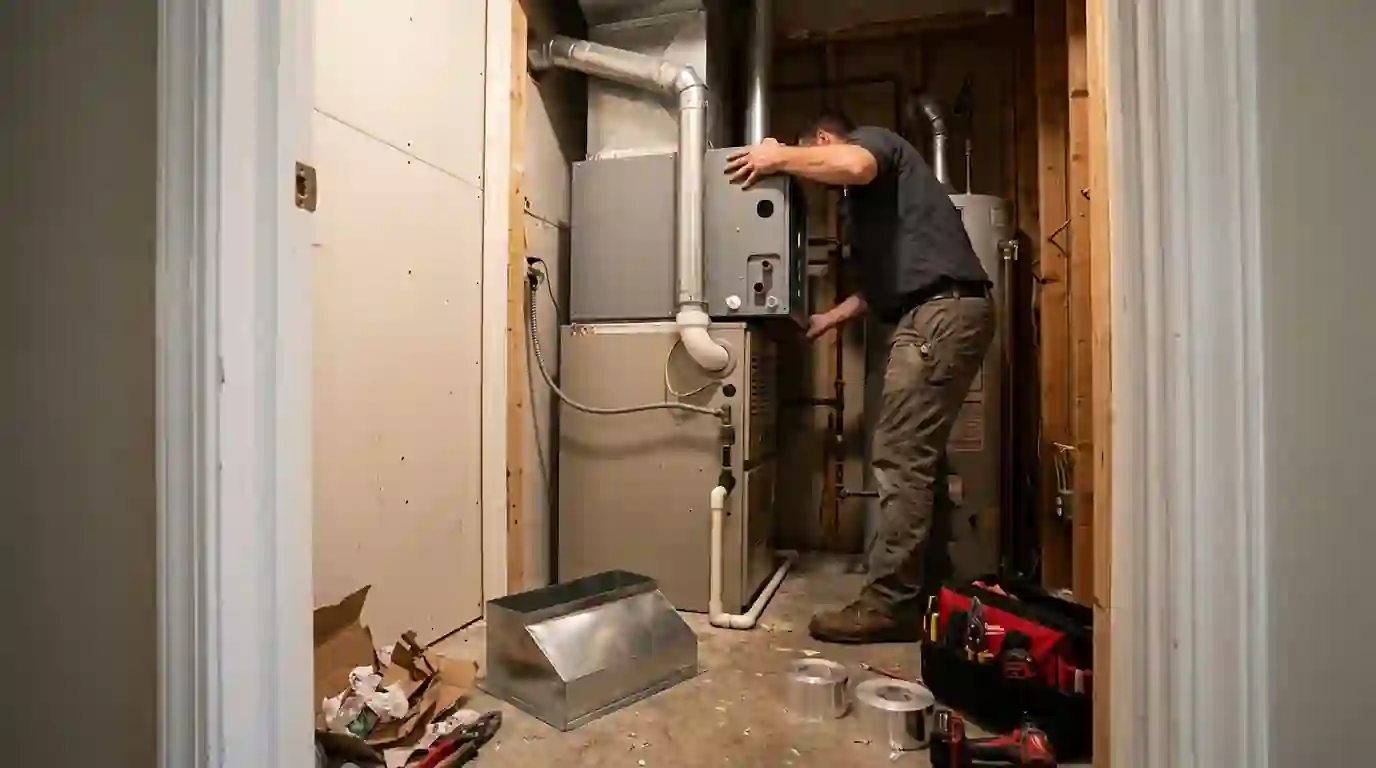
R-410A to R-454B changeover
As of January 1, 2025, new home AC systems generally cannot use refrigerants with a global warming potential of 700 or more, which moved most manufacturers from R-410A to R-454B. Your existing R-410A system can still be repaired and recharged. The change matters when you replace.
R-454B is a mildly flammable A2L refrigerant, so most new coils carry a refrigerant sensor that starts the blower to clear the gas if it ever leaks. We recover the old R-410A, flush or replace the line set as needed, and charge the new system to the maker's figure.
Repair the old AC or replace it?
| Situation | Repair makes sense | Replacement makes sense |
|---|---|---|
| Failed part | Capacitor, contactor, fan motor or drain | Compressor or indoor coil on an older system |
| Refrigerant | R-410A system with a small, fixable leak | R-22 system that needs a recharge |
| Condition | Mid-life unit that runs well otherwise | Repeated repairs, rust and worn coils |
| Comfort | House cools evenly when the unit runs | Rooms never cooled well, even when it was new |
What sets the price of a replacement AC
Most of the gap between two replacement quotes comes from size, efficiency and what the old installation left behind.
For planning, HomeGuide puts typical national pricing for this kind of job at $2,500 to $7,500 (HomeGuide, August 2025). That is a market range, not our quote; the figure for your home comes after we see the equipment.
- Tonnage. A larger house load needs a larger condenser and coil.
- Efficiency rating. Higher SEER2 equipment costs more up front and less to run.
- Coil access. A coil in a tight closet or crawl space takes more labor to swap than one in a basement.
- Line set condition. A line set that is undersized, kinked or buried in a finished wall may need replacing.
- Electrical and pad. A corroded disconnect, worn whip or sunken pad gets replaced with the unit.
Older ranch homes and the refrigerant switch
Around Crieve Hall, most houses were built between the 1950s and the 1980s, with the largest share from the 1970s. In homes of that age the indoor coil often sits in a hall closet or crawl space laid out long before current equipment sizes. Because most new systems now use R-454B, a replacement there means a new coil and not just a new condenser. So we measure the closet, the return and the coil opening before we choose equipment.
What comes with a replacement
- Load calculation to confirm the size
- Refrigerant recovery from the old system
- New condenser and matched indoor coil
- Line set flushed or replaced
- New pad, disconnect and whip as needed
- Startup readings recorded for your file

Replacement day, from recovery to first cool-down
- 1
Size and price
A load calculation and a look at the coil space set the equipment and the price.
- 2
Recover and remove
The old refrigerant goes into a recovery cylinder before the condenser and coil come out.
- 3
Set and braze
The new coil and condenser go in, the copper is brazed under nitrogen, then pressure-tested and evacuated.
- 4
Charge and measure
We charge to the maker's figure and record pressures, airflow and the temperature split.
Brands we work on
We service and install equipment from the major manufacturers, including Carrier, Trane, Lennox, Rheem, Goodman, American Standard, Daikin, Mitsubishi Electric, Bryant, Ruud, York and Amana.
AC replacement questions we hear in Nashville
With the move to R-454B, usually not. The indoor coil is built for one refrigerant and has to match the condenser, so both are replaced together.
Yes. The 2025 rule applies to new systems, and R-410A is still available for servicing existing equipment. Replacement makes sense when the repair is large or the system is old.
Yes. It is classed as mildly flammable, so equipment built for it includes safeguards such as a sensor that starts the blower to disperse any leak.
Only if it is near the end of its life or its blower cannot move enough air for the new AC. We price a full system replacement separately so you can compare.
Not necessarily. Older systems were sometimes oversized, and a load calculation often shows the same size or a smaller one is right.