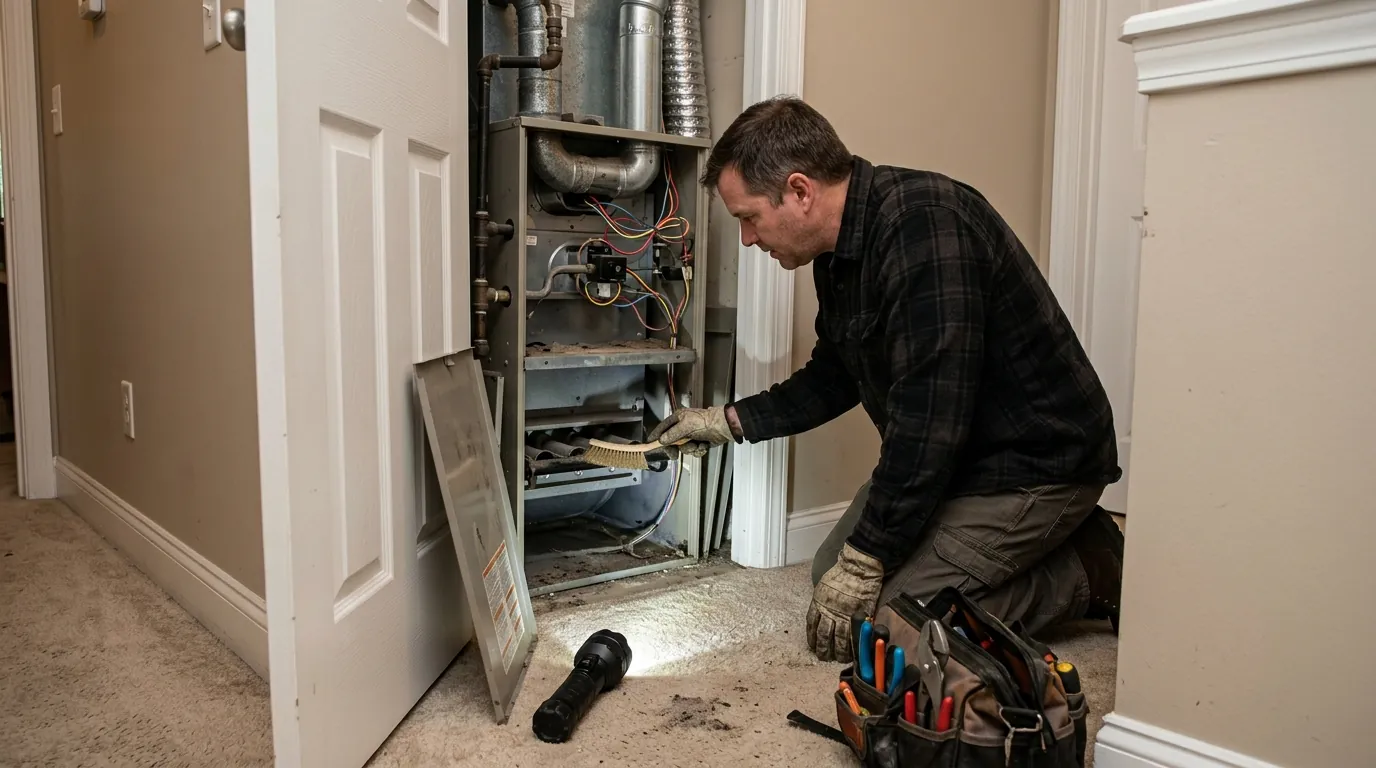
A furnace tune-up in Nashville covers the parts that fail on the first cold nights: the flame sensor, igniter, burners, pressure switch, limit switch and blower. The technician also checks the vent for draft and measures gas pressure and temperature rise. Schedule it in early fall, before steady heating starts. Call (615) 412-2815 at any hour.
What a furnace tune-up measures and cleans
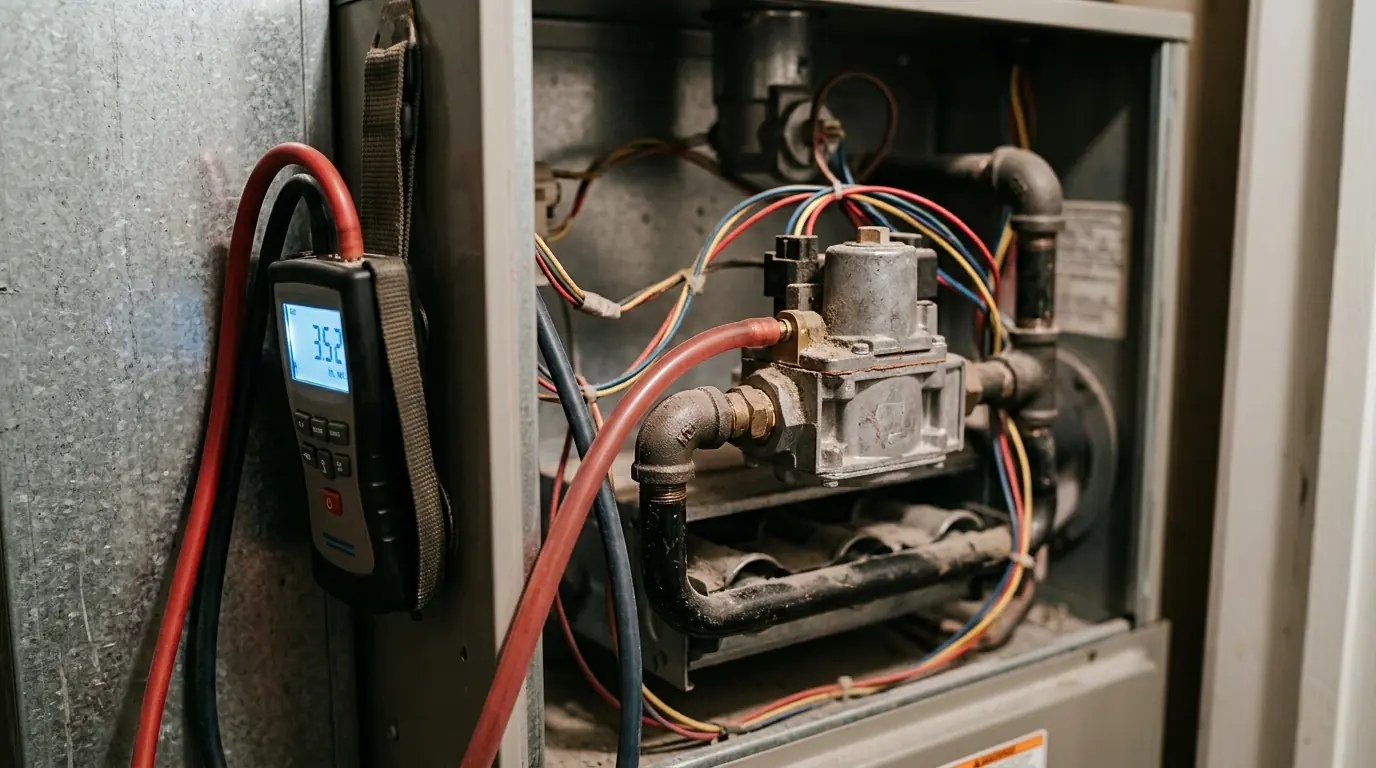
A tune-up is a set of measurements followed by cleaning where the readings call for it. We record flame sensor current, igniter resistance, gas manifold pressure, temperature rise and blower amp draw, then compare each with the furnace data plate. Readings drifting out of range show what is likely to fail before it does.
Cleaning the flame sensor and burners, checking the drain on a condensing furnace and testing every safety switch take care of most early-winter no-heat calls. If something can't wait, you hear about it with a price, and nothing gets replaced without your approval.
What every furnace tune-up covers
- Flame sensor cleaned and current measured
- Burners brushed and ignition watched
- Igniter inspected and tested
- Gas pressure and temperature rise checked
- Pressure and limit switches tested
- Vent, drain and CO readings checked
Burner and flame sensor cleaning
Dust, drywall residue and oxide build up on the flame sensor and burner ports over a summer of sitting idle. A coated sensor reads low microamps, and the furnace lights, then shuts off. Dirty burners light unevenly and can roll flame out toward the burner compartment.
We pull the sensor and polish it, brush and vacuum the burners, and inspect the igniter for hairline cracks. Then we watch several ignitions to confirm the flame carries across every burner smoothly and the sensor holds a steady signal.
Draft and venting check
Every gas furnace has to push its exhaust outside. On an 80 percent furnace we check the flue connector for rust, loose joints and proper slope, and confirm draft with the inducer running. On a condensing furnace we look at the plastic vent and intake for sags, clear the terminations and clean the condensate trap.
A blocked vent or plugged trap trips the pressure switch, which is a safety doing its job. We also measure carbon monoxide in the flue gas and around the furnace, and check that CO alarms near the bedrooms work.
Why the December 2022 blackouts argue for an early tune-up
On December 23 and 24, 2022, TVA ordered rolling blackouts across Tennessee during a hard cold snap, and more than 75,000 NES customers in Nashville were out or in rotation at 8 a.m. on December 24. Every 10 to 30 minute cut meant another furnace restart in the cold. A weak igniter or a dirty flame sensor that limps through ordinary weather is exactly the part that quits after a string of cold starts like that. A fall tune-up finds it first.
How a furnace tune-up visit runs
- 1
Set the time
Pick a fall visit before steady heating starts, or any time the furnace runs oddly.
- 2
Measure first
The technician records gas pressure, flame current, temperature rise and blower amps.
- 3
Clean and test
Sensor, burners and drain get cleaned, and every safety switch is tested.
- 4
Report and run
You get the readings and any worn parts with prices, then we run a full heat cycle.
What shapes the price of a furnace tune-up
The visit itself is routine; what changes the bill is the furnace type and what the readings find.
- Furnace type. A condensing furnace adds a drain, a trap and plastic venting to inspect and clean.
- Access. Attic and crawl space furnaces take longer to reach and work on safely.
- Condition. A furnace skipped for several years usually needs more cleaning than one serviced each fall.
- Worn parts. An igniter or sensor replaced during the visit is priced separately after you approve it.
- Number of systems. Homes with two furnaces, or a furnace plus a heat pump, need time for each system.
Furnace upkeep you can handle between visits
Most of a tune-up needs meters and a gas shutoff, but a few jobs are yours.
| Task | Safe to do yourself | Leave to a technician |
|---|---|---|
| Air filter | Change it every one to three months in heating season. | A filter that clogs within weeks, which can point to duct leaks. |
| Space around the furnace | Keep paint, cleaners and storage away from the cabinet. | Soot or scorch marks near the burners. |
| CO alarms | Test them monthly and replace batteries each fall. | Any alarm that sounds: leave the house and call 911. |
| Condensate drain | Look for water around a condensing furnace. | Cleaning the trap or replacing a condensate pump. |
Furnace tune-up questions we hear each fall
Early fall, before the furnace runs every night. That leaves time to replace a worn part before the first cold snap.
Yearly service catches igniter and sensor wear before it causes a no-heat call. Most manufacturers also call for regular maintenance in their instructions.
A short dusty smell the first time the furnace runs each fall is dust burning off the heat exchanger. A smell that lingers, or any gas odor, isn't normal.
Leave the house without touching switches or the thermostat, then call your gas utility or 911 from outside.
It is a simple job, but it means opening the burner compartment with the gas and power off. If that feels uncertain, leave it for the tune-up.