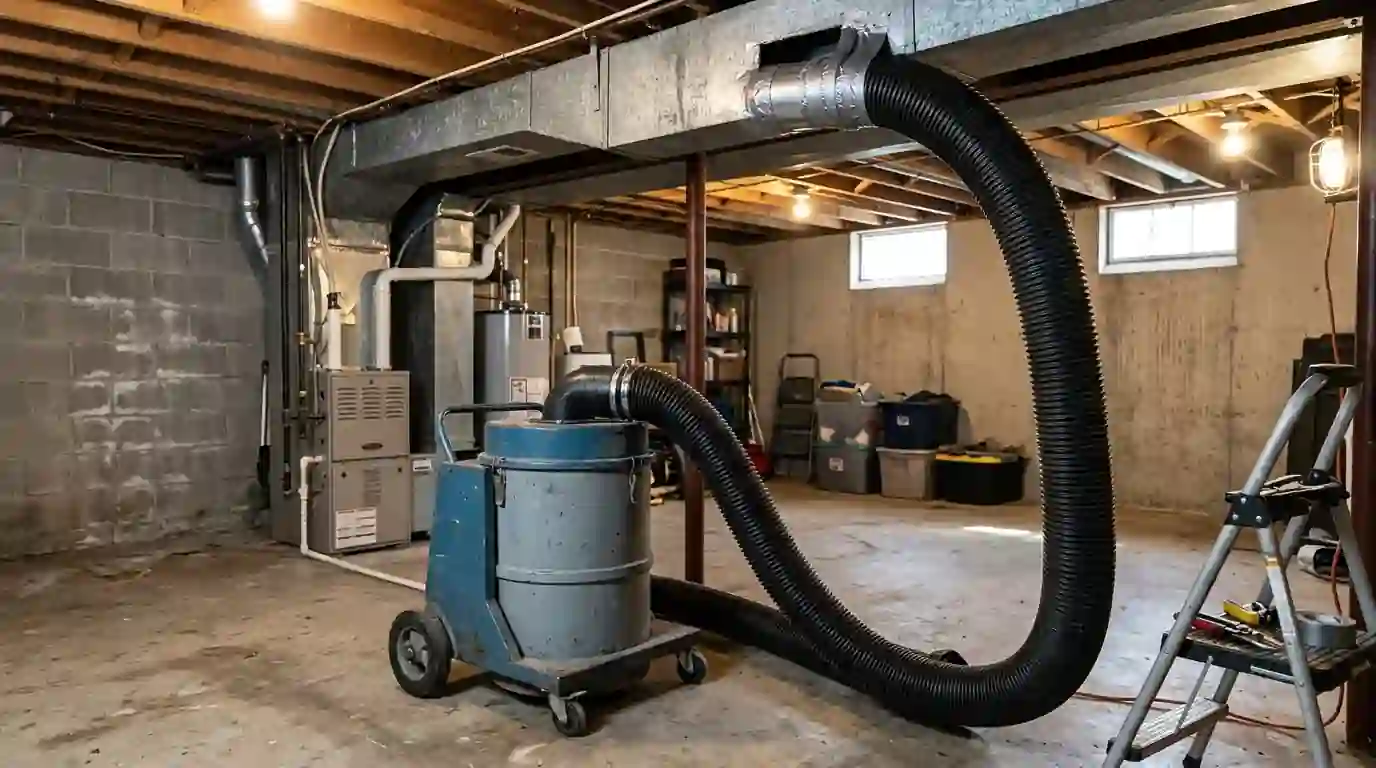
Air duct cleaning in Nashville is worth booking after a renovation, a pest problem or water in the ducts, not on a fixed schedule. The job holds the ducts under negative pressure with a vacuum collector, then loosens debris with brushes and air whips at every supply and return. A typical house takes a large part of a day. Call (615) 412-2815 at any hour.
When duct cleaning is worth it and how it is done
Ducts collect some dust in normal use, and most of it stays put. Cleaning makes sense when something has changed: drywall or sanding dust from a remodel, droppings or nesting from pests, visible mold, or debris you can see or hear moving in the ducts.
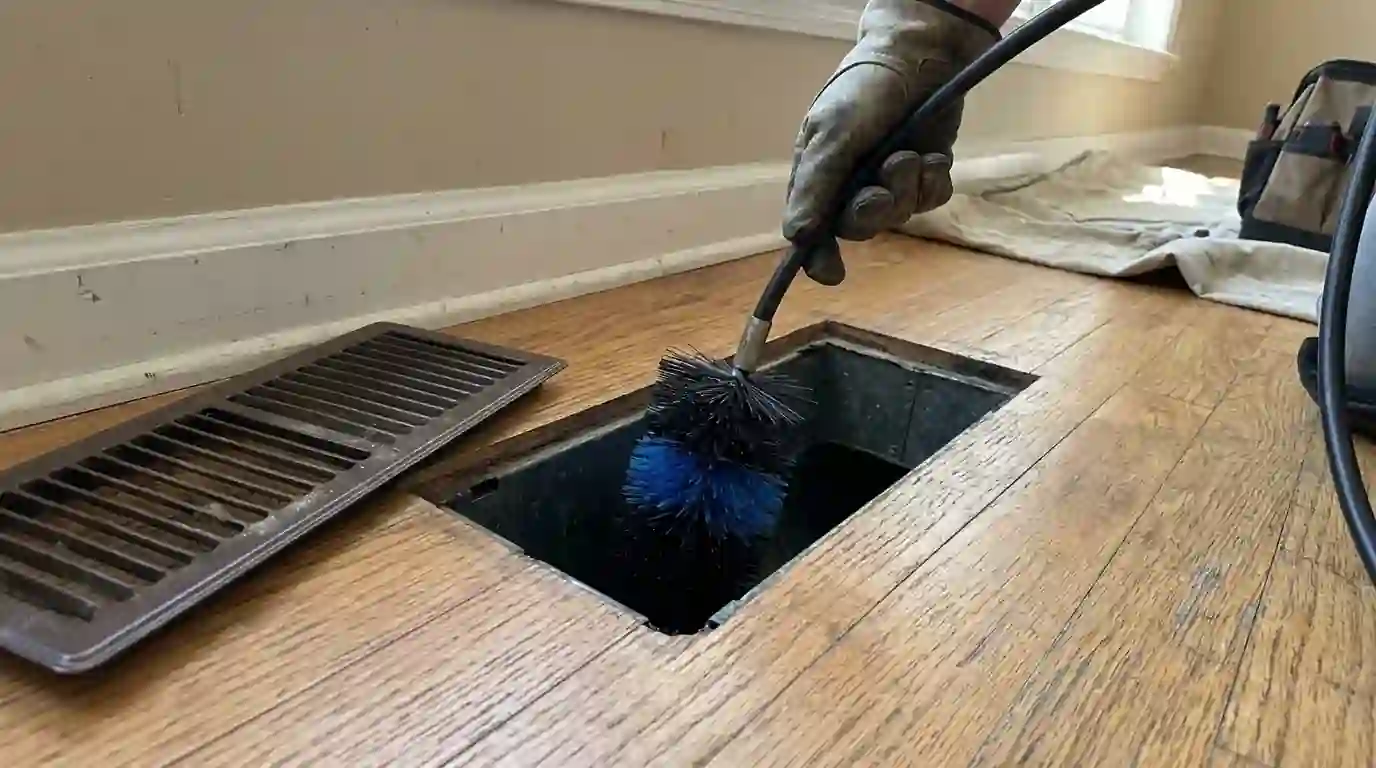
A proper cleaning connects a strong vacuum to the trunk so the whole system is under suction, then works each run with brushes and air whips. The loosened dirt is pulled out instead of blown into the house.
What an air duct cleaning covers
- A look inside the trunk and runs before cleaning
- Vacuum collector holding negative pressure
- Every supply and return run brushed or whipped
- Registers and grilles removed and washed
- Blower compartment and return plenum cleaned
- Access openings sealed and a new filter fitted
Cleaning after a renovation
Drywall sanding, tile cutting and floor refinishing throw fine dust into the air, and if the system ran during the work, the returns pulled it straight into the ducts. You notice it as a white film on furniture that comes back days after dusting, and a filter that clogs within weeks.
That fine dust also coats the blower wheel and coil, where it cuts airflow. We clean the return side first, since that is where most of it collects, then the supply runs, the blower area and the registers. Next time, cover the registers in the work area and shut the system off during sanding.
Supply and return line cleaning
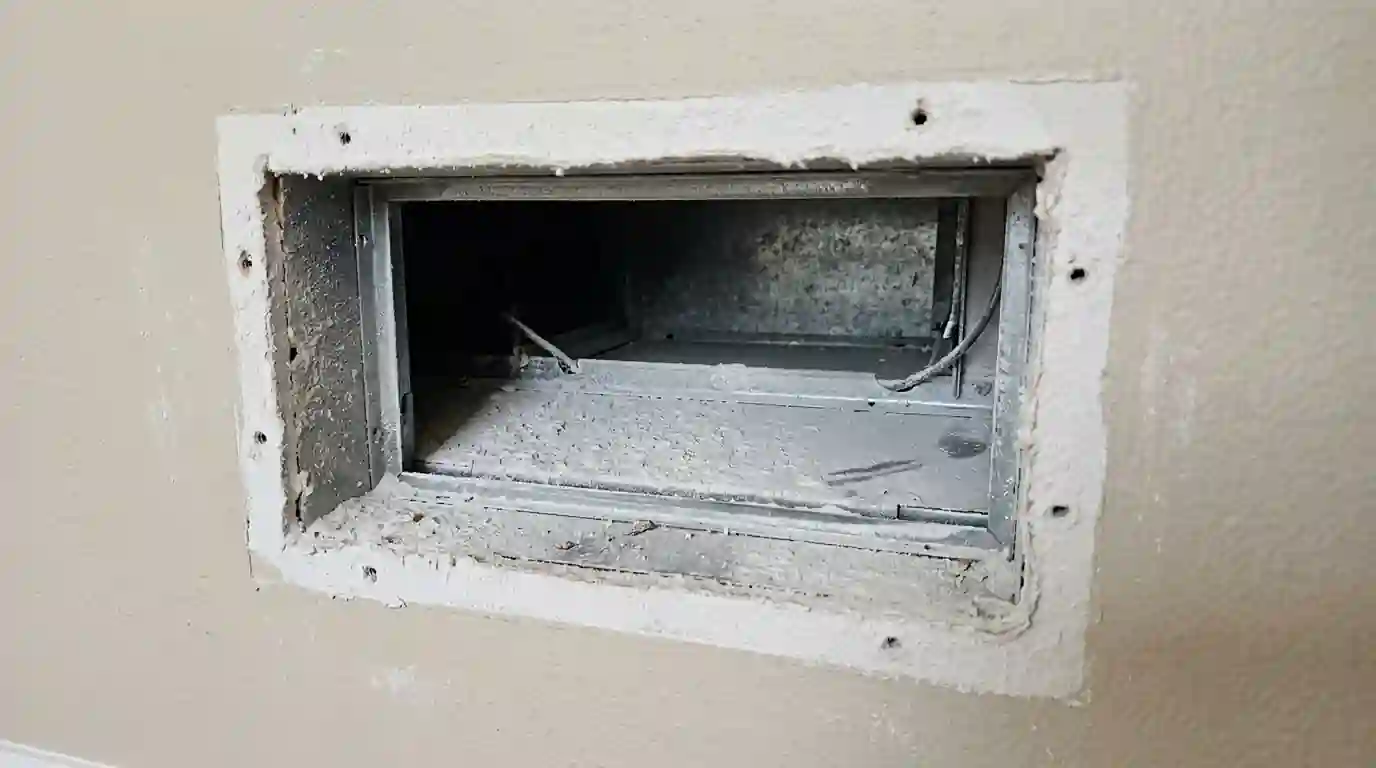
Supply ducts carry conditioned air to the rooms; return ducts bring room air back to the filter and blower. Returns usually collect more debris, because they pull air from the house before it's filtered, and a gap around the filter lets dirt bypass it entirely.
We run brushes and air whips through each run while the vacuum collector holds the system under suction, so the debris moves toward the collector rather than into the rooms. Flex duct gets gentler tools than sheet metal, because stiff brushes can tear its liner. Any torn or damaged run we find gets noted and priced separately.
Duct cleaning in older Nashville homes and flood-hit crawl spaces
Davidson County's median home was built in 1986, and about 18 percent of its housing predates 1960, so many Nashville ducts have run for decades with patched joints that let dust in. In 2010 the Harpeth River at Bellevue rose about nine feet over its old record, and Mill Creek at Antioch set a record crest. Insulated ducts that sat in that kind of water need replacing, not cleaning, and we will say so if that is what we find.
How a duct cleaning visit runs
- 1
Look inside first
We open a few registers and the trunk to see what is actually in the ducts.
- 2
Set up suction
The vacuum collector connects to the trunk and registers are covered to hold negative pressure.
- 3
Clean every run
Brushes and air whips work each supply and return toward the collector.
- 4
Close up and check
Access openings are sealed, the registers go back clean and a fresh filter goes in.
What changes the price of a duct cleaning
System size and duct condition set most of the price.
- Number of registers. Each supply and return opening is a run to clean, so larger houses take longer.
- How dirty the ducts are. Construction dust or pest debris needs more passes than light household dust.
- Duct type. Flex duct needs gentler tools and more care than sheet metal.
- Access. Trunks in tight attics or low crawl spaces slow the setup.
- Coil and blower. Cleaning the coil and blower wheel adds time beyond the ducts themselves.
What you can do between duct cleanings
Most day-to-day dust control is in your hands. The ducts themselves need the right equipment.
| Task | Safe to do yourself | Leave to a technician |
|---|---|---|
| Filter changes | Replace the filter on schedule and check that it seals in its slot. | A filter slot with gaps that let dust bypass. |
| Registers | Vacuum the grilles and the first few inches of each duct. | Anything deeper than your arm can reach. |
| During a remodel | Shut the system off and tape over registers in the work area. | Cleaning out dust that already got in. |
| Pests or mold | Note droppings or growth at a register and take a photo. | Removing it and sanitizing the ducts. |
Air duct cleaning questions from Nashville homeowners
Not on a fixed schedule. Clean them after a remodel, a pest problem or water in the ducts, or when you can see debris inside.
It removes what has built up in the ducts, but a good filter changed on schedule does more day to day.
Yes, with soft brushes and lower pressure. Flex duct with a torn liner should be replaced instead.
Insulated duct that sat in water should be replaced, not cleaned. Bare sheet metal can sometimes be cleaned and sanitized if it is sound.
Most homes take a large part of a day, depending on the number of registers.