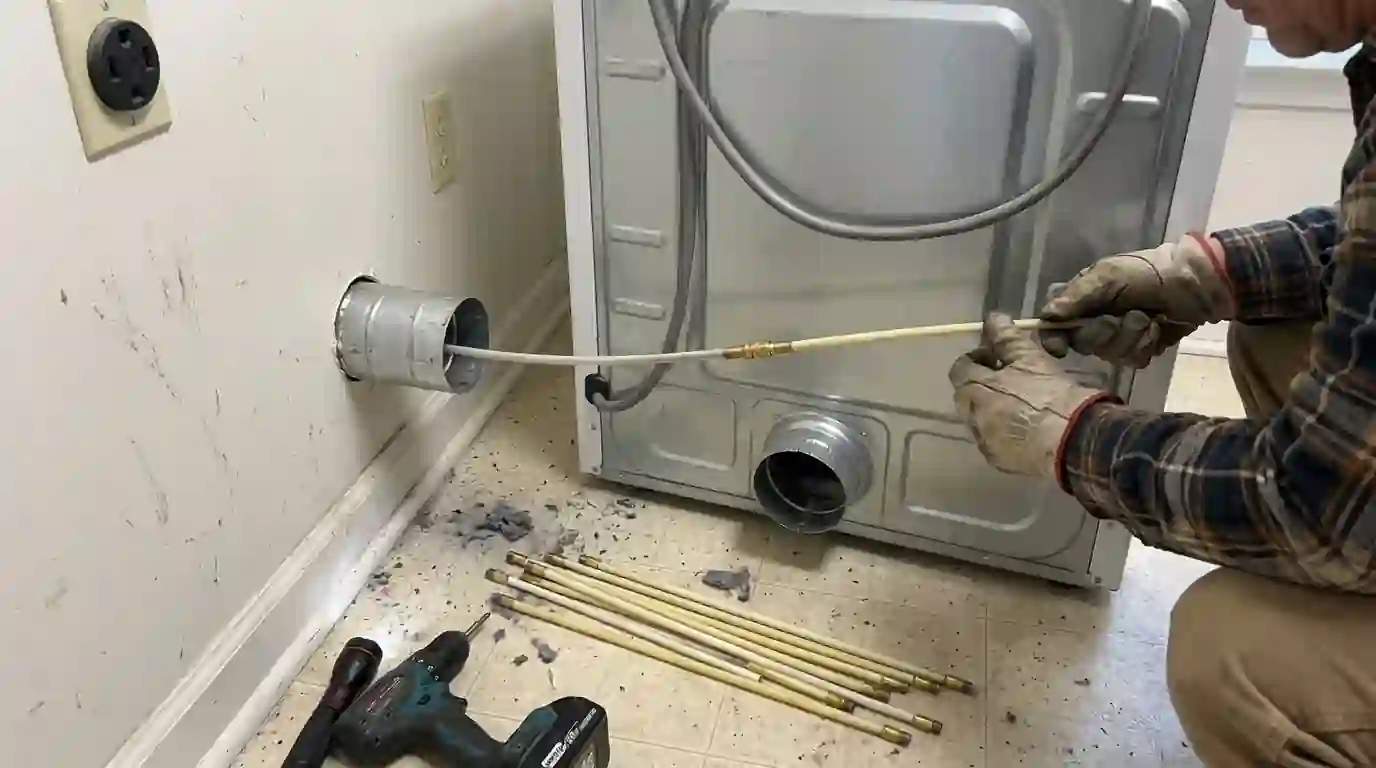
Dryer vent cleaning in Nashville clears the lint packed along the whole duct, from the back of the dryer to the outside hood. Lint is flammable, and a blocked vent makes the dryer run hot and long. We brush the full run, clear the hood and check airflow at the exit. Most homes take about an hour. Call (615) 412-2815 at any hour.
Why lint in the vent matters more than lint in the screen
Every load sends some lint past the dryer screen and into the vent. It sticks to the duct walls, especially at bends and joints, and slowly narrows the pipe. As airflow drops, the dryer runs longer, the drum and exhaust get hotter, and lint builds faster. Because lint burns easily, a clogged vent is a fire risk, not only wasted power.
We clean from both ends where we can, with rotary brushes sized to the duct and a vacuum catching what comes loose, then confirm the airflow at the hood.
Long roof and wall vent runs
When the laundry room sits in the middle of the house or upstairs, the vent may run through a wall cavity, across the attic or straight up to a roof cap. Every foot and every bend adds resistance, and vertical sections let lint fall back and pile up at the elbows.
We clean these from inside with rods long enough to reach the whole run, and from the roof or wall cap where it is safe to get there. Any screen on the exit cap comes off, because a screen on dryer exhaust catches lint and blocks the vent.
Lint and nest blockages
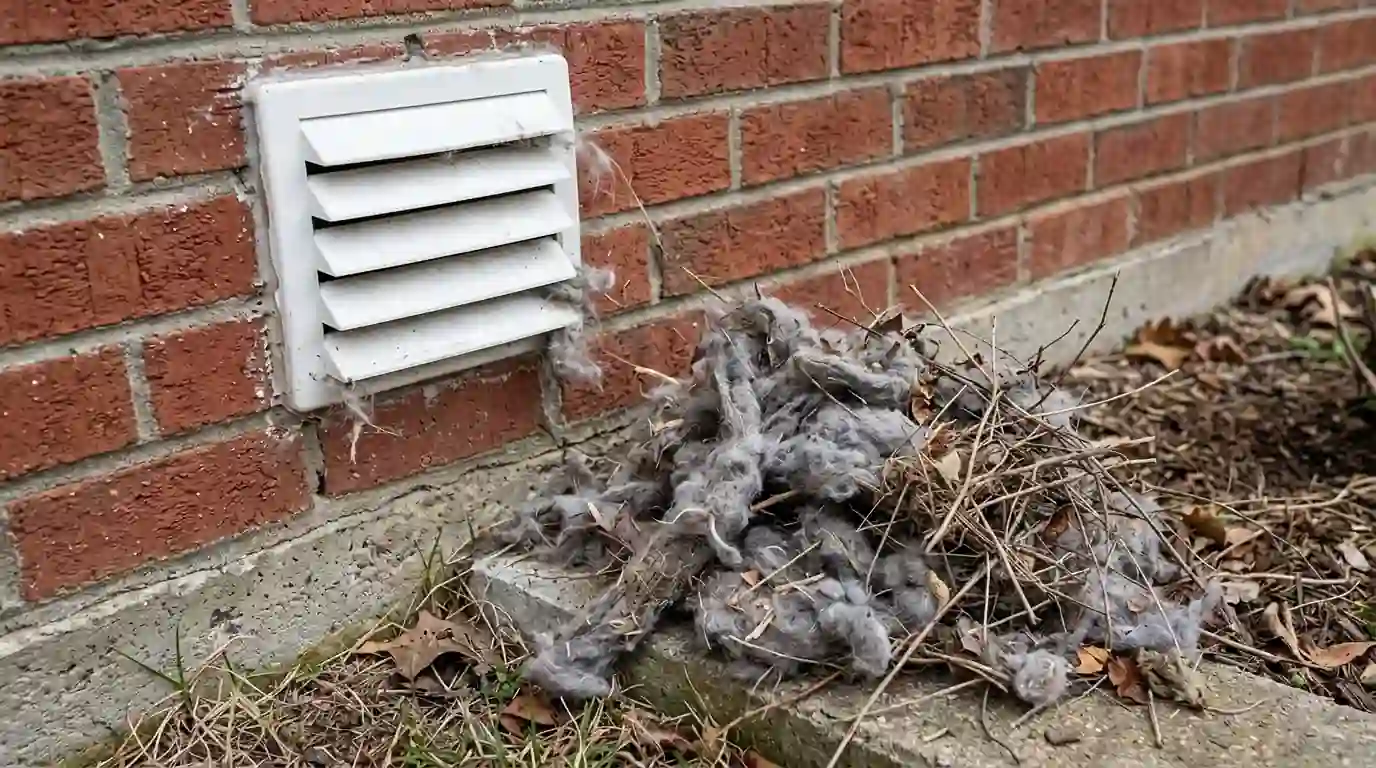
A vent hood with a stuck or broken flap is an open door for birds and rodents, and a nest built in the duct can close it off within days. You may hear chirping or scratching behind the dryer, or see straw and twigs at the hood.
We pull the nest and the lint out, clean the duct back to the dryer, and check whether nesting material has dropped down the run. Then we fit a hood with a gravity flap or a guard made for dryer exhaust, never a fine screen. A crushed foil connector behind the dryer gets replaced with semi-rigid metal duct.
Why Nashville dryer vents clog faster than you would think
In a humid Nashville summer, warm, wet dryer exhaust meets outdoor air that's already damp, so lint tends to cake on the hood flap and in the last few feet of duct instead of blowing clear. Birds look for sheltered cavities to nest in each spring, and a flap that sticks open gives them one. For most households a yearly cleaning is a sensible default, with more frequent visits for long runs, roof vents or a dryer that runs most days.
Signs your dryer vent is clogged
Restricted airflow leaves clothes damp.
Heat stays in the drum when it cannot exhaust.
A loose or blocked vent pushes moist air back into the house.
Lint near the heater is scorching; stop the dryer and call.
Weak airflow cannot push open the outside flap.
Lint at the exit means the run is loaded.
How a dryer vent cleaning runs
- 1
Pull the dryer out
We disconnect it and check the connector behind it.
- 2
Brush the full run
Rotary brushes clean the duct while a vacuum catches the lint.
- 3
Clear the exit
The outside hood or roof cap is cleaned and its flap checked.
- 4
Test the airflow
With the dryer running again, we confirm strong airflow at the hood.
What sets the price of a dryer vent cleaning
The length of the run and where it ends set most of the price.
- Run length. Runs through an attic or wall cavity take longer.
- Roof termination. A roof cap needs safe roof access.
- Blockage type. A nest or packed lint plug takes extra time.
- Connector replacement. A crushed foil connector gets swapped for metal duct.
- Hood repair. A broken or screened hood may need replacing.
What you can do for your dryer vent
Some upkeep is yours. Anything deeper, or up on a roof, is ours.
| Task | Safe to do yourself | Leave to a technician |
|---|---|---|
| Lint screen | Clean it before every load and wash off any residue. | Lint built up past the screen inside the dryer. |
| Outside hood | Check that the flap opens when the dryer runs. | A hood that is broken, screened or on the roof. |
| Connector | Keep the duct behind the dryer from kinking when you push it back. | Replacing foil with semi-rigid metal duct. |
| Long runs | Notice when loads start taking longer to dry. | Brushing runs through walls, attics or roofs. |
Dryer vent questions from Nashville homeowners
Once a year suits most homes. Long runs, roof vents and heavy use call for more frequent cleaning.
Yes. Lint burns easily, and a blocked vent traps heat in the dryer. If you smell burning, stop the dryer and call.
A kit handles short, straight runs. Long runs, roof vents and nests need longer rods and a vacuum.
A broken or stuck-open hood flap gives birds a sheltered spot. We remove the nest and fit a hood designed to keep them out.
Thin foil or plastic connectors crush easily and trap lint. Use semi-rigid or rigid metal duct.