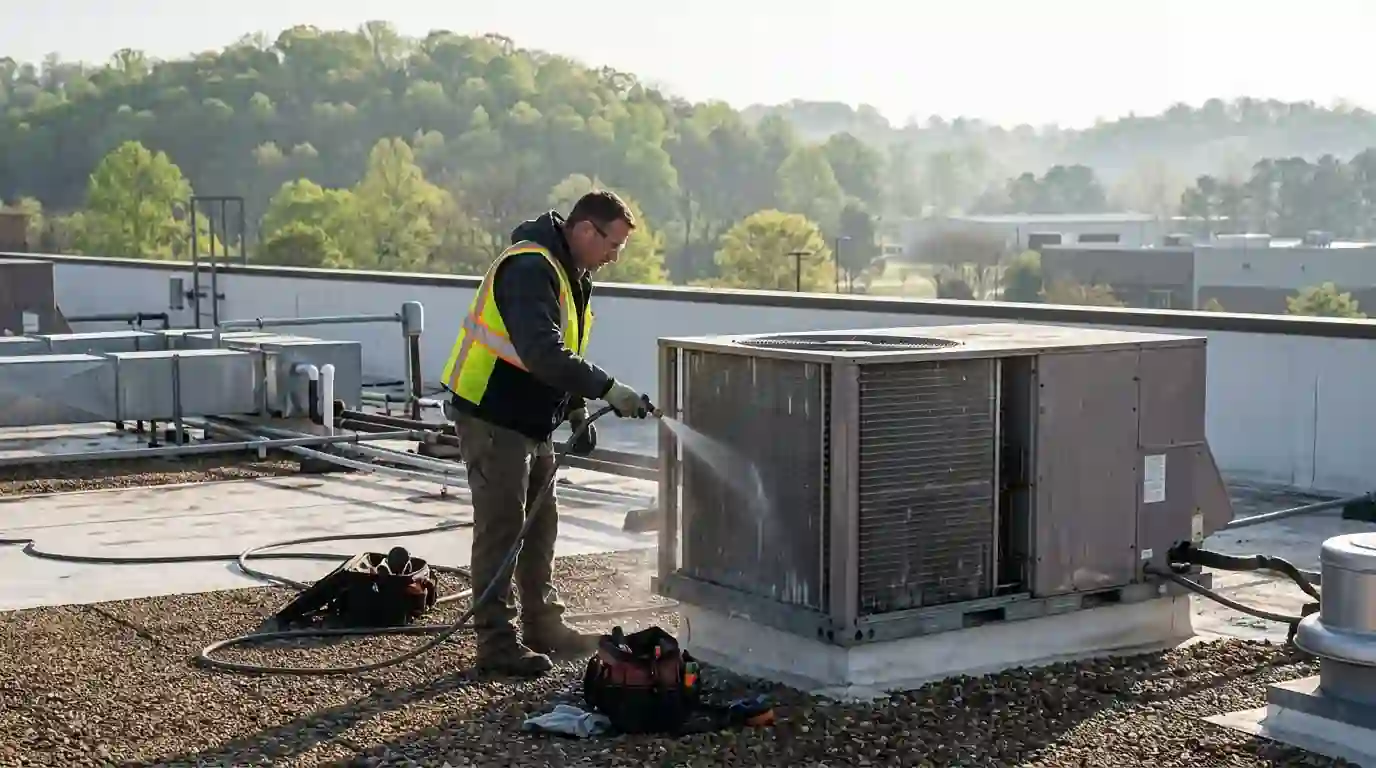
Commercial HVAC maintenance in Nashville means scheduled visits, usually in spring and fall, that change filters and belts, clean coils and drains, test the economizer and check gas heat and refrigerant on each unit. Kitchens and busy retail spaces often need filters changed more often than that. Call (615) 412-2815 at any hour.
What a maintenance visit covers on each unit
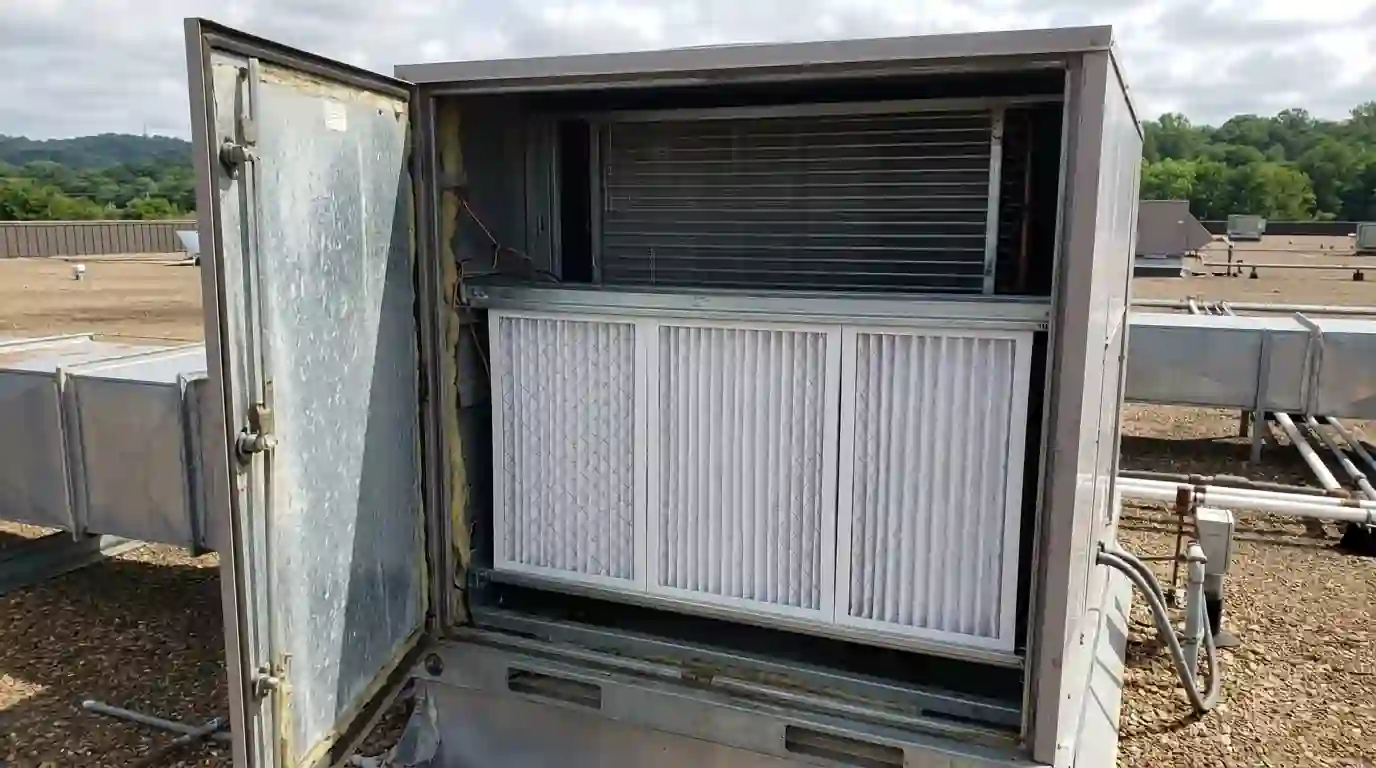
A maintenance visit on a rooftop unit is a checklist with readings attached. We change filters, inspect and adjust or replace belts, clean the condenser coil, flush the drain and treat the pan, and test the economizer damper and its sensor. Then we measure amp draw, refrigerant pressures and the temperature split, and before winter we check the gas heat section.
Each unit gets a written record of those readings. Over a few visits, the records show which unit is wearing fastest, so you can plan a repair or replacement before it fails in July instead of during it.
What every maintenance visit includes
- Filters replaced and belts checked or changed
- Condenser coil cleaned and evaporator coil inspected
- Condensate drain flushed and pan treated
- Economizer damper and sensor tested
- Refrigerant pressures, amp draw and temperature split recorded
- Gas heat or defrost controls checked each fall
Rooftop unit service
In spring we focus on cooling. Coils get cleaned, the condenser fan motor and blade are checked, refrigerant pressures and superheat are measured, the contactor is inspected for pitting, and the drain is flushed before the humid months fill it with algae.
In fall the work turns to heat. Gas units get the burners, igniter, flame sensor, heat exchanger and flue inspected, and heat pump units get their defrost controls tested. Both visits include the economizer, since a damper stuck open in summer wastes energy and leaves the space sticky.
Filter and belt schedules
Filters load up faster in some buildings than others. An office with carpet might go a full quarter, while a restaurant near the cook line or a shop with doors propped open may need new filters every month. A clogged filter cuts airflow, freezes coils and strains the blower motor.
Belts stretch and glaze with age, and a slipping belt moves less air long before it snaps. We set the filter interval and belt checks from what we find in your units, then adjust them after the first few visits. It's easier to plan than to react.
Nashville weather that sets the maintenance calendar
Nashville's normal July high is about 91 degrees and its normal January low about 30, so most rooftop units work hard in both seasons. That's why spring and fall visits split cleanly into a cooling check and a heating check. The city also gets roughly 50 inches of rain a year, and the humid months keep condensate drains wet and grow algae in the pans. A drain that clogs on a rooftop unit usually shows up first as a water stain on a ceiling tile inside.
How a maintenance schedule gets set up
- 1
Walk the equipment
We list every unit with its size, age, filter sizes and belt numbers.
- 2
Set the schedule
Visit timing and filter intervals are matched to how the building is used.
- 3
Service and record
Each visit follows the checklist and records readings for every unit.
- 4
Report and plan
You get findings and repair prices so failing parts are fixed before peak season.
What sets the cost of a maintenance plan
A maintenance price depends mostly on how many units you have and how often they need a visit.
- Number of units. Each rooftop unit or split system adds inspection time and parts.
- Visit frequency. Quarterly visits cost more over a year than spring and fall visits.
- Filter and belt sizes. Large filter racks and multiple belts add material to every visit.
- Building use. Kitchens and dusty spaces need more coil cleaning and more frequent filters.
- Roof access. A hatch, a tall ladder or a lift changes the time needed on site.
Spring and fall or quarterly: picking a schedule
The right interval depends on how hard the building runs its equipment.
| Schedule | Spring and fall | Quarterly |
|---|---|---|
| Visits a year | Two | Four |
| Good fit for | Offices and light retail | Restaurants, gyms and busy stores |
| Filter changes | Each visit, with owner swaps between | Each visit, plus monthly swaps near kitchens |
| Coil cleaning | Before the cooling and heating seasons | Every visit, keeping grease and dust off the coil |
Maintenance questions from property and business owners
At least twice a year, in spring and fall. Restaurants and busy retail spaces often need quarterly visits and monthly filter changes.
We note it with the readings, give you a price, and repair it with your approval, either during the visit or at a scheduled time.
Yes. The fall visit covers gas heat sections on one and defrost controls on the other.
Rooftop work usually doesn't disturb the space, and when it does, visits can be timed around your hours.
Yes. Condenser coils are cleaned as needed at each visit, and evaporator coils are inspected and cleaned where access allows.