Air purifier installation in Nashville means adding one of three things to the duct system: a UV lamp at the indoor coil, a deep media filter cabinet or an electronic air cleaner. Each has to fit the airflow your blower can move, so we measure static pressure first. Upkeep differs: a yearly bulb, a filter change or cell washing. Call (615) 412-2815 at any hour.
Where air cleaning fits in your duct system
Whole-house air cleaning works through the system you already have. Every time the blower runs, the house air passes through the return, the filter and the coil, so that's where cleaners go. A one-inch filter does little. A deep media filter or an electronic cell catches far more fine dust, and a UV lamp keeps the coil and drain pan surfaces from growing a film.
The catch is airflow. A filter that catches more also resists more, and a blower pushing against too much resistance moves less air, ices the coil and runs hotter. We read static pressure before and after, and we choose a cleaner the duct system can handle. No add-on replaces a clean filter and a sealed return.
UV coil lights
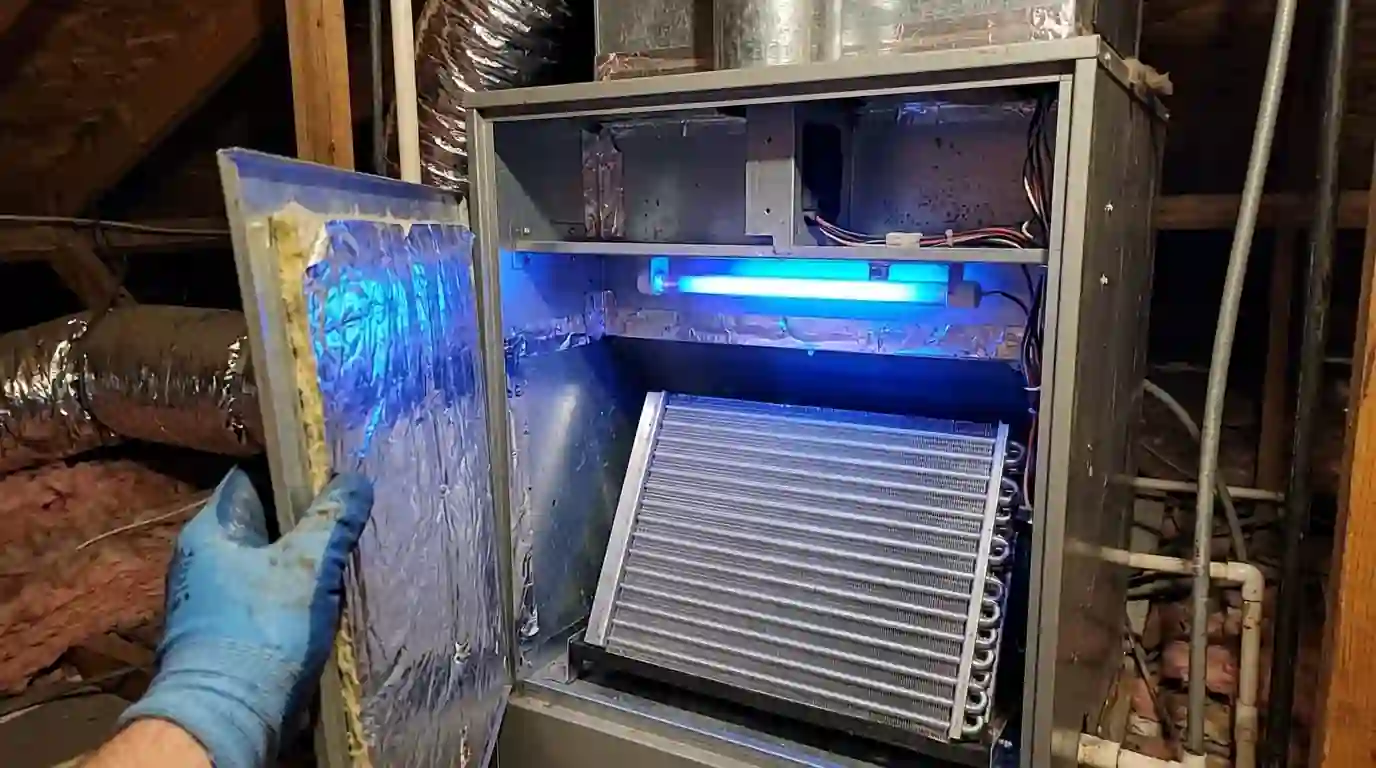
A UV coil light is a lamp mounted inside the air handler or plenum and aimed at the evaporator coil and drain pan. The coil stays cold and wet all summer, and over time a slimy film can grow on the fins and in the pan. That film slows airflow and helps clog the condensate drain.
The lamp shines on those surfaces around the clock, which keeps the buildup down. We mount it where the light reaches the coil face, wire it to shut off when the cabinet door opens, and note the yearly bulb change, since the output fades long before the bulb burns out. Never look at a lit UV lamp.
Media air cleaners
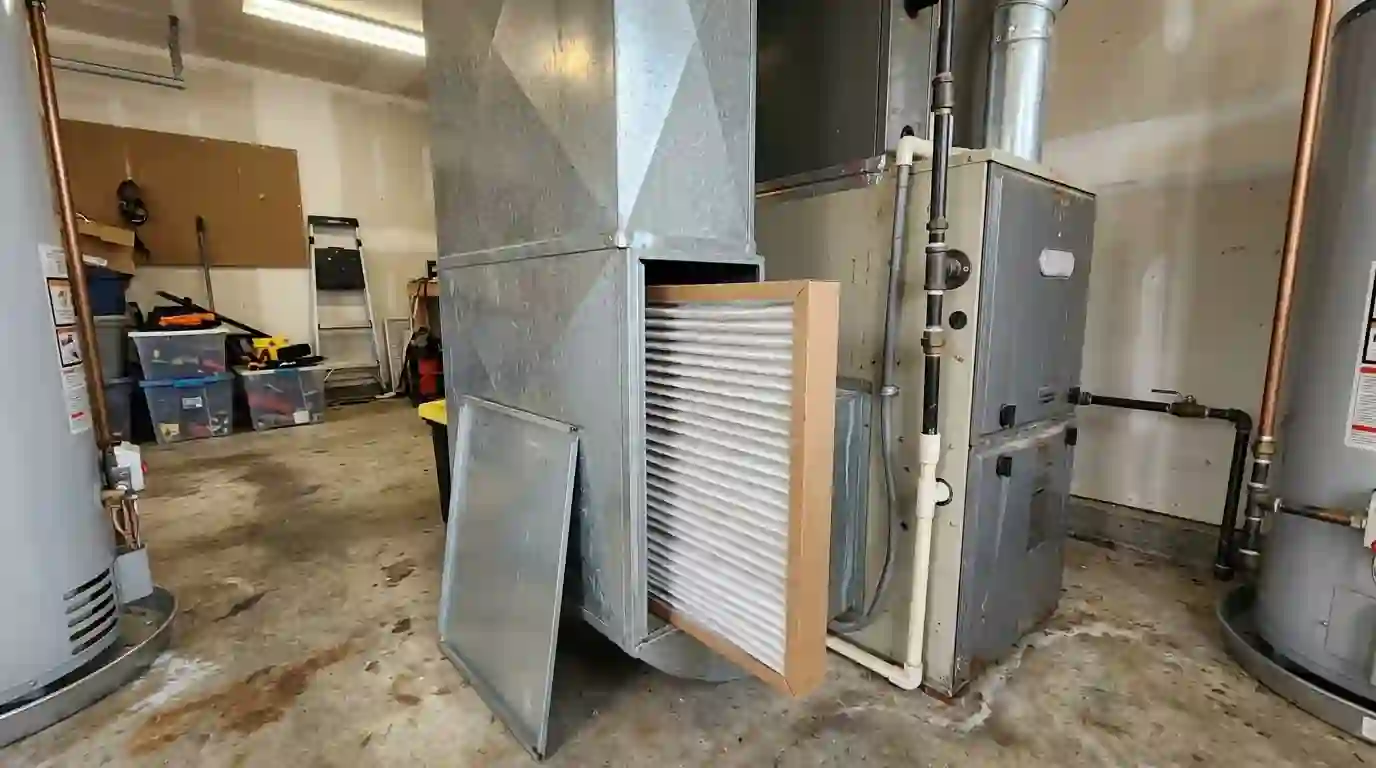
A media air cleaner is a cabinet that holds a pleated filter four or five inches deep instead of one. The deep pleats give it far more surface, so it catches fine dust while letting air through more easily than a thin, high-rated filter would.
We mount the cabinet on the return side of the furnace or air handler, seal it to the duct and the equipment so air can't slip around it, and pick a rating the blower can handle. Most of these filters go several months between changes, which is less fuss than monthly one-inch filters. In a dusty house with a leaky return, sealing that return often helps more than any filter.
Electronic air cleaners
An electronic air cleaner charges particles as they pass and collects them on metal plates inside a removable cell. When the cell is clean it adds very little resistance to airflow, and it catches fine particles that slip through ordinary filters.
The trade-off is upkeep. The cell needs washing every few months, by hand or in a dishwasher if the maker allows it, and a loaded cell stops collecting well. A snapping or crackling sound usually means the cell is dirty or a plate is bent. On older units we check the power supply and the cell before recommending a repair or a switch to a media cabinet.
UV lamp, media cabinet or electronic cleaner
| What matters | UV coil light | Media cabinet | Electronic cleaner |
|---|---|---|---|
| What it does | Keeps coil and drain pan surfaces clean | Catches dust in a deep pleated filter | Collects charged particles on metal plates |
| Effect on airflow | None | Low when sized right | Very low with a clean cell |
| Upkeep | New bulb about once a year | New filter every several months | Wash the cell every few months |
| Pairs well with | Any filter type | A UV lamp at the coil | A UV lamp at the coil |
What changes the cost of an air cleaner
Which type you choose and how it fits your equipment drive most of the price.
- Type of cleaner. A UV lamp, a media cabinet and an electronic cleaner differ widely in parts cost.
- Return duct changes. A media cabinet may need the return transition rebuilt to fit.
- Electrical. UV lamps and electronic cleaners need power wired from the equipment.
- Equipment location. Attic and crawl space equipment takes longer to work on than a closet or garage install.
- Upkeep parts. Yearly UV bulbs and replacement media add to the cost of ownership.
What long Nashville run seasons do to the indoor coil
Nashville systems run for much of the year, cooling through a long, humid summer and heating through the winter. All those hours keep the indoor coil cold and wet for months, and that's where a film builds up when the filter is thin or the return leaks. Spring pollen and renovation dust load filters quickly too. Across Middle Tennessee we look at the coil, the drain pan and the return before suggesting a cleaner, since a fouled coil or a leaking return changes which option makes sense.
What an air cleaner installation includes
- Static pressure reading before and after
- Cleaner sized to the blower and duct
- Cabinet sealed to the return and equipment
- UV lamp wired to a door safety switch
- Coil and drain pan checked
- Upkeep schedule explained before we leave
How an air cleaner install runs
- 1
Look at the system
We check the filter, coil, drain pan and return for leaks or buildup.
- 2
Read static pressure
A pressure reading shows how much added resistance the blower can take.
- 3
Choose and price
You get the option that fits, its upkeep and the cost before work starts.
- 4
Install and recheck
We fit the cleaner, seal it in place and read the pressure again with the blower running.
Brands we work on
We service and install equipment from the major manufacturers, including Carrier, Trane, Lennox, Rheem, Goodman, American Standard, Daikin, Mitsubishi Electric, Bryant, Ruud, York and Amana.
Air purifier questions from Nashville homeowners
It depends on what you want to fix. A UV lamp keeps the coil cleaner, a media cabinet catches fine dust with little upkeep, and an electronic cleaner catches fine particles but needs regular washing.
Sometimes, but a thin high-rated filter restricts airflow more than a deep one. We check static pressure before recommending it.
UV bulbs are usually changed once a year. Deep media filters last several months, and electronic cells need washing every few months.
It helps, but leaky return ducts in a crawl space or attic often pull in dust faster than any filter can catch it. We check the return first.
Ducted heat pumps take all three types. Ductless mini-splits use their own washable filters, so these add-ons don't apply.