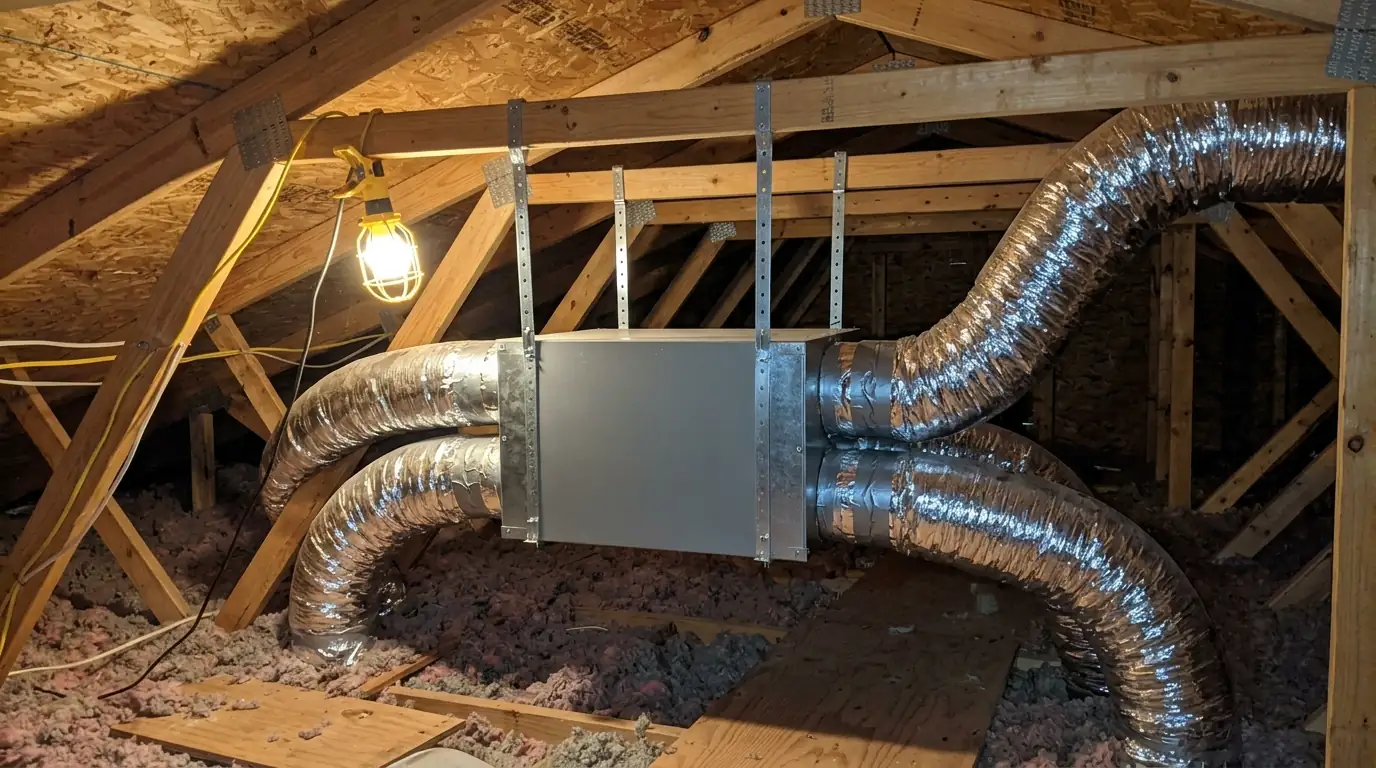
Fresh air ventilation in Nashville usually means an energy recovery ventilator, or ERV. It brings in outdoor air and exhausts stale indoor air at a steady rate, passing both streams through a core that trades heat and some moisture between them. That matters in humid summers, when raw outdoor air would add water to the house. Call (615) 412-2815 at any hour.
Why tight houses need a planned air supply
Older houses get outside air whether anyone plans it or not, through gaps around windows, attic hatches and floors. Newer houses are built much tighter, which keeps conditioned air in and the power bill down. It also keeps cooking odors, shower moisture and stale air inside unless something deliberately swaps them out.
An ERV makes that swap on purpose. Two small fans move matched amounts of air in and out, and the core between them hands the outgoing air's heat or coolness, and part of its moisture, to the incoming stream. We size it to the house, run its ducts and set it to run on a schedule or with the air handler.
Energy recovery ventilators
An ERV has two airstreams that cross inside a core without mixing. Stale air leaves through one side and outdoor air enters through the other. In July the outgoing cool, drier air pre-cools and dries the incoming air, and in January it warms it.
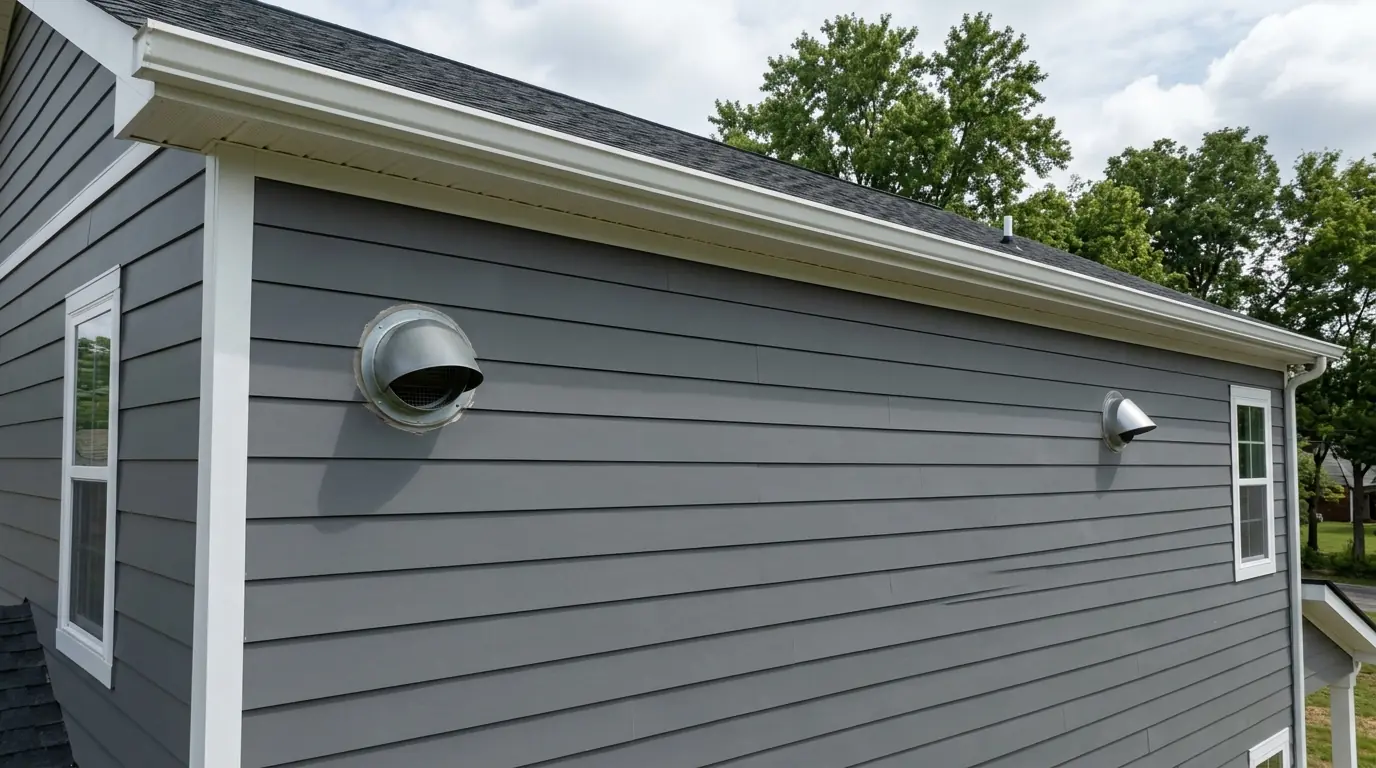
Most installs either duct the ERV on its own to bedrooms and baths or tie it into the air handler's return so fresh air spreads through the existing ducts. We size it by floor area and bedroom count, place the outdoor hoods well apart so exhaust isn't drawn back in, and balance the two fans so the house isn't pushed or pulled. The filters need changing and the core needs cleaning on a schedule.
Tight newer homes
A house built to current energy codes leaks far less air than one built a few decades ago. That's good for the power bill, but the moisture from cooking, showers and breathing stays inside, and so do odors. Windows that fog on cold mornings, bathrooms that stay damp and stuffy bedrooms are the usual signs.
Bath and kitchen fans help, but they run only when someone switches them on, and they pull replacement air through whatever gaps they find. An ERV gives the house a steady, measured exchange instead. In a humid Nashville summer we pair it with good dehumidification where needed, since an ERV slows moisture coming in but doesn't remove what is already there.
ERV, HRV or a fresh-air duct to the return
| What matters | ERV | HRV | Fresh-air duct |
|---|---|---|---|
| How air moves | Balanced in and out through a core | Balanced in and out through a core | Outdoor air pulled into the return only |
| Moisture handling | Hands some moisture back out | Transfers heat only | Brings outdoor moisture straight in |
| Humid Nashville summers | Strong fit | Weaker fit in humid months | Needs good dehumidification |
| Equipment | Ventilator, two hoods, ducts | Ventilator, two hoods, ducts | One hood, a duct and a damper |
What decides the cost of an ERV install
The duct runs and where the unit can hang set most of the price.
- Unit size. Larger homes need a ventilator that moves more air.
- Stand-alone or tied in. Dedicated ducts to several rooms take more labor than a connection to the return.
- Wall or roof hoods. Two exterior openings, spaced apart, need flashing and sealing.
- Location. Attic installs need insulated ducts and a condensation check that a basement install may not.
- Controls. A simple timer costs less than a control tied to humidity or the thermostat.
New households across four Nashville-area counties
Davidson County added about 9,300 residents in 2025 to reach roughly 745,900, while Williamson County stands near 272,000, Sumner County near 215,500 and Robertson County near 80,200. Some of those new households move into recently built houses, where a tight shell makes stale, stuffy air a first-year complaint. When we're called to a newer home in any of these counties, we ask how old the house is and whether it already has a ventilation fan or a fresh-air duct before recommending an ERV.
How an ERV install runs
- 1
Assess the house
We note the home size, bedrooms, existing exhaust fans and how the air handler is ducted.
- 2
Plan and price
You get the unit size, duct layout, hood locations and cost before work starts.
- 3
Install and duct
We hang the ventilator, run insulated ducts, cut in the hoods and wire the control.
- 4
Balance the flows
We measure intake and exhaust airflow and adjust until the two match.
How long an ERV install takes
A ventilator tied into the return of an easy-to-reach air handler is often a one-day job. A stand-alone system with dedicated ducts to bedrooms and bathrooms, or one going into a cramped attic, can take longer.
Most of the time goes into the duct runs and the two exterior hoods, not the unit itself. We finish by measuring both airflows and showing you how to change the filters, so you know how to keep it running.
Brands we work on
We service and install equipment from the major manufacturers, including Carrier, Trane, Lennox, Rheem, Goodman, American Standard, Daikin, Mitsubishi Electric, Bryant, Ruud, York and Amana.
Ventilation questions from Nashville homeowners
Both exchange stale air for fresh air through a core. An ERV also moves some moisture, which suits humid Nashville summers better than an HRV.
No. It limits how much moisture comes in with the fresh air but does not remove moisture already inside. A dehumidifier does that.
Usually not. Older houses leak enough air on their own. An ERV pays off in a tight, newer home or after major air sealing.
Slightly, from the small fans and from conditioning the fresh air. The core recovers much of that energy compared with simply opening a window.
Change or clean the filters every few months and clean the core as the maker directs. We check the core and the fan balance during a tune-up.
Yes. Most are set to a timer or a continuous low speed, which is what keeps the air from going stale.