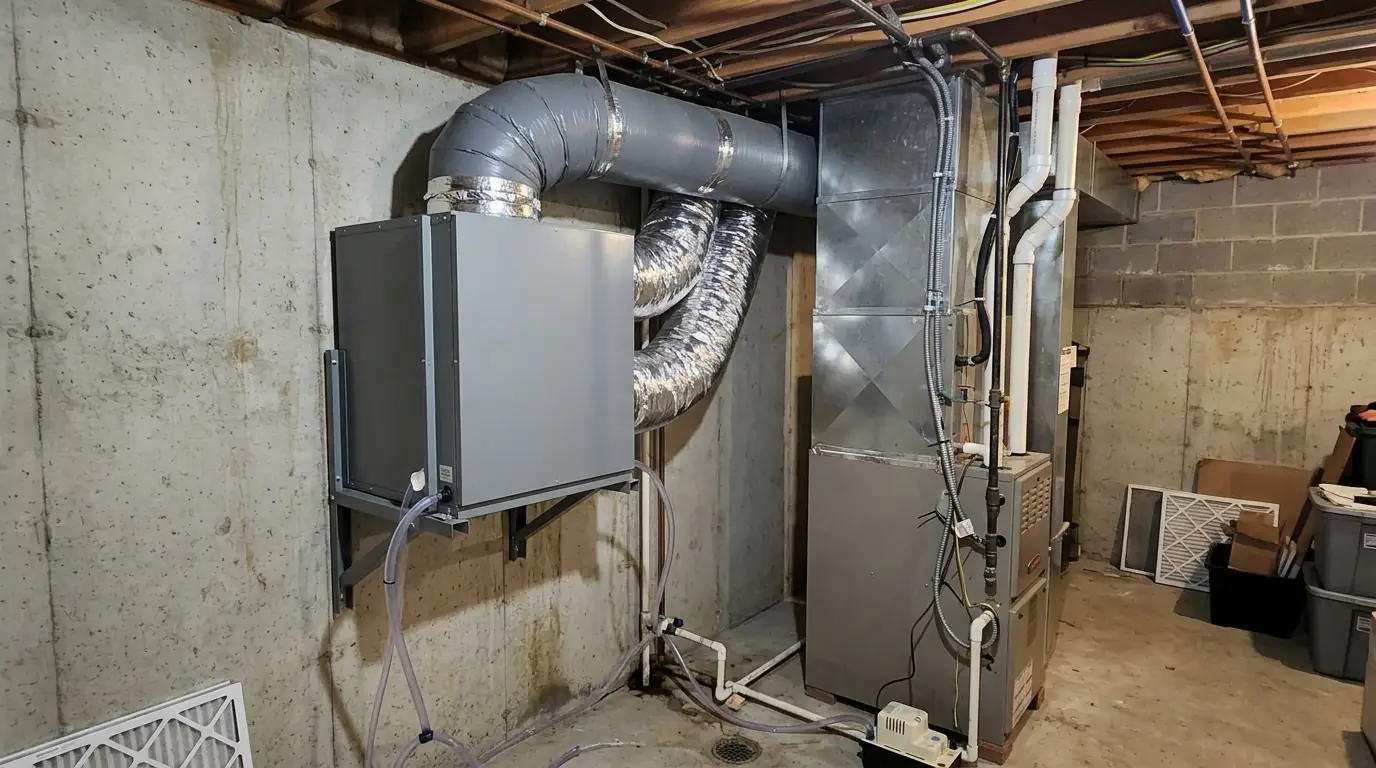
A whole-home dehumidifier in Nashville ties into your ductwork and removes the moisture an air conditioner leaves behind, mostly in spring and fall when the AC barely runs. It needs a drain, a nearby outlet and its own humidity control. Most homes are set between the mid-40s and 50 percent relative humidity. Call (615) 412-2815 at any hour.
Why the AC alone leaves a house damp
An air conditioner removes moisture as a side effect of cooling. On long, hot afternoons it does that well. On a mild, damp day it barely runs, and an oversized system reaches the thermostat setting before the coil has pulled much water out. That's when a house sits at 72 degrees and still feels clammy.
A ducted dehumidifier works on its own schedule. It draws air from the return, pulls moisture out across a cold coil and sends the dried air back through the duct system, whether the AC is running or not. We size it to the house, run its condensate to a drain and set a control that reads humidity rather than temperature.
Ducted dehumidifiers
A ducted unit sits in the attic, basement, crawl space or a utility closet near the air handler. It is rated by how many pints of water it removes per day, and we size it from the house's square footage, how tightly it is built and what the humidity readings show.
Most installs tie the intake into the return duct and the outlet into the supply or return, so dried air reaches every room through the existing registers. The unit needs a standard outlet within reach of its cord and a condensate line that drains by gravity or through a small pump. We can also wire it to bring on the air handler blower when it needs to move air.
Humidity control setup
A dehumidifier is only as good as its control. A wall-mounted dehumidistat, or a thermostat that reads humidity, tells the unit to run when indoor humidity climbs above the setting and to stop once it drops back.
We place the sensor away from bathrooms and the kitchen so a shower doesn't trigger long run times, then confirm the unit starts and stops at the setpoint. Setting it too low wastes power and can dry out wood trim, so most homes land in the mid-40s to 50 percent range. On some thermostats we also turn on a mode that slows the blower during cooling to pull more water from the air.
Whole-home unit, portable unit or the AC alone
| Option | Whole-home ducted | Portable unit | AC alone |
|---|---|---|---|
| Area covered | Whole house through the ducts | One room or basement | Whole house, only while cooling |
| Drainage | Piped to a drain or pump | Bucket or hose | Existing AC drain |
| Mild, damp days | Runs on humidity, not temperature | Runs in its room | Barely runs |
| Noise | Out of the living space | In the room | Normal system noise |
What changes the price of a whole-home dehumidifier
The unit size and where it has to go set most of the cost.
- Capacity. A higher pints-per-day unit costs more than one sized for a smaller house.
- Location. An attic or crawl space install takes more labor than a basement utility room.
- Duct connections. Tying into the return and supply needs new collars, duct and sometimes a damper.
- Drainage. Where gravity drainage is not possible, a condensate pump adds parts and labor.
- Controls. A separate dehumidistat or a humidity-reading thermostat adds to the cost.
Why Nashville houses hold moisture between seasons
Nashville summers are humid, and through the long cooling season the AC handles much of that moisture just by running. The harder stretches are spring and fall, when outdoor air is damp but mild, the AC hardly runs and the windows stay shut. Basements, crawl spaces and houses on low ground hold moisture longer, and newer, tighter homes trap the water from cooking, showers and laundry. Those are the houses where a dehumidifier makes the clearest difference across Middle Tennessee.
How a dehumidifier install runs
- 1
Read the house
We measure indoor humidity, look at the AC size and check the crawl space or attic for moisture sources.
- 2
Size and price
You get the unit capacity, where it goes, how it drains and the cost before work starts.
- 3
Install and duct
We mount the unit, connect it to the duct system, run the drain and wire the control.
- 4
Test the setpoint
We run it until it cycles off at the setting and confirm water is reaching the drain.
Signs the house is holding too much moisture
The thermostat reads 72 or 74 but the air still feels sticky.
A stale smell builds in closed spaces and lower floors.
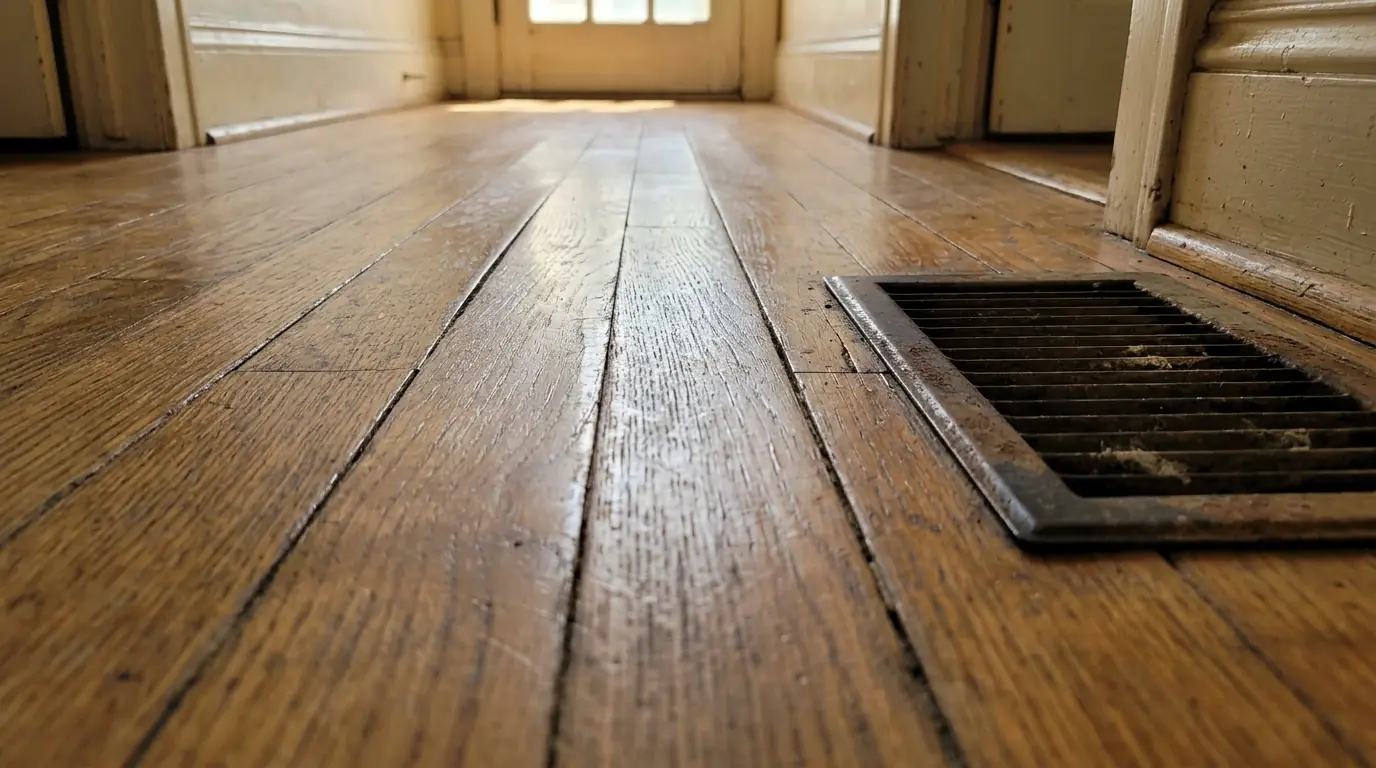
Floorboards rise at the edges during humid months.
Water beads on vents or ceiling grilles during cooling runs.
Glass fogs on the room side on cool spring or fall mornings.
Short run times leave little chance to pull water out of the air.
Brands we work on
We service and install equipment from the major manufacturers, including Carrier, Trane, Lennox, Rheem, Goodman, American Standard, Daikin, Mitsubishi Electric, Bryant, Ruud, York and Amana.
Dehumidifier questions from Nashville homeowners
On long, hot days it often can. On mild, damp days, or with an oversized AC, it shuts off before pulling much moisture, which is where a dehumidifier helps.
It covers the whole house through the ducts, drains itself and runs out of the living space. A portable unit handles one room and needs its bucket emptied.
Into a condensate line that drains by gravity to a floor drain, outdoors or into the AC drain, or through a small pump when gravity won't work.
Most homes are comfortable from the mid-40s to 50 percent. Lower settings use more power and can dry out wood.
Yes. Change or clean its filter on schedule and check the drain each season. We look at it during your regular AC tune-up.
It adds a little heat as it runs, which the AC handles easily. Most owners feel cooler at the same thermostat setting because the air is drier.