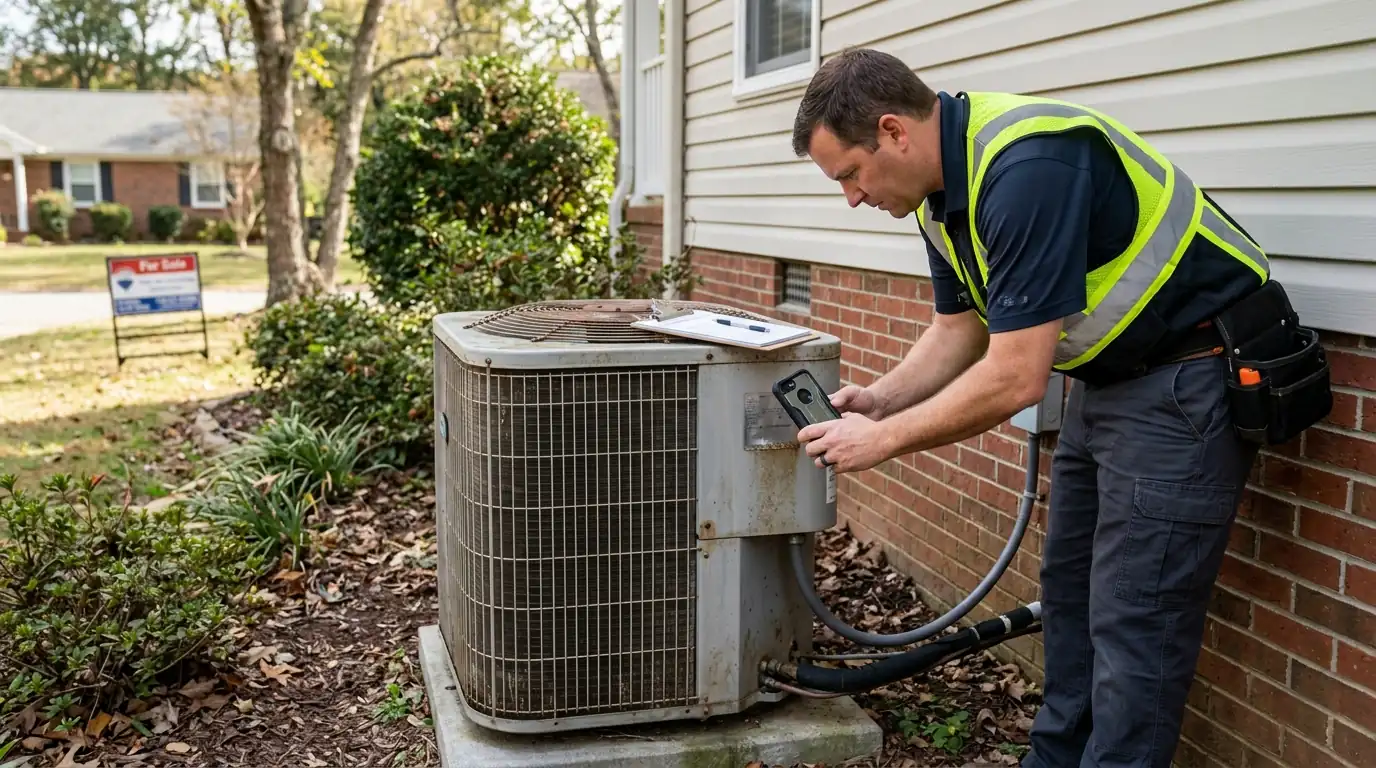
A home buyer HVAC inspection in Nashville looks at the heating and cooling system in more depth than a general home inspection. We date the equipment from its data plates, run heating and cooling, measure temperature split and static pressure, and look at the ducts. You learn what is aging, what is failing and what is fine. Call (615) 412-2815 at any hour.
What a buyer HVAC check covers that a home inspection skips
A general home inspector covers the whole house in one visit, so the HVAC section is usually a quick check that the system runs. We spend the visit on the system alone. We read the age off each data plate, look inside the furnace or air handler, check the outdoor unit, and run heating and cooling with gauges and thermometers.
You get the findings in plain language: what's near the end of its life, what's a small repair and what's fine. That gives you something specific to take to the seller or to plan for after closing. It is not a full home inspection and doesn't replace one.
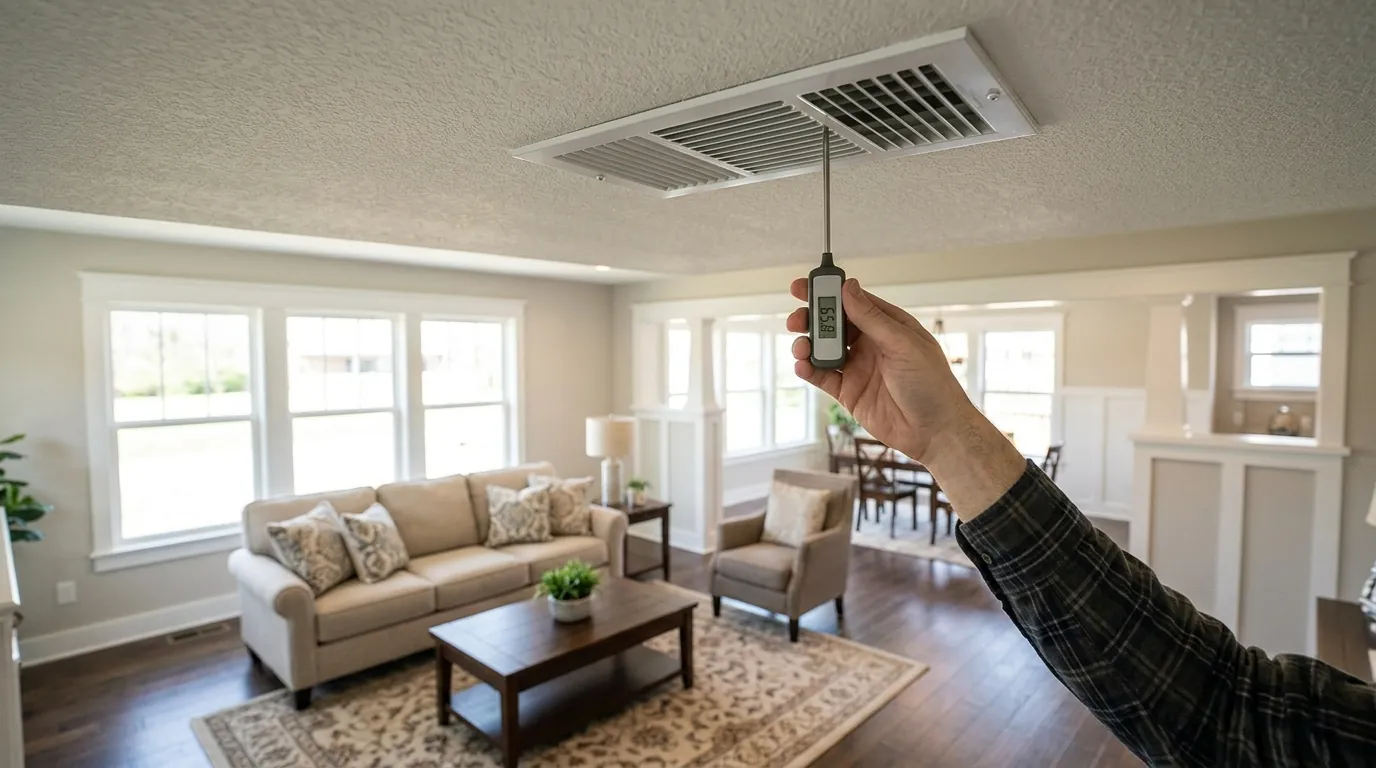
What the buyer inspection includes
- Build year read from each data plate
- Heating and cooling run with readings
- Temperature split and amp draw
- Static pressure at the equipment
- Duct condition in the crawl space or attic
- Plain-language summary of findings
Equipment age and condition
Most outdoor units, furnaces and air handlers carry a serial number that encodes the build year. We read each one, because an older condenser paired with a newer furnace is a common mix and the oldest piece sets the timeline. We also note the refrigerant type, since a system running R-22 costs more to recharge.
Then we look for wear: rust in the drain pan, an oily or corroded coil, a bulging capacitor, scorched wiring, and the burner and flue on a gas furnace. We run heating and cooling and measure temperature split and amp draw. In cold weather we can't safely run cooling, so we check the outdoor unit's electrical parts at rest and note it.
Duct and airflow check
Ducts are the part buyers rarely see and the part most often ignored. We look in the crawl space or attic for disconnected runs, crushed flex duct, missing insulation and ducts lying in water or dirt. Then we measure static pressure at the equipment to see whether the ducts are choking the blower.
We also check that every room gets supply air and that the return is large enough for the system. A house with one small return grille and a large new heat pump will run loud and wear out its blower. When we find problems, we describe them by location so a quote for duct repair can follow.
What Davidson County housing ages mean for a buyer
Davidson County's median home was built in 1986, about 18 percent of its housing predates 1960, and about half of all units are detached houses. That spread shows up on buyer inspections. A house from the 1980s may be on its second or third system with its original ducts. A pre-1960 house had its ductwork added long after it was built. Attached homes, which make up much of the rest of Nashville's housing, often hide an air handler in a closet and a condenser the listing never mentions.
How a buyer inspection runs before closing
- 1
Call with the address
Tell us the address, your inspection deadline and how the agent will arrange access.
- 2
Test the system
We date the equipment, run heating and cooling and take pressure and temperature readings.
- 3
Check the ducts
We look at duct condition in the crawl space or attic and measure static pressure.
- 4
Explain the findings
You get a plain-language summary of what is aging, failing or fine.
What affects the cost of a buyer inspection
The visit is priced by how much equipment the house has and how hard it is to reach.
- Number of systems. A second floor with its own system doubles the equipment to test.
- Equipment type. Gas furnaces need burner and flue checks that an all-electric system does not.
- Access. Tight crawl spaces and attics without a floor take longer to inspect.
- Extra tests. Duct leakage or combustion testing adds time to the visit.
- Time of the visit. Night and weekend visits can carry a higher rate than a weekday appointment.
How long the visit takes and when to book it
A single system in an average house usually takes one to two hours. A second system, a deep crawl space or a gas furnace with a flue to check adds time.
Book it early in your inspection period. If we find something worth a repair quote or a second opinion, you'll want room to get it before the deadline in your contract.
Questions buyers ask before closing
A home inspection usually confirms the system runs. An HVAC inspection dates the equipment, measures how it performs and looks at the ducts, which is where many surprise costs hide.
Many systems are near the end of their service life by 15 to 20 years. Age alone isn't a failure, so we pair it with what the readings show.
Yes. We check the outdoor unit and its electrical parts at rest and note that cooling could not be run. Heating gets a full test.
We describe each finding and the work it calls for. If you want a price on a specific repair or replacement, we can quote it separately.
It helps but isn't required. Your agent can arrange access, and we go over the findings with you by phone.
Yes. We inspect package units, mobile home systems and condo split systems as well as detached houses.