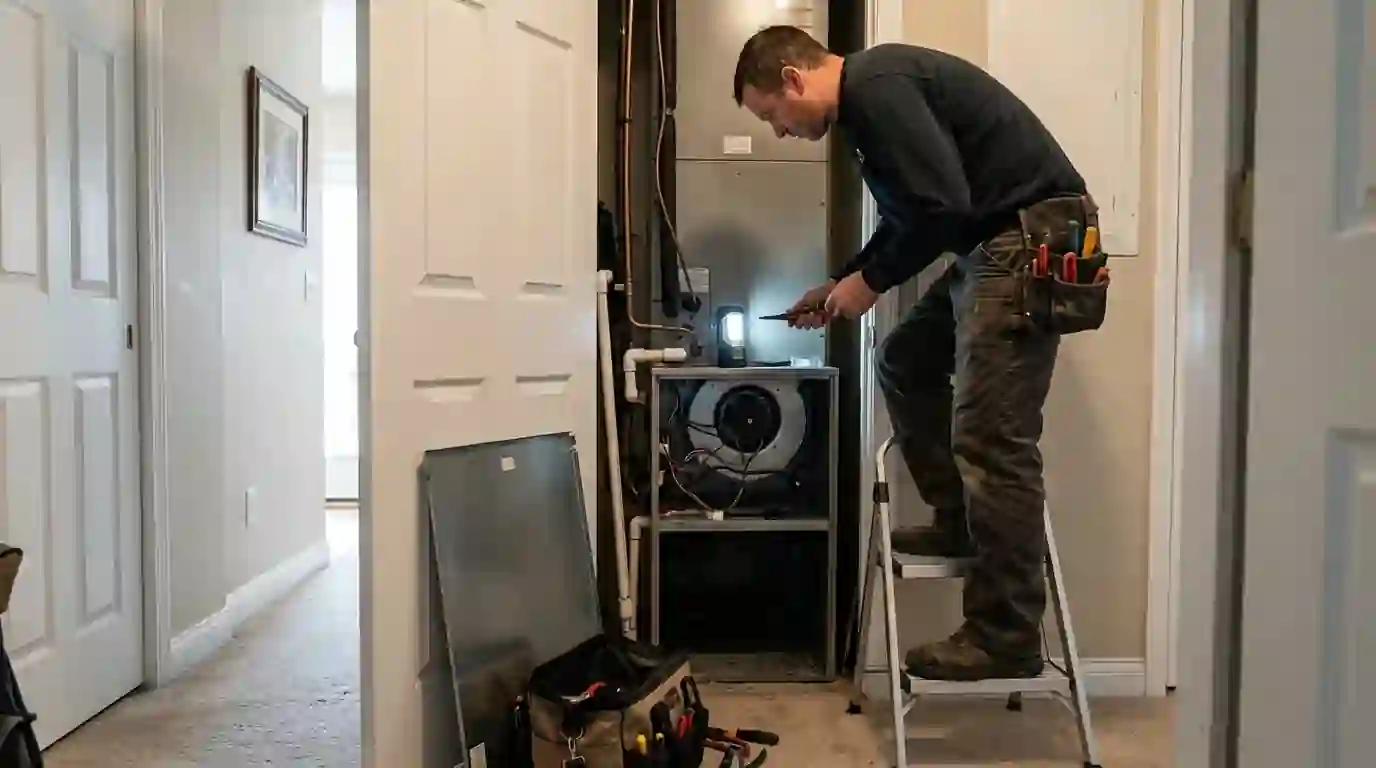
Air handler repair in Nashville usually comes down to the blower motor or its capacitor, a heat strip or sequencer, or the control board. A technician checks voltage, amp draw, capacitor value and strip resistance, then prices the failed part before any work starts. Call (615) 412-2815 at any hour.
What sits inside the air handler, and what fails
The air handler is the indoor half of a heat pump or electric heat system: the blower, the coil, the heat strips and the board that runs them. When it fails, the outdoor unit may keep running while the house gets no air, or the air moves but never heats.
We test each part with the panels off, and you get the finding and the price first. If the cabinet is rusted through or the coil is leaking on an old unit, we price a replacement alongside the repair.
Signs the air handler needs a repair visit
The outdoor unit runs but little air comes out of the vents.
A blower that hums without turning or squeals points to the motor or its capacitor.
The air is barely warm when the heat strips should be helping.
A hot electrical smell can mean a melting lug or failing motor, so switch the system off.
A stuck relay on the board can keep the fan running with the thermostat off.
A clogged drain or rusted pan can overflow onto the floor or the ceiling below.
Blower motor replacement
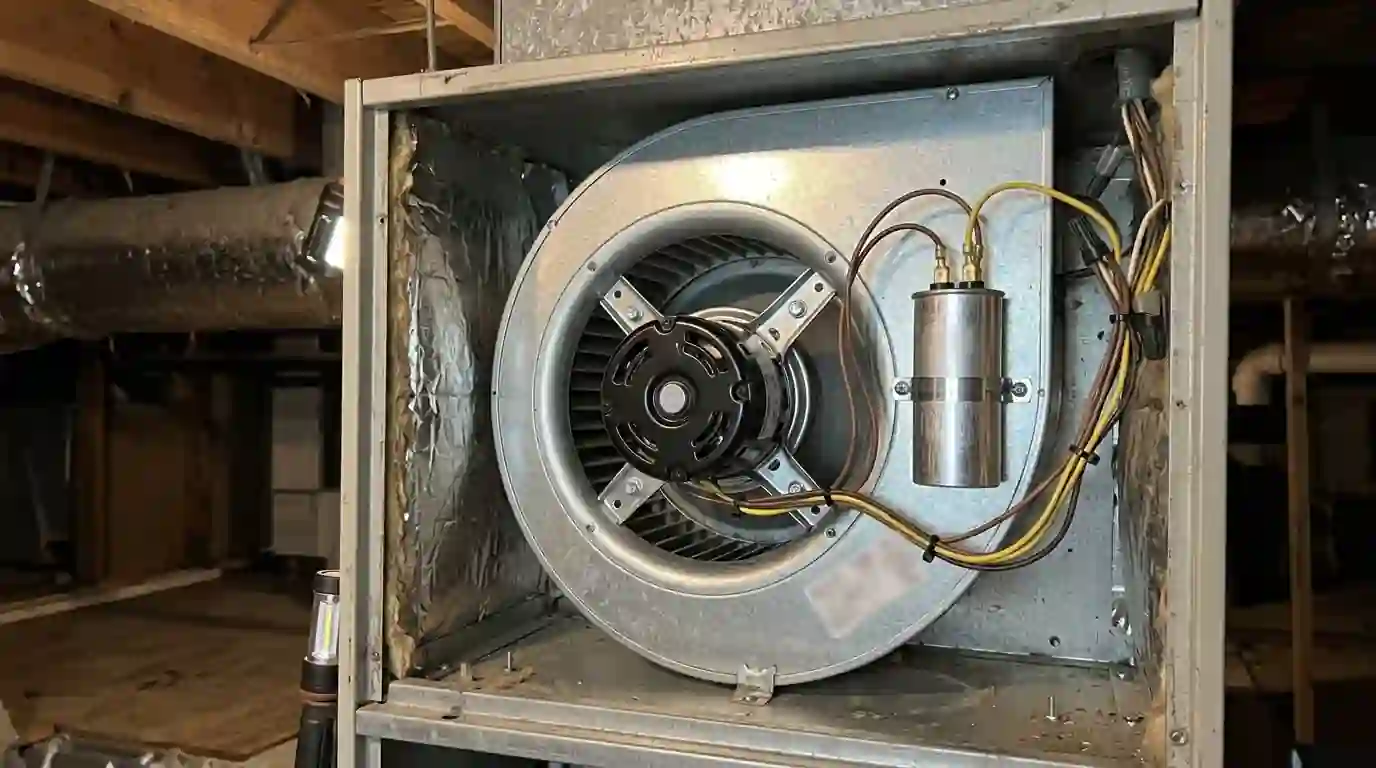
The thermostat calls, the outdoor unit runs, and almost nothing comes out of the vents. Or the blower hums without turning, or it squeals and smells hot. On a PSC motor the run capacitor is often the real failure and costs far less than the motor.
When the motor itself is done, we match horsepower, speed taps and rotation, or fit an ECM motor programmed for the system. HomeGuide lists $300 to $900 for a blower motor replacement. We clean the wheel while it is out, because a dirty wheel moves far less air.
Heat strip and sequencer failure
The heat pump runs, but the house falls behind on a cold morning and the air at the vents is barely warm. Or the thermostat shows emergency heat and nothing warms up at all. The strips are the only heat source then, and one burned element or stuck sequencer takes a big share of that heat away.
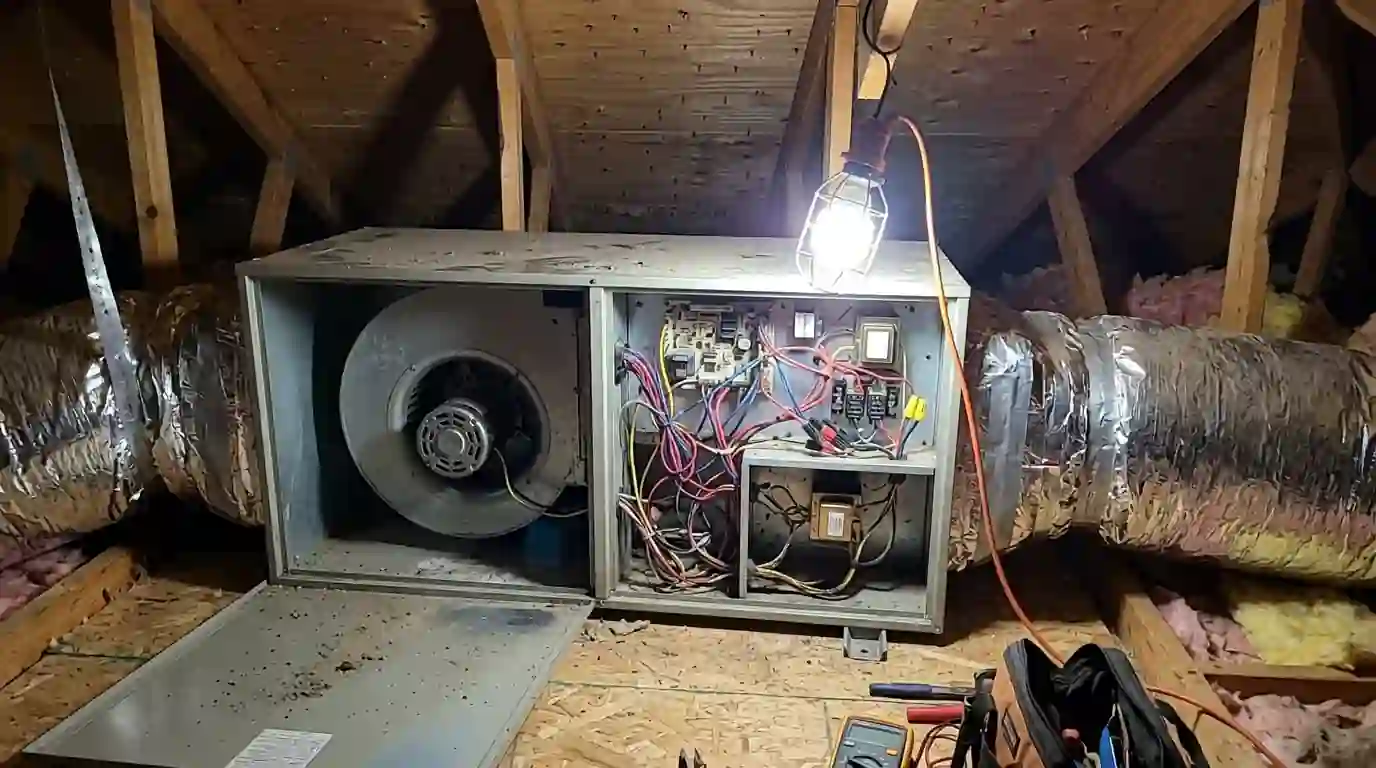
We measure each strip with an amp clamp and check the sequencers, limit switches and wire lugs. Loose lugs overheat and melt insulation, so we replace damaged wire along with the failed part. A strip kit can often be replaced inside the existing cabinet.
Control board faults
The control board takes the thermostat signal and turns on the blower, the strips and the outdoor unit in order. A failed relay, a blown low-voltage fuse or a cooked transformer can shut the whole system down or leave the blower running nonstop.
A blown fuse usually means a short somewhere, often a nicked thermostat wire or a chafed outdoor cable, so we find the short before replacing the fuse. If the board is at fault, we confirm it with a meter and match the replacement to the model. Lightning and power surges damage boards too, and they're common culprits after a storm.
How long an air handler repair takes
A capacitor, sequencer, fuse or strip element usually takes an hour or two once the fault is found. A blower motor swap takes longer, because the blower assembly comes out of the cabinet and the wheel gets cleaned while it is out.
Attic and crawl space units take more time than a closet unit. If the motor or board has to be ordered for your model, we tell you at the visit and make the system safe in the meantime.
How an air handler repair call runs
- 1
Describe the symptom
Tell us whether air is moving, whether it is warm, and any smell or noise.
- 2
Open and measure
We check voltage, capacitor value, amp draw on the blower and each strip, and the board.
- 3
Price the fix
You get the failed part and the cost before we replace anything.
- 4
Repair and run both modes
We confirm airflow and strip operation in heating and cooling before we leave.
What the January 2024 freeze asked of air handlers
During the January 14 to 21, 2024 Arctic blast the Nashville airport hit 1 degree below zero on January 17, the wind chill reached 7 below on January 20, and 7.6 inches of snow fell. In cold like that a heat pump spends much of its time defrosting or short of capacity, so the strips and blower in the air handler run for days with few breaks. Weak sequencers, loose strip lugs and tired blower motors tend to fail in the same week, and we test those first on a winter no-heat call.
What an air handler repair costs
The part that failed and where the air handler sits drive most of the bill.
For planning, HomeGuide puts typical national pricing for this kind of job at $300 to $900 for a blower motor replacement (HomeGuide, August 2025). That is a market range, not our quote; the figure for your home comes after we see the equipment.
- The failed part. A capacitor or fuse costs far less than a blower motor, strip kit or control board.
- Motor type. Variable-speed ECM motors cost more than standard PSC motors and may need programming.
- Location. An attic or crawl space air handler takes more labor than one in a hall closet.
- Wiring damage. Melted lugs or wire found during the repair add parts and time.
- Time of the call. A night or holiday visit can carry a higher rate than a weekday appointment.
Brands we work on
We service and install equipment from the major manufacturers, including Carrier, Trane, Lennox, Rheem, Goodman, American Standard, Daikin, Mitsubishi Electric, Bryant, Ruud, York and Amana.
Air handler repair questions
The blower inside is not running. A failed blower motor, its capacitor or the control board is the usual cause, and the system should be shut off until it is fixed so the coil does not freeze.
A dusty smell on the first cold morning is normal. A sharp electrical or plastic smell is not, so turn the system off at the thermostat and call.
A motor on a sound air handler is usually worth replacing. A rusted cabinet, a leaking coil and an old system together point to replacement.
Yes. Attic and crawl space units take longer to work on, and we check the drain pan and safety switch while we are up there.
It runs the heat strips alone without the heat pump. If emergency heat does not warm the house either, the strips or their controls have failed.