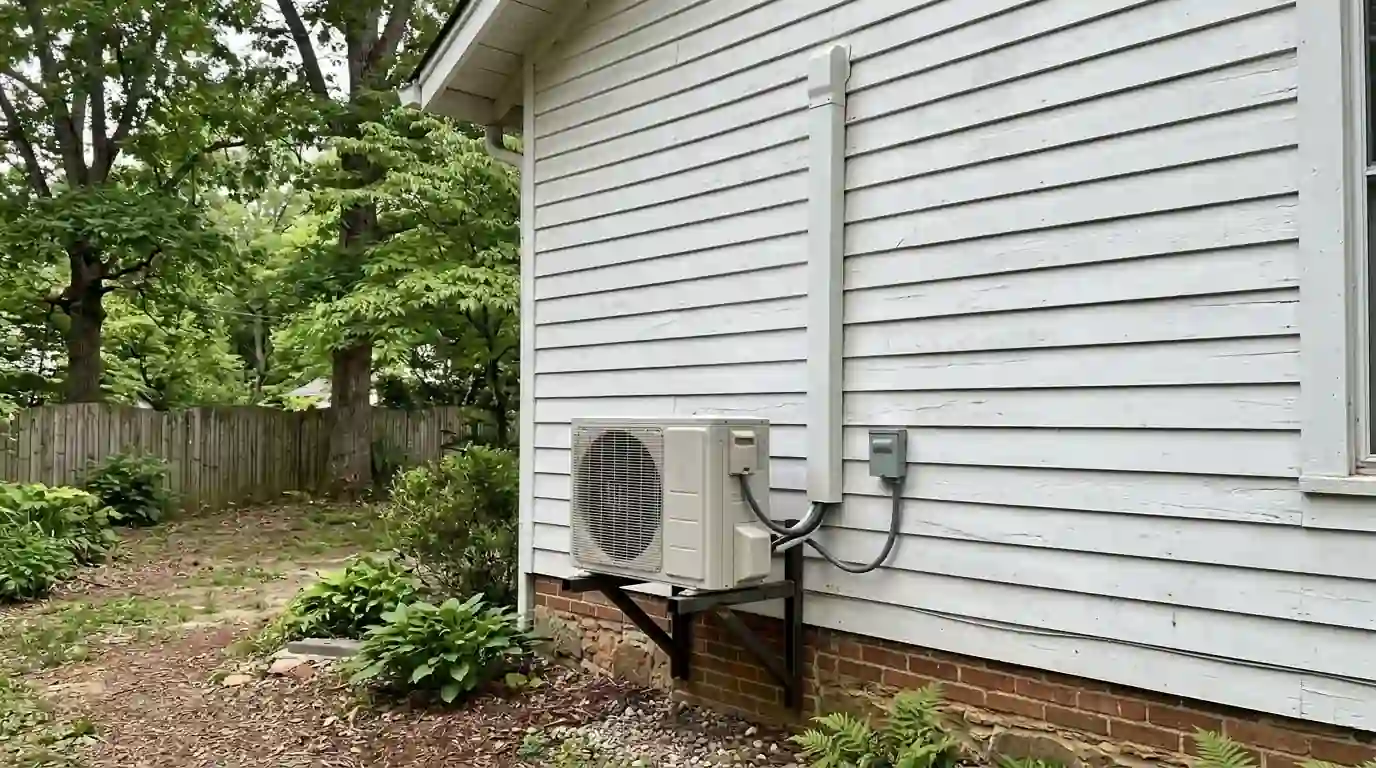
Ductless mini-split installation in Nashville means mounting an indoor head in each room, setting a heat pump condenser outside, and joining them through a wall hole about three inches across. HomeGuide lists $3,000 to $10,000 nationally, driven mostly by the number of zones. We size each head to its room before quoting. Call (615) 412-2815 at any hour.
What goes into a mini-split installation
A mini-split is a heat pump without ductwork. Each indoor head has its own fan and coil, and a copper line set, a drain line and a control cable run through the wall to the outdoor unit. It is the cleanest way to heat and cool a room the central system cannot reach, or a house that never had ducts.
Before we quote, we work out the heat load room by room: window area, insulation, ceiling height and which way the room faces. Then we plan where each head mounts, where the condensate drains and how the lines run, so you see the finished layout before anything's drilled.
Single-zone mini-splits
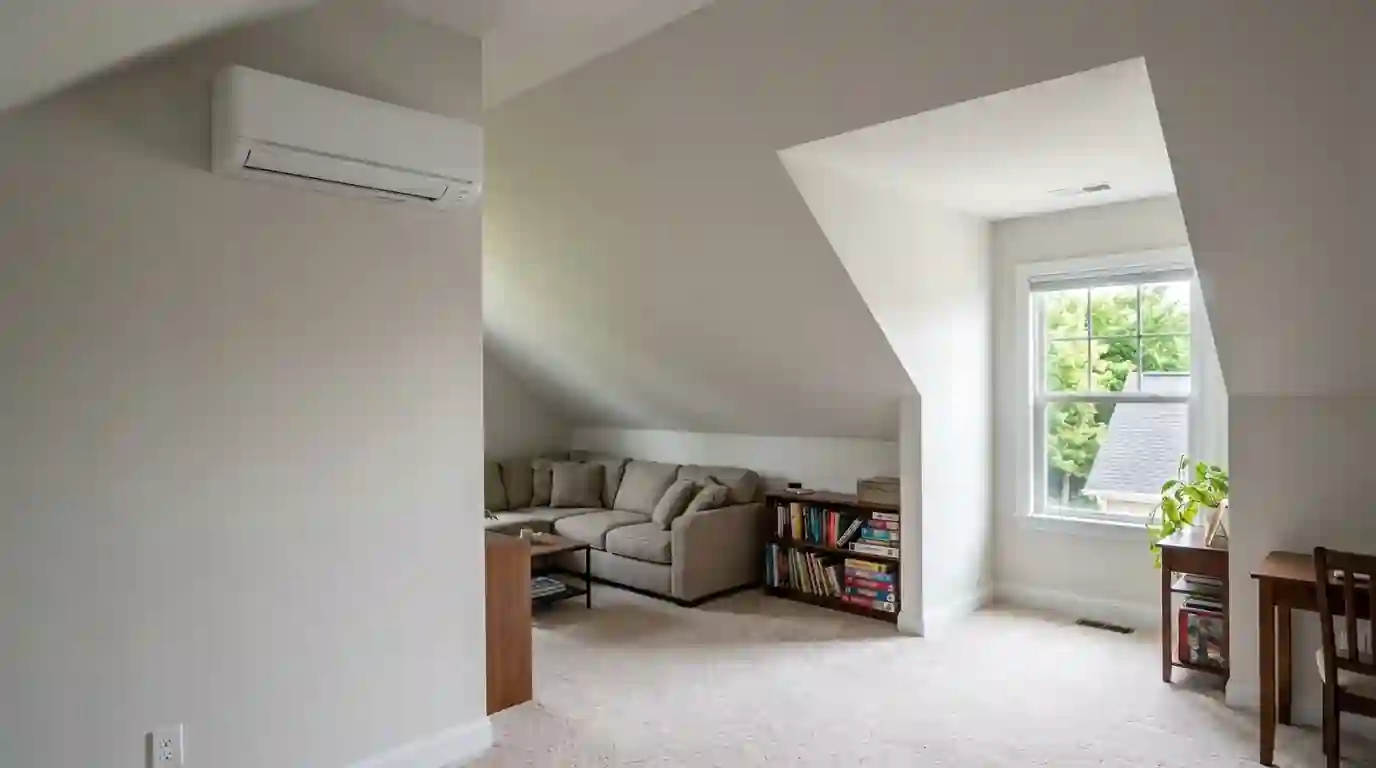
One outdoor unit feeds one indoor head. It suits a sunroom, a bedroom over the garage, or an office that runs hot all afternoon while the rest of the house stays comfortable. Because the condenser serves only that head, it can slow down to match the room and run quietly for hours instead of cycling on and off.
The work is mounting the bracket and head, drilling the wall penetration, setting the outdoor unit on a pad or wall bracket, and running the line set. We pressure test the lines with nitrogen and pull a deep vacuum before opening the refrigerant valves, which is the step that decides how long the system lasts.
Multi-zone systems
A multi-zone condenser carries two or more indoor heads, each with its own remote and set point. It works well for an upstairs that never cools, or for a small house heated and cooled without ducts. The trade-off is that one outdoor unit now carries every room, so if it fails, every head stops.
Sizing matters more here. An oversized head short cycles and leaves a room clammy, and that's a real problem in a humid July. We match each head to its room, then check that the combined capacity suits the condenser. Sometimes two single-zone systems serve a house better than one large multi-zone unit.
Garages and bonus rooms
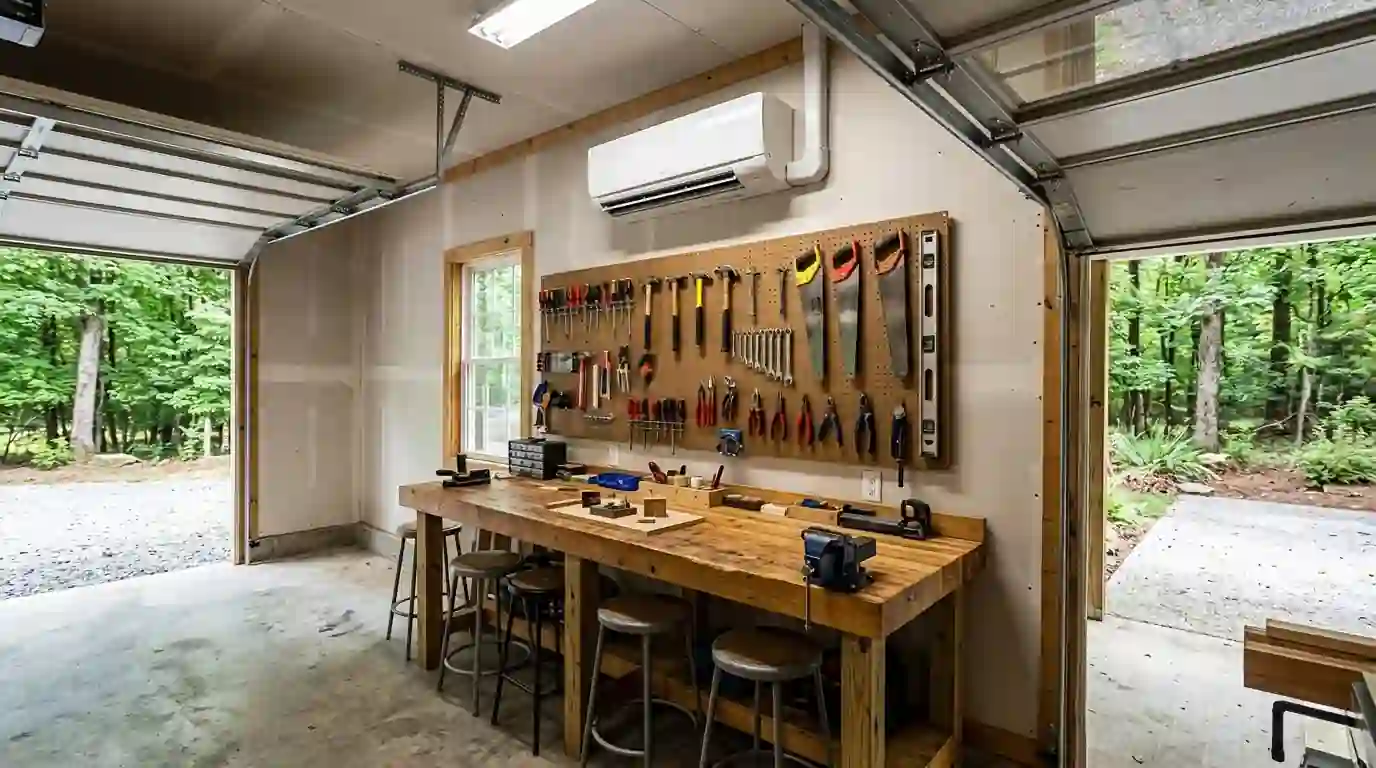
A garage, or the bonus room above it, usually has no supply duct, thin insulation and a big door or sloped ceiling that loads heat into the space. Extending the central ductwork rarely helps, because the existing system was never sized for the extra square footage.
A single head on its own condenser keeps that room comfortable without stealing air from the bedrooms. In a garage we mount the head clear of the overhead door track and route the condensate where it will not drip on the floor. For a bonus room we often run the line set through the attic to keep the outside wall clean.
Mini-split, extended ductwork or a window unit?
For one hard-to-condition room, these are the three choices people usually weigh.
| For the room | Ductless mini-split | Extending ductwork | Window unit |
|---|---|---|---|
| Heats as well as cools | Yes, it is a heat pump | Only if the central system has spare capacity | Cooling only on most models |
| Effect on other rooms | None, it runs on its own | Can starve existing rooms of air | None |
| Noise in the room | Low, the compressor is outside | Low | Loud, the compressor sits in the window |
| Control | Its own set point and remote | Shares the main thermostat | A dial on the unit |
What a mini-split costs and what moves the number
The number of zones drives the price more than anything else.
For planning, HomeGuide puts typical national pricing for this kind of job at $3,000 to $10,000 (HomeGuide, August 2025). That is a market range, not our quote; the figure for your home comes after we see the equipment.
- Number of zones. Each extra indoor head adds equipment, a wall penetration and its own line set or branch.
- Capacity and heating range. Larger heads and models built to keep heating in hard cold cost more than basic units.
- Line set length. A long run through an attic or around the house adds copper, insulation and labor.
- Electrical work. The outdoor unit needs its own circuit and disconnect, and a full panel may need attention first.
- Condensate route. A head on an inside wall may need a condensate pump where water cannot drain by gravity.
Why ductless fits older houses in East Nashville and Old Hickory
Inglewood is mostly 1940s houses, followed by homes from the 1950s and 1930s, and much of East Nashville was built before central air was common. Old Hickory began in 1918 as a DuPont gunpowder-plant village with more than 300 permanent homes, run as a company town until DuPont sold the houses to workers in 1946. Houses of that age were not laid out around ductwork, and adding it can mean opening plaster ceilings or giving up closet space. A mini-split needs one small wall hole per head instead.
What a mini-split installation includes
- Room-by-room heat load calculation
- Placement plan for heads, condenser and line sets
- Wall penetration sealed against water and pests
- Nitrogen pressure test and deep vacuum
- Disconnect and wiring to the outdoor unit
- Startup in heat and cool with remote setup

How a mini-split goes from site visit to first cool air
- 1
Walk the rooms
We measure each room, note windows and insulation, and agree on where heads and the condenser sit.
- 2
Price the layout
You get the zone plan, the equipment and the cost before any hole is drilled.
- 3
Mount and connect
Heads, line sets, drains and wiring go in, and the lines are pressure tested and evacuated.
- 4
Start up and show you
We run each head in heat and cool, check the temperatures and walk you through the remotes.
Brands we work on
We service and install equipment from the major manufacturers, including Carrier, Trane, Lennox, Rheem, Goodman, American Standard, Daikin, Mitsubishi Electric, Bryant, Ruud, York and Amana.
Mini-split installation questions from Nashville homeowners
Yes. A mini-split is a heat pump, and models built for cold weather keep heating well below freezing. A poorly insulated room may still want backup heat on the coldest nights.
A multi-zone condenser carries two or more heads, depending on the model. We size it to the combined load of the rooms, not just the count.
Not always. An open living and kitchen area can share one head, while closed bedrooms usually need their own.
Usually about three inches across, sealed and covered outside where the line set leaves the house.
Yes. It runs on its own controls, so it can carry a hard room while the central system serves the rest of the house.
Rinse the washable filters every few weeks in heavy use, and book a mini-split cleaning when the blower wheel or coil shows dirt.