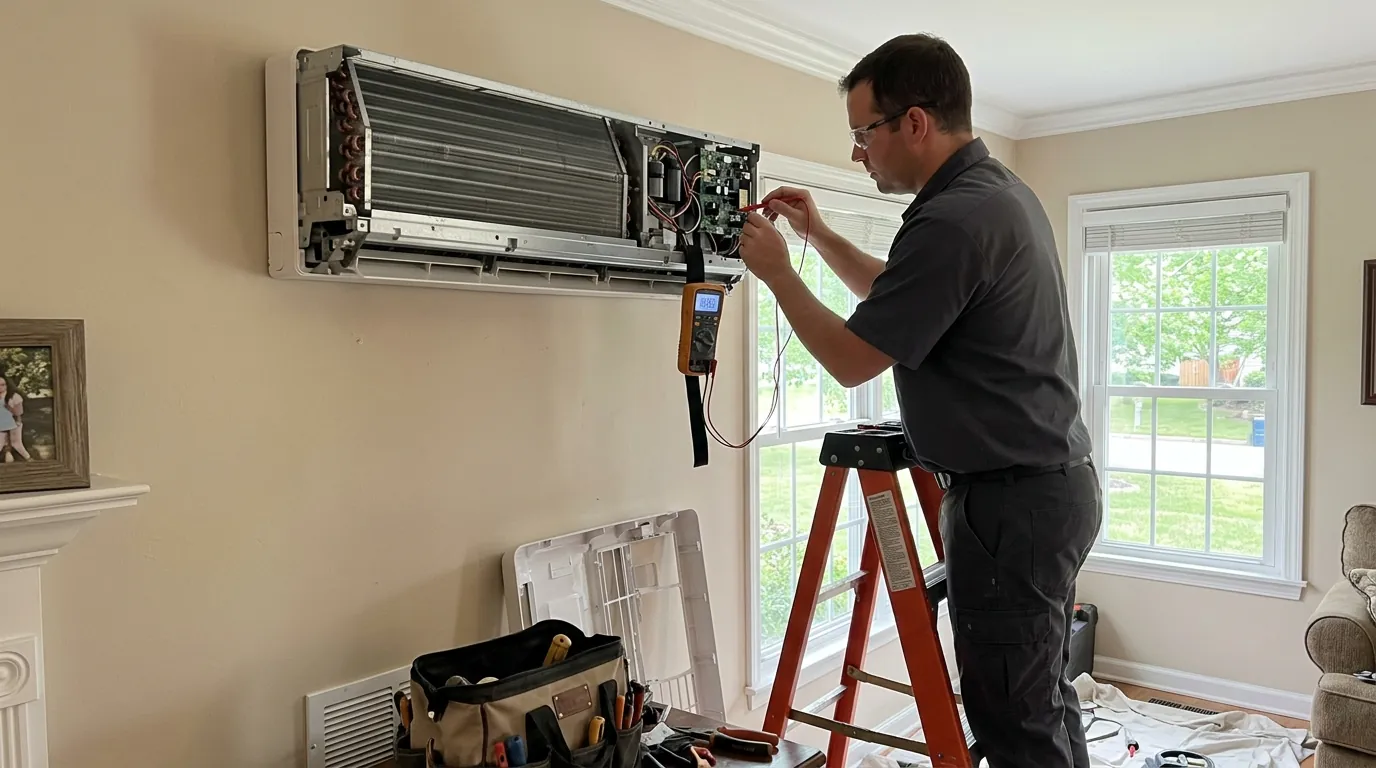
Mini-split repair in Nashville usually starts with the fault code the unit is flashing, since inverter systems log what shut them down. Common causes are a clogged condensate line, a failed sensor or fan motor, a communication fault between head and condenser, or a leak at a flare fitting. We test, price the fix, then repair. Call (615) 412-2815 at any hour.
How we track down a mini-split fault
Ductless systems are inverter driven, so the boards in the indoor head and the outdoor unit talk to each other constantly. When something goes wrong, the system usually shuts down and flashes a code rather than limping along. That code is a starting point, not a diagnosis: a sensor fault can be the sensor, its wiring or the board reading it.
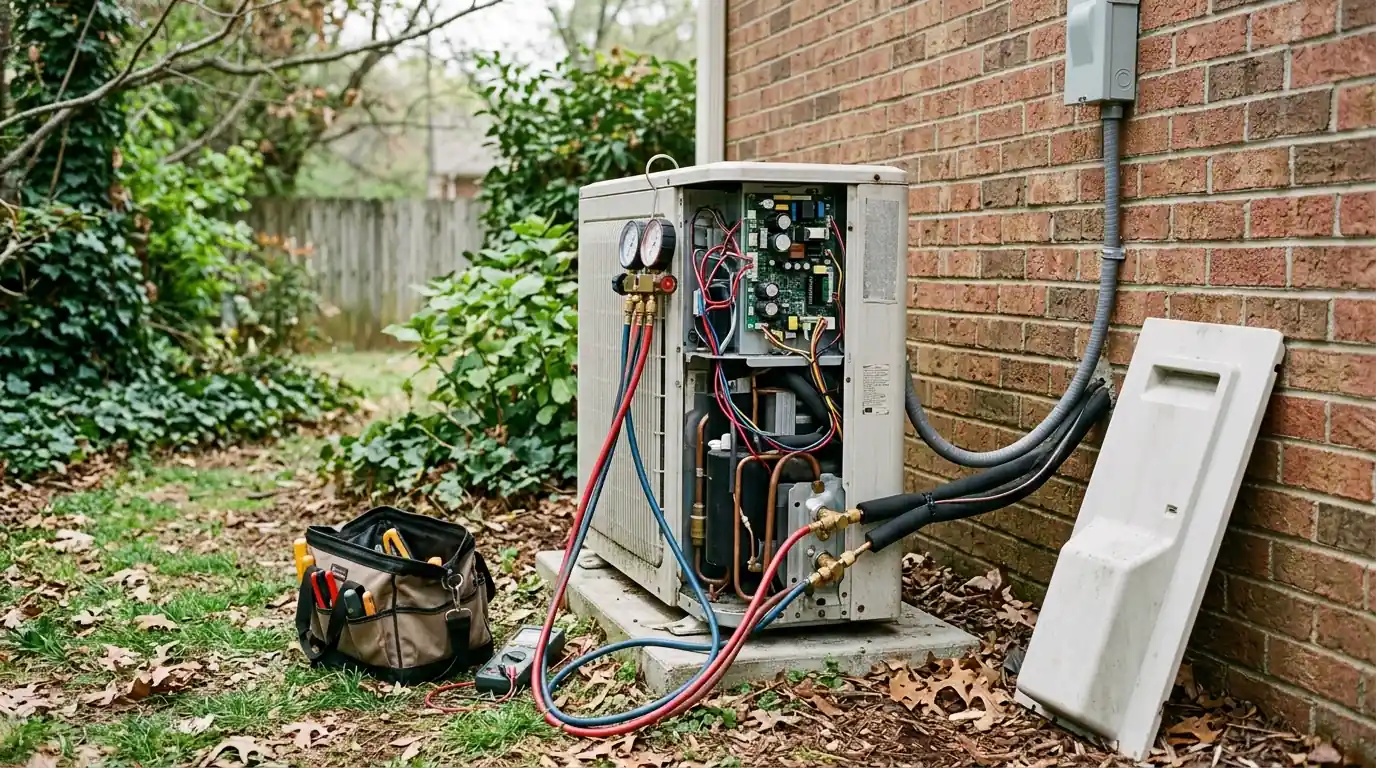
We check the code against the service data for that model, then confirm it with a meter, gauges and temperature readings. You get the failed part and the price before any work starts.
Signs a mini-split needs a repair call
The drain line or pan is blocked, or the head is not level.
The board has logged a fault and stopped the system.
The outdoor unit may not be running, or the charge is low.
Low airflow from dirty filters, or a refrigerant leak.
A failed louver motor or a board fault.
A sensor or receiver fault, once fresh remote batteries are ruled out.
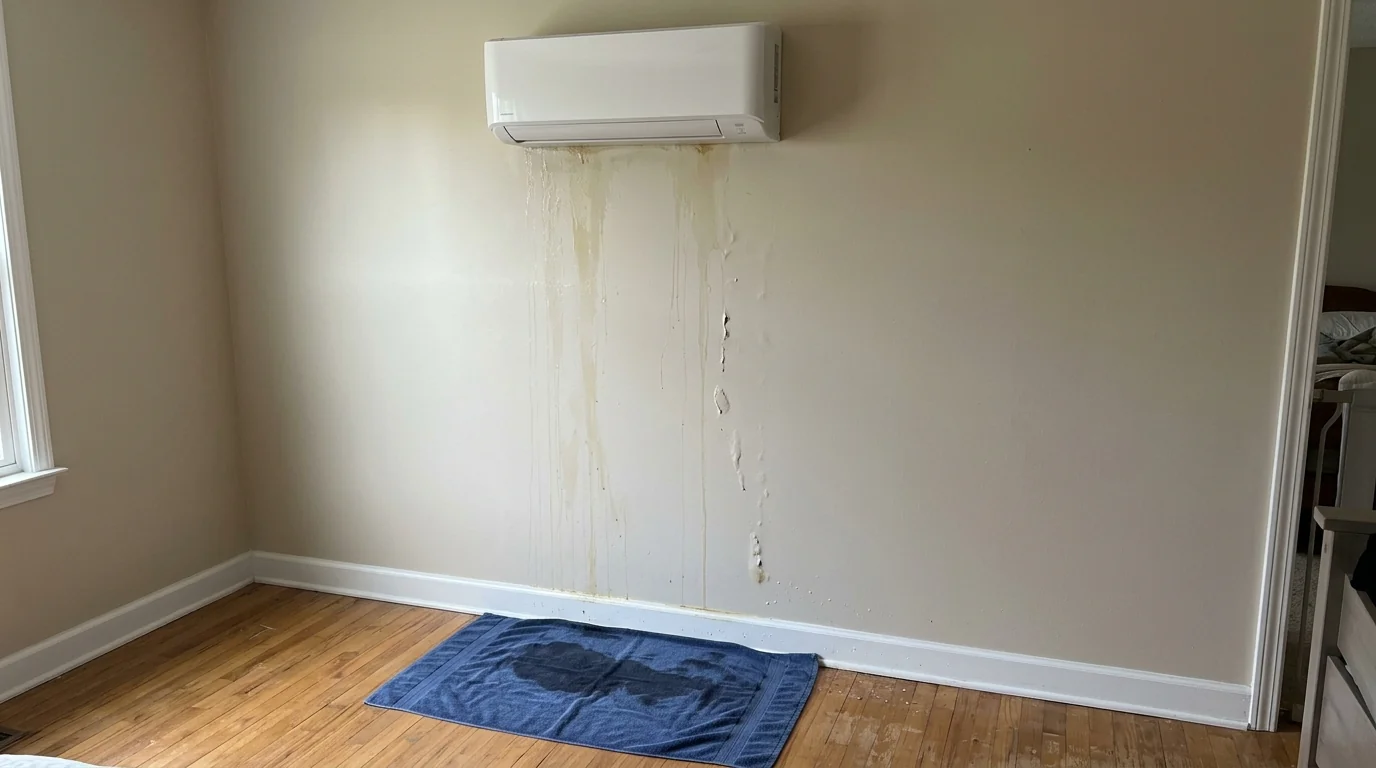
Indoor head leaking water
Water running down the wall below the head, or dripping off the bottom of the cabinet, almost always means condensate is not leaving the drain pan. The drain line may be clogged with slime, kinked behind the head, or sloped wrong after the unit was moved. A head mounted out of level can also spill water off one end of the pan.
We clear and flush the line, check the pan and the slope, and pour water through to confirm it drains. If the head uses a condensate pump, we test its float and outlet. Slime on the blower wheel often travels with a blocked drain, so we look at that too.
Error codes and blinking lights
Every manufacturer uses its own code set, and the same blink pattern can mean different things on different brands. Common faults point at a temperature sensor, the indoor fan motor, high discharge temperature, or a communication error between the indoor and outdoor boards.
Resetting the breaker may clear the code for a while, but it comes back if the cause is still there. We read the code, test sensor resistance and the control cable between units, and check the board outputs before naming a part. Loose or corroded terminals on that cable are a frequent cause of communication faults, and they cost far less than a board.
Line set leaks
Mini-split line sets are joined with flare fittings at the indoor head and the outdoor unit. A flare that was not cut or tightened correctly can seep slowly for a year or two before the room stops cooling. Oily residue at a fitting is a common clue.
We find the leak with an electronic detector or bubble solution, remake or replace the flare, then pressure test with nitrogen and pull a vacuum before recharging by weight. Topping off without fixing the leak only buys a few weeks. If the coil itself is leaking, we price that repair against replacing the head.
How a mini-split repair call runs
- 1
Note the code
Tell us the blink pattern or the code on the display and what the head is doing.
- 2
Confirm with meters
We test sensors, wiring, fan motors and pressures to confirm what the code points at.
- 3
Price before work
You get the failed part and the cost, and on an older system the replacement option.
- 4
Repair and run both modes
After the fix we run cooling and heating and check the temperature split at the head.
What the R-454B change means for mini-split repairs in Nashville
From January 1, 2025, new home AC and heat pump systems generally cannot use refrigerants with a global warming potential of 700 or more, which moved most manufacturers from R-410A to R-454B. Mini-splits installed before that change typically run on R-410A, and they can still be repaired and recharged with it in Nashville. The catch comes when a condenser or indoor head fails on an older system: a new replacement may not match the existing refrigerant, so we check compatibility before recommending a single-part swap.
What you can check on a mini-split before you call
These checks are safe and solve a few calls outright. Anything inside the cabinet waits for a technician.
| Task | Safe to do yourself | Leave to a technician |
|---|---|---|
| Filters | Slide out the mesh filters and rinse them clean. | If the coil behind them is iced or slimy. |
| Remote | Replace the batteries and confirm the mode and set point. | Any head that ignores a working remote. |
| Breaker | Reset a tripped breaker once and note any code. | A code or a trip that comes back. |
| Outdoor unit | Clear leaves and debris from around the condenser. | Oily stains, a fan that will not turn or a burning smell. |
What drives the cost of a mini-split repair
The bill depends mostly on which part failed and whether refrigerant work is involved.
- The failed part. A sensor or a drain clearing costs far less than an inverter board, fan motor or compressor.
- Refrigerant work. Leak search, flare repair, evacuation and recharge add time and refrigerant cost.
- Head location. Ceiling cassettes and heads high on a stairwell wall take longer to open and service.
- Brand parts. Boards and sensors are usually specific to one brand, and some take time to order.
- Time of the call. Night, weekend and holiday visits can carry a higher service rate than a weekday appointment.
Brands we work on
We service and install equipment from the major manufacturers, including Carrier, Trane, Lennox, Rheem, Goodman, American Standard, Daikin, Mitsubishi Electric, Bryant, Ruud, York and Amana.
Mini-split repair questions we hear in Nashville
A blink pattern is a stored fault code. Note how many blinks and which light, and tell us when you call, since the code narrows down what to test.
Usually a clogged or kinked condensate line, a dirty drain pan or a head that isn't level. Switch it off and call before the water damages the wall.
Yes. Systems built for R-410A can still be serviced and recharged with it. The real question is whether a large repair makes sense on an older unit.
Once is fine. If the fault returns, leave it off, because repeated restarts strain the compressor and the board.
Yes. We test each head and the shared condenser to find whether the fault sits in one room or in the outdoor unit.
Yes. The phone is answered 24 hours a day, every day, including weekends and holidays.