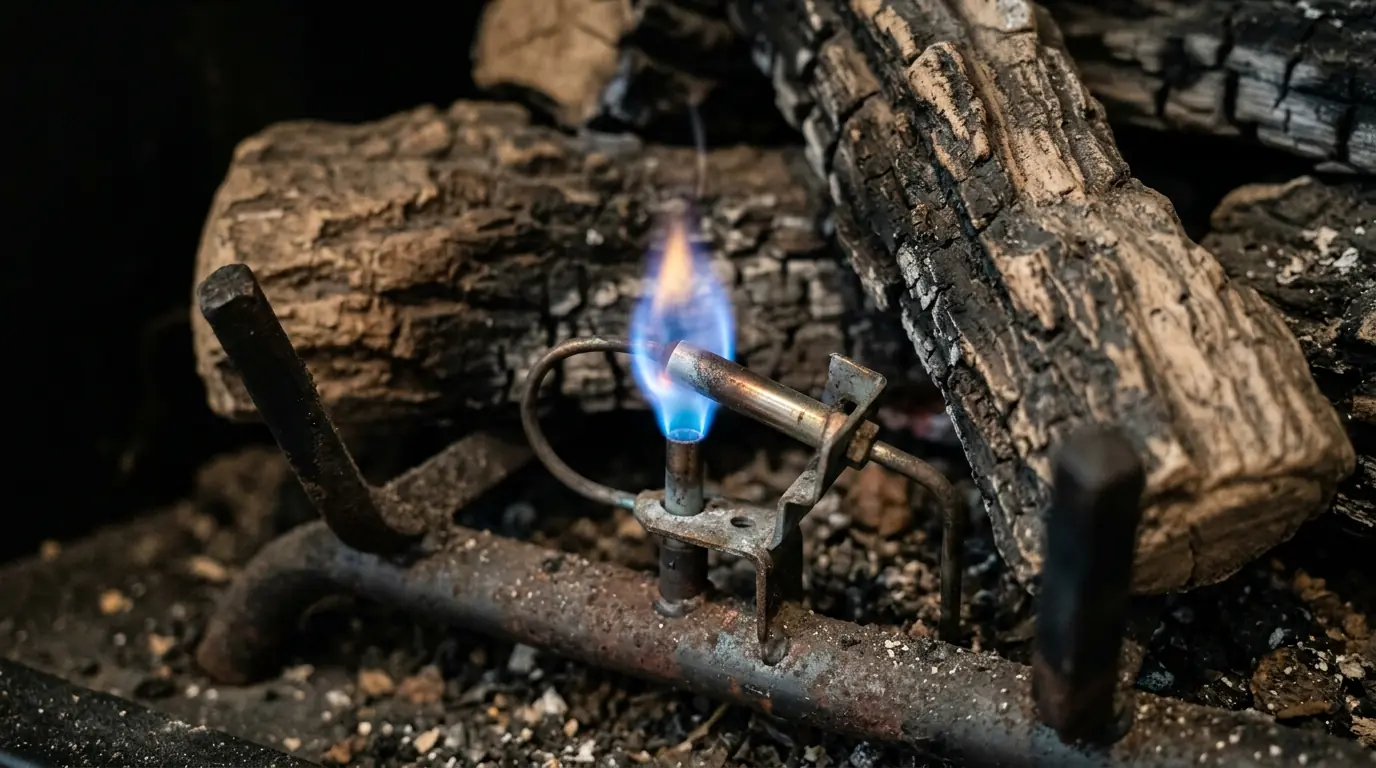
Most gas fireplace repairs in Nashville come down to the pilot assembly: a dirty pilot orifice, a weak thermocouple or thermopile, or a failed gas valve. A technician measures millivolts, cleans the pilot and checks gas pressure before replacing anything. If you smell gas, leave the house and call from outside. Call (615) 412-2815 at any hour.
How a gas fireplace lights and where it fails
A standing-pilot gas fireplace runs on very little electricity, often none. The pilot flame heats a thermocouple, which holds the safety valve open, or a thermopile, which makes enough millivolts to run the main valve and a wall switch. When the pilot flame shrinks from dust or a spider web in the orifice, those parts stop getting enough heat.
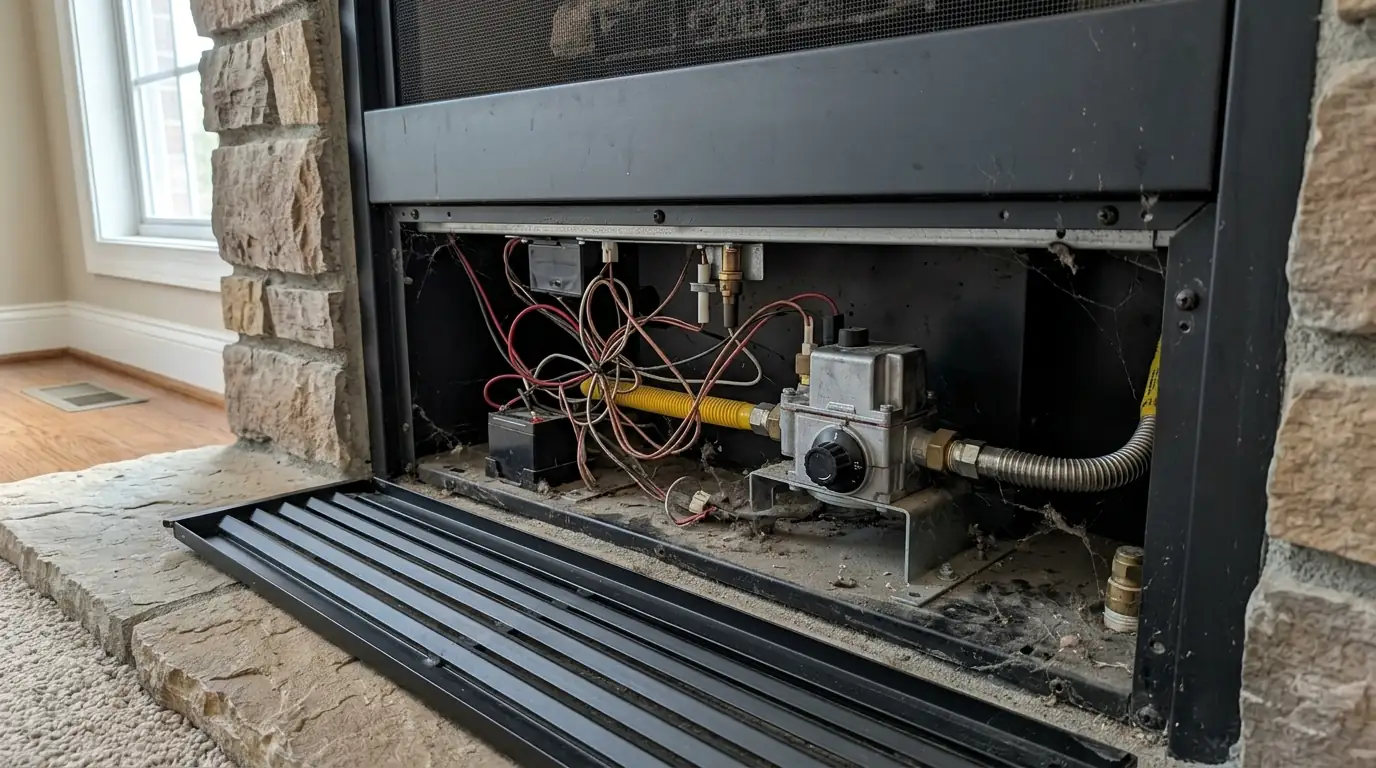
We measure millivolts open and under load, clean the pilot assembly, and check inlet and manifold gas pressure. Units with electronic ignition add a module, batteries and a remote receiver to the list. Then we check the glass seal and venting so exhaust leaves the house.
Signs your gas fireplace needs a technician
The thermocouple or pilot flame is not proving flame to the valve.
The pilot stays on but the thermopile, switch or wiring is weak.
Logs or embers are out of place, or the air mix is off.
Poor combustion that should be corrected before more use.
On electronic ignition, a dead battery or module is likely.
Leave the house and call the gas utility or 911 from outside.
Pilot will not stay lit
You hold the knob, the pilot lights, and it goes out as soon as you release it. The safety valve is not getting proof of flame. Either the pilot flame is too small to heat the thermocouple, which points to a dirty orifice or low gas pressure, or the thermocouple itself is worn out.
A pilot that goes out on its own after hours of burning can also mean a draft across it, or a weak oxygen depletion sensor on vent-free logs. We clean the pilot hood and orifice, measure the thermocouple output, and only then decide whether a part is needed.
Thermocouple and thermopile
A thermocouple makes a small voltage, measured in millivolts, that holds the safety valve open while the pilot burns. A thermopile is a bundle of thermocouple junctions that produces several times that, enough to open the main burner valve when the wall switch or remote closes the circuit.
When the pilot stays lit but the burner won't come on from the switch, a weak thermopile, a dirty switch contact or a long, thin wire run is the usual cause. We read millivolts at the valve with the switch open and closed, which separates a bad thermopile from bad wiring.
Gas log service
Logs that are placed wrong, or that have crumbled and settled over the burner ports, push flame into the logs and coat the glass and logs with soot. Lava rock and embers piled over the ports do the same. Tall, smoky yellow flame is the sign.
We pull the logs, vacuum the burner and ports, clean the glass, and reset the logs to the manufacturer layout. We also check the air shutter and look at the vent cap outside for nests or debris. Vent-free logs get a check of the oxygen depletion sensor as well.
How a gas fireplace repair visit runs
- 1
Describe the symptom
Tell us whether the pilot lights, how long it stays on and what the switch does.
- 2
Measure and clean
The technician measures millivolts and gas pressure, then cleans the pilot assembly.
- 3
Price the part
If cleaning does not fix it, you get the failed part and its cost before work starts.
- 4
Test the whole unit
We run the fireplace from the switch or remote and check flame, glass seal and venting.
Who to call about gas in Nashville, and when to call us
Spire completed its purchase of Piedmont Natural Gas's Tennessee business on March 31, 2026, and now serves more than 200,000 Nashville-area gas customers as Spire Tennessee. That is the number to call from outside the house if you ever smell gas near a fireplace. A pilot that won't stay lit with no gas odor is a different problem, almost always in the pilot assembly, and that one is ours. Fireplaces across Middle Tennessee sit unused from spring to fall, so dust and spider webs in the pilot are common.
Fireplace checks that are safe to make yourself
A few causes are quick to rule out. Anything inside the valve compartment waits for a technician, and a gas smell means leaving the house first.
| Task | Safe to do yourself | Leave to a technician |
|---|---|---|
| Gas supply | Confirm the shutoff to the fireplace is open and other gas appliances work. | Low pressure or a valve that will not open. |
| Batteries and remote | Replace receiver and remote batteries on electronic ignition units. | A receiver or module that stays dead with fresh batteries. |
| Lighting steps | Follow the lighting label inside the access panel exactly. | A pilot that keeps going out after following it. |
| Glass and logs | Leave the logs where they sit while the unit is cool. | Repositioning logs or cleaning soot from the burner. |
What a gas fireplace repair costs and why it varies
Most bills are set by which small part failed and how easy the valve compartment is to reach.
- The failed part. A cleaned pilot costs far less than a new thermopile, valve or ignition module.
- Ignition type. Electronic ignition units add modules, receivers and batteries to diagnose.
- Unit style. Some inserts and built-ins need the logs and burner out to reach the valve.
- Part availability. Pilot assemblies and valves are often model specific and can take time to source.
- Time of the call. Evening, weekend and holiday visits can carry a higher rate than weekday service.
Brands we work on
We service and install equipment from the major manufacturers, including Carrier, Trane, Lennox, Rheem, Goodman, American Standard, Daikin, Mitsubishi Electric, Bryant, Ruud, York and Amana.
Gas fireplace questions we hear in Nashville
Usually a dirty pilot orifice making a small flame, or a worn thermocouple that no longer holds the valve open. Drafts and low gas pressure are less common causes.
Soot means incomplete combustion, so stop using it until the logs, burner and venting are checked.
Many owners do to save gas. If it won't stay lit when you relight it in the fall, the pilot assembly likely needs cleaning.
Leave the house without touching switches, then call the gas utility or 911 from outside. Call us for the repair once the leak has been made safe.
Yes. Vent-free logs have an oxygen depletion sensor in the pilot, and we check and clean it along with the burner and log layout.
Standing-pilot millivolt units usually can, since the thermopile powers the valve. Electronic ignition models may need battery backup to light.