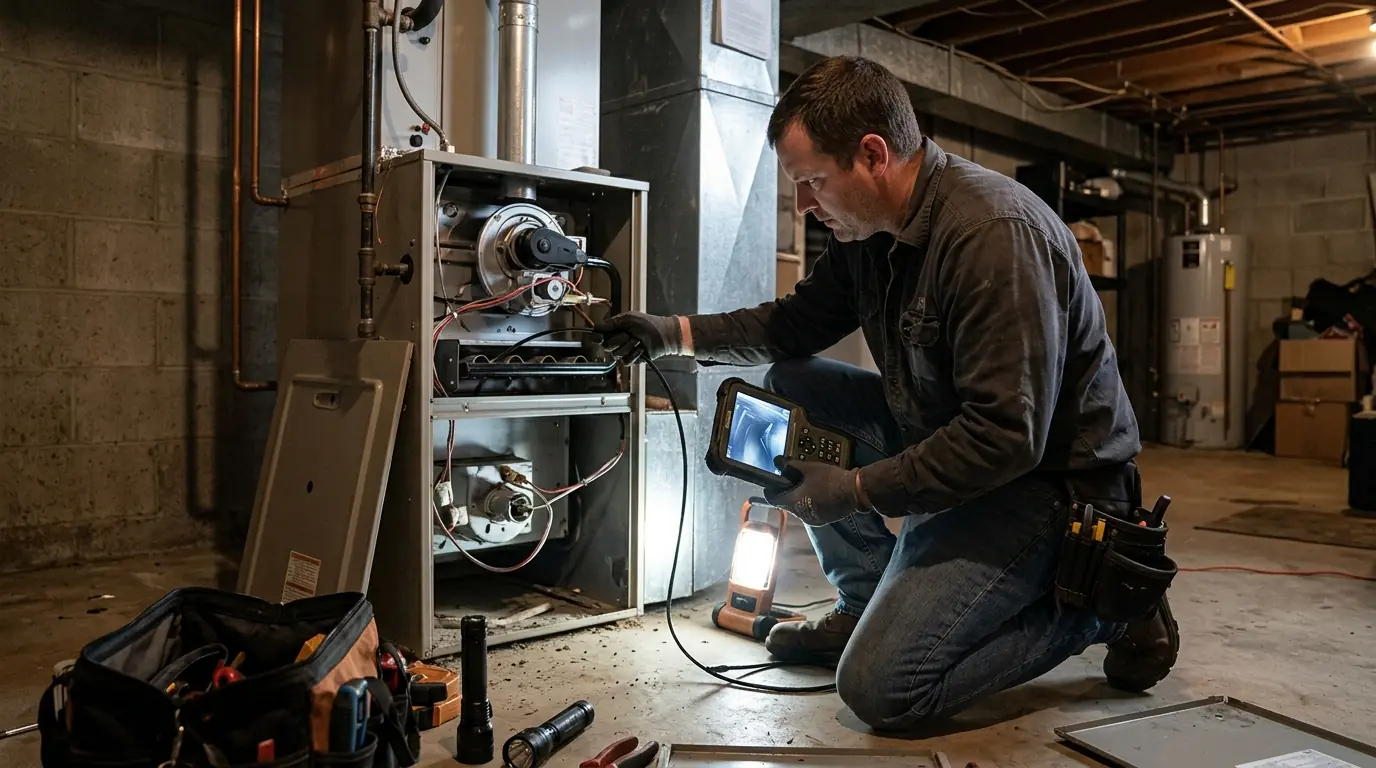
A furnace safety inspection in Nashville checks that combustion gases stay inside the heat exchanger and leave through the vent. The technician inspects the heat exchanger for cracks, measures carbon monoxide in the flue and living space, tests draft and safety switches, and checks gas connections for leaks. If a CO alarm sounds, leave and call 911 first.
What a furnace safety inspection looks for
A tune-up keeps a furnace running well. A safety inspection asks a narrower question: is anything from the fire getting into the air you breathe? The heat exchanger is the metal wall between the burner flame and your house air, and the vent is the only path the exhaust should take.
We look at both closely, measure carbon monoxide at several points, and test the switches that shut the gas off when something goes wrong. If we find a hazard, we explain it plainly, and if it can put CO into the house we won't leave the furnace running.
What the safety inspection covers
- Heat exchanger light and camera check
- CO readings in the flue, supply air and rooms
- Vent and flue draft test
- Gas connections checked for leaks
- Limit, rollout and pressure switch tests
- Findings and any hazard explained on site
Heat exchanger crack check
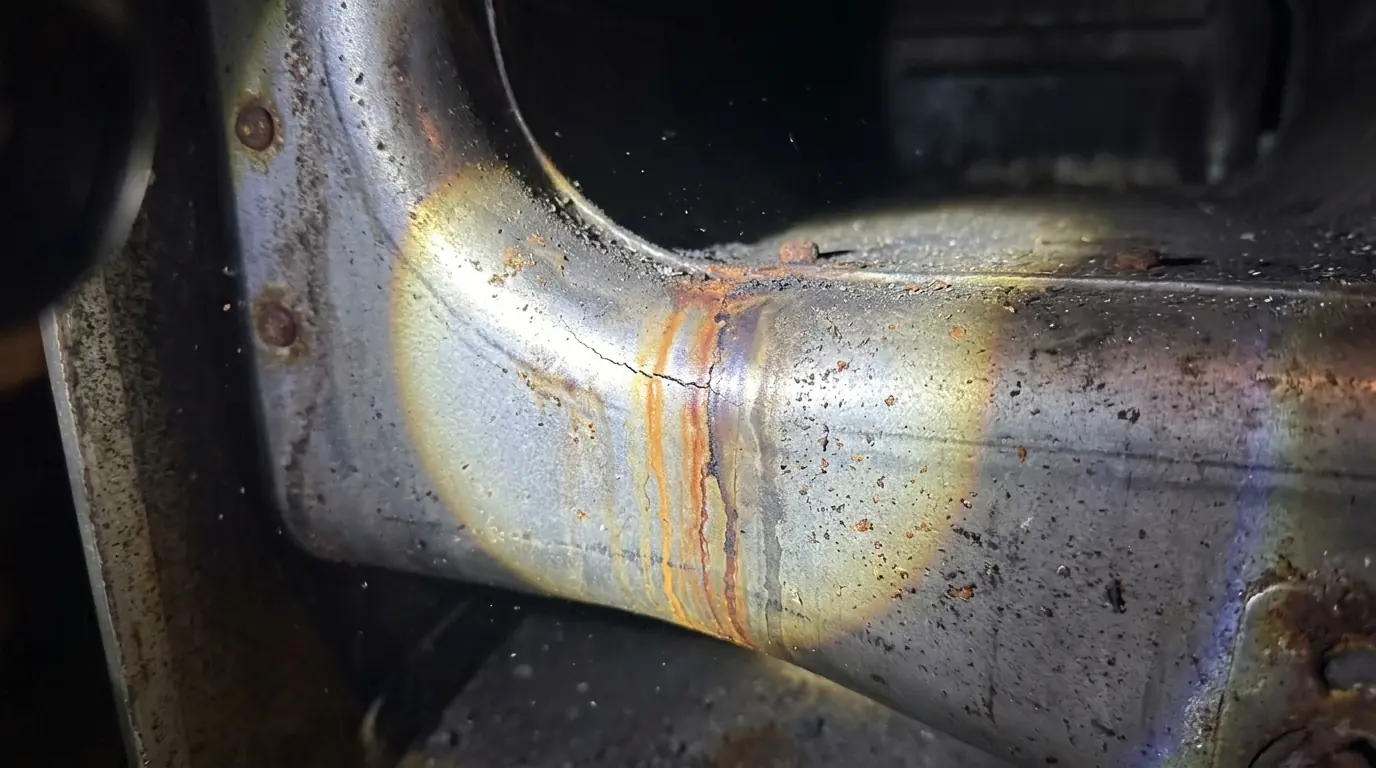
Heat exchangers expand and contract with every cycle. After many winters, especially on a furnace that has run hot from poor airflow, the metal can crack at bends and seams. A crack can let combustion gases into the airstream, and it can also disturb the burner flame.
We remove the burners where the design allows and inspect with a light and a camera. We also watch the flame as the blower starts; a flame that lifts or wavers when the fan kicks on points to a breach. A cracked heat exchanger is a replace-or-repair decision we price for you, never something to patch.
Carbon monoxide testing
Carbon monoxide has no smell or color, so it is measured with an analyzer. We sample the flue gas to see how cleanly the burners fire, then check the air near the furnace, at supply registers and in the living space. High CO in the flue usually means a burner, gas pressure or combustion air problem.
We also check that CO alarms are installed near sleeping areas and working. If an alarm ever sounds, don't wait for a visit: get everyone out and call 911 from outside.
Older Nashville houses and the furnaces inside them
Davidson County's median home was built in 1986, and about 18 percent of its housing predates 1960. Neighborhoods like Crieve Hall are mostly 1950s and 1960s brick ranch houses, many on their third or fourth furnace, often still venting through an original metal flue. Those flues and connectors deserve a close look. On condensing furnaces, Metro Codes now requires plastic vent pipe listed to UL 1738 with contrasting primer on projects started after January 1, 2026, and we note whether a vent run is listed for its use.
Signs a furnace safety check should not wait
A sounding alarm means leave and call 911; a chirp may be a low battery or end-of-life alert.
Black streaks near the burners or the vent hood point to poor combustion.
Burner flames should be crisp and mostly blue.
A flame that shifts as the fan kicks on can signal a heat exchanger breach.
Corroded or loose flue pipe can leak exhaust before it reaches outside.
If several people feel unwell at home, get everyone outside and call 911.
How a furnace safety inspection runs
- 1
Safety first
If a CO alarm is sounding, leave, call 911, and call us once responders clear the home.
- 2
Test before opening
We measure CO in the living space and at the registers with the furnace running.
- 3
Open and inspect
Burners and panels come off where needed for the heat exchanger and switch checks.
- 4
Explain the findings
You hear what we found, how serious it is and what a fix costs before anything is done.
What affects the cost of a furnace safety inspection
The inspection follows a fixed checklist, so the price moves mainly with the furnace and how hard it is to examine.
- Furnace design. Some heat exchangers can be seen only after the burners or blower come out.
- Access. Attic and crawl space furnaces take longer to open up and inspect safely.
- Shared venting. A flue shared with a water heater adds a second appliance to the draft and CO checks.
- Findings. Repairs found during the visit are priced separately before any work starts.
- Timing. A night or holiday call can carry a higher rate than a weekday visit.
Furnace safety questions from Nashville homeowners
Yearly is a sensible rhythm for a gas furnace, and right away for one in a home you just bought or one that has sat unused.
Not safely by welding or patching. The fix is a replacement heat exchanger where one is available, or a new furnace.
If we find a condition that can put carbon monoxide into the home, we turn the furnace off and explain why. Leaving it running would not be safe.
Alarms are essential, but they react to CO already in the room. An inspection looks for the cause before it gets that far.
Yes. Our home buyer HVAC inspection covers the furnace, the cooling equipment and the ducts.