Ductwork replacement in Nashville makes sense when ducts are crushed, disconnected, poorly insulated or sat in floodwater. HomeGuide lists $1,400 to $5,600 nationally, set by how many runs change and how hard the attic or crawl space is to work in. We measure static pressure and airflow first, then size new runs to the equipment. Call (615) 412-2815 at any hour.
What tells us ductwork needs replacing
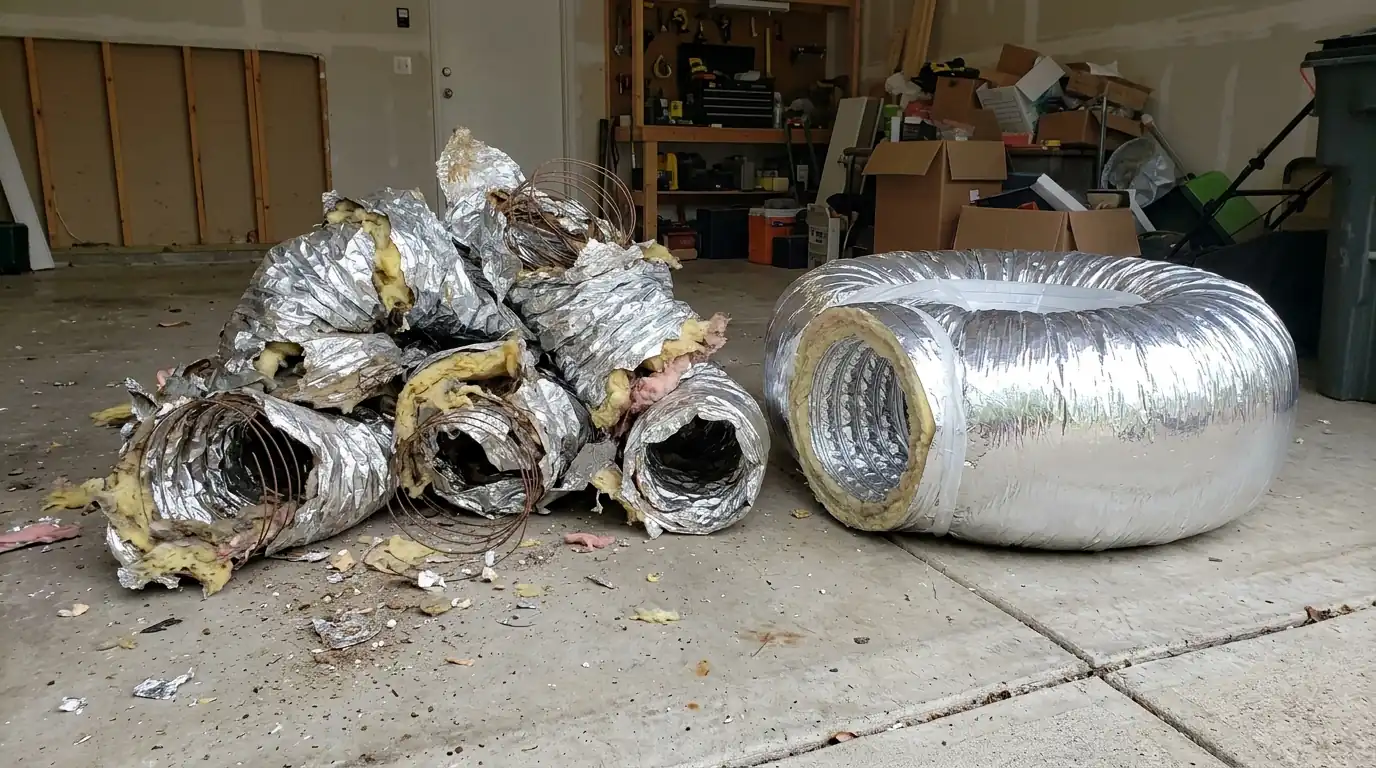
Ductwork rarely fails all at once. Flex duct sags between straps, tape lets go, a run gets stepped on in the attic or pulled loose in the crawl space, and the rooms at the far end slowly lose airflow. Older metal ducts may rust at the seams or carry insulation that has fallen away.
We start by measuring total static pressure and the airflow at the registers, then inspect every run we can reach. That tells us whether a few sections need replacing or the whole layout needs redesigning to fit the equipment you have now.
Crawl space duct replacement
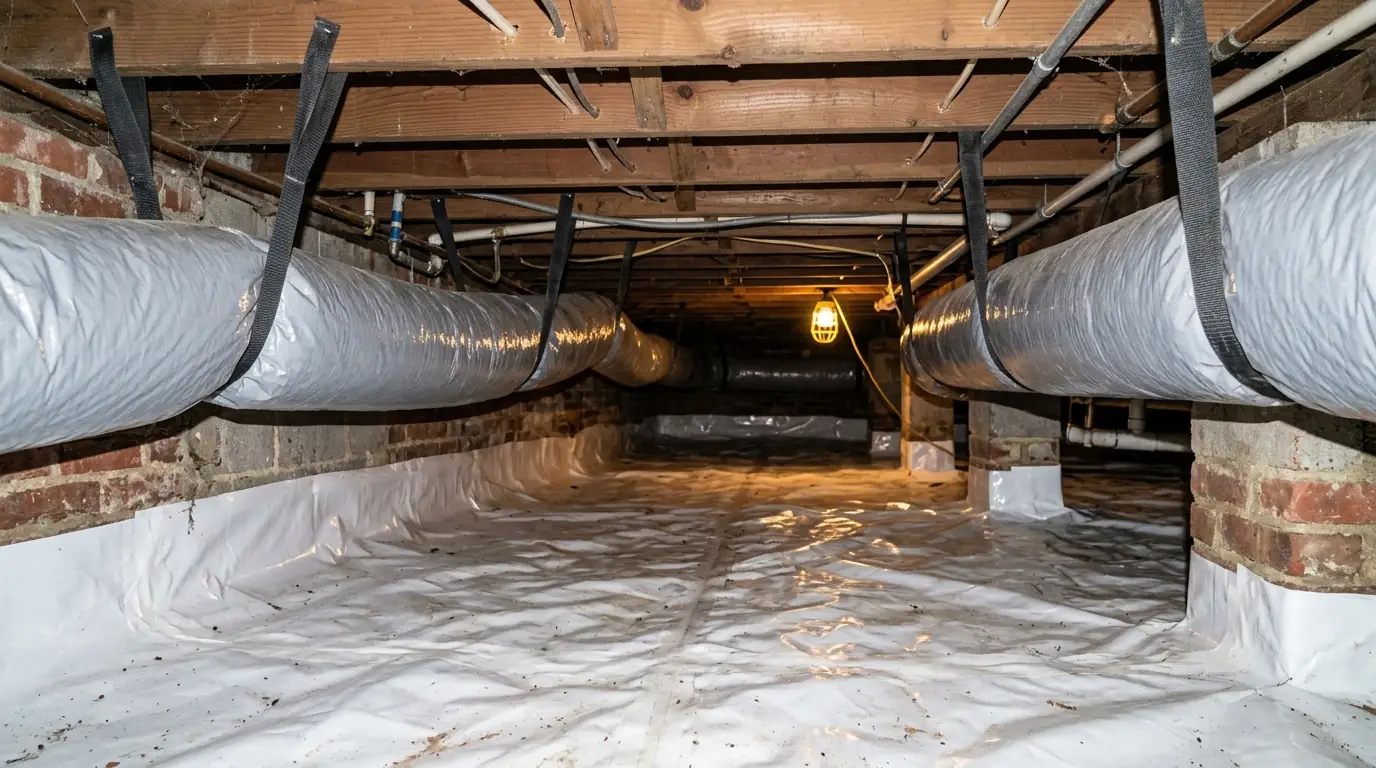
Crawl space ducts live in damp air, so their weak points are torn vapor jackets, wet insulation and runs that have dropped onto the dirt. A duct lying on the ground draws in moisture, rusts metal fittings and can become a home for pests. In summer the cold duct sweats, and that water soaks the insulation further.
We remove the failed runs, hang new insulated duct on wide straps clear of the ground, and seal every joint with mastic. Where the vapor barrier is torn or missing, we'll tell you, because new ducts in a wet crawl space will not last as long as they should.
Attic duct replacement
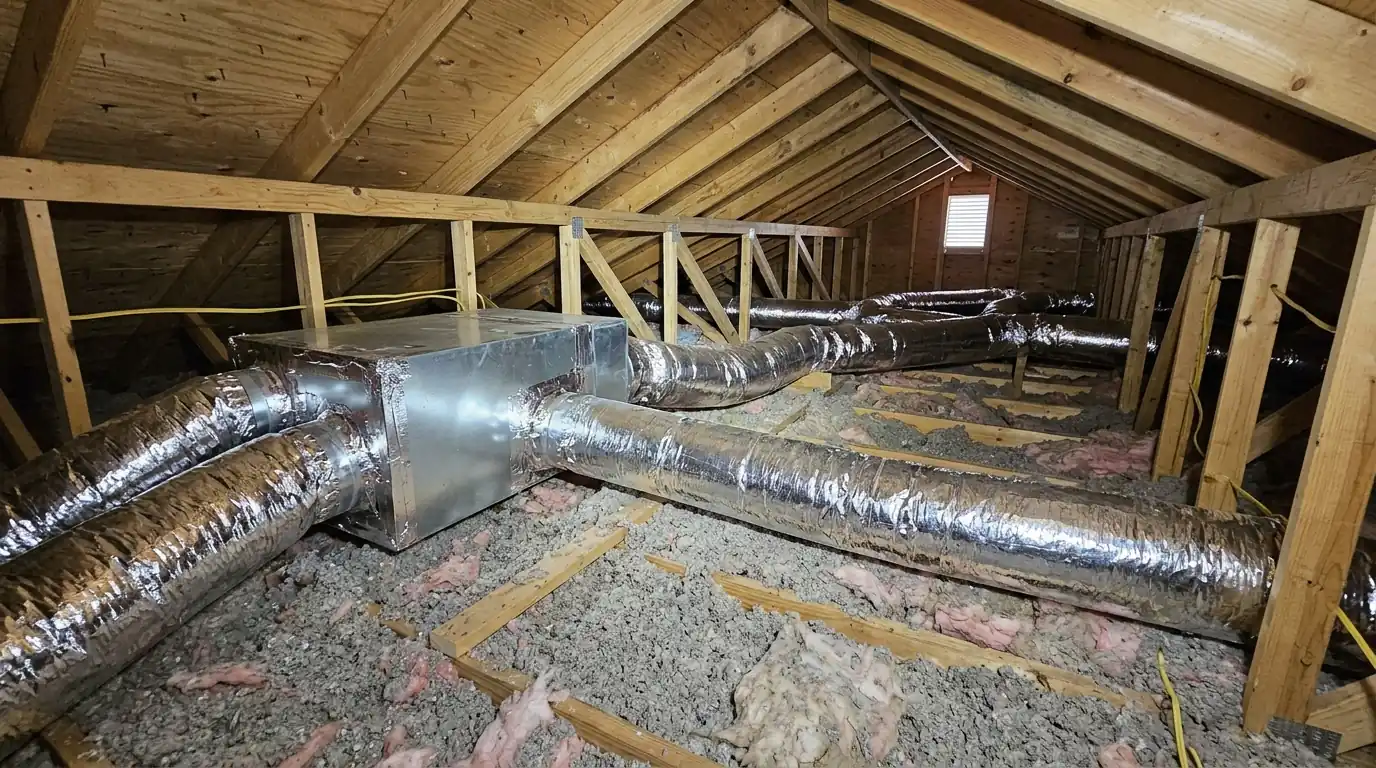
Attic ducts face the opposite problem. A summer attic runs far hotter than the outdoors, so any leak or thin insulation dumps cooling into the hottest space in the house. Flex duct that was stretched too far, or crushed under storage boxes, chokes airflow to the rooms below.
We pull the old runs, set new insulated duct with gentle bends and proper support, and seal the boots where they meet the ceiling. Short, straight runs with fewer turns move more air, so we often reroute rather than copy the old layout. Every run gets insulation suited to the attic, not just a fresh jacket.
Duct sizing for new equipment
A new heat pump or furnace is designed to move a set amount of air through its coil. Ducts that are too small or too restrictive force the blower to work against high static pressure, which makes it noisy, cuts capacity and can shorten the life of the motor and compressor.
When we replace equipment on old ductwork, we measure static pressure before deciding whether the ducts can stay. If they cannot, we size the trunk and branch runs from a room-by-room load calculation, so each room gets the air it needs. New equipment on undersized ducts is a frequent reason a new system never performs as promised.
Repair a few sections or replace the ductwork?
Not every duct problem calls for new ductwork. Often duct repair and sealing is enough. Here is how we decide.
| What we find | Repair and seal | Partial replacement | Full replacement |
|---|---|---|---|
| Condition of the ducts | Mostly sound, leaking at joints | A few runs crushed, wet or torn | Widespread damage or wrong sizing |
| Static pressure | Normal once leaks are sealed | High only on the damaged runs | High across the system |
| Usual trigger | Comfort or power bill complaints | Pest, water or storage damage | New equipment, flood or a remodel |
What ductwork replacement costs and why it varies
Footage and access set most of the price.
For planning, HomeGuide puts typical national pricing for this kind of job at $1,400 to $5,600 (HomeGuide, August 2025). That is a market range, not our quote; the figure for your home comes after we see the equipment.
- How many runs. Replacing a few branch runs costs far less than a full trunk-and-branch system.
- Access. Low crawl spaces and tight attics slow the work and add labor.
- Material. Rigid sheet metal costs more to fabricate than flex duct but holds its shape better over time.
- Redesign. Resizing trunks and branches for new equipment adds design and fitting work.
- Old duct removal. Hauling out wet, moldy or crushed duct and insulation adds time.
Flood-soaked crawl spaces and older ducts around Nashville
In the May 2010 flood the Harpeth River at Bellevue rose about nine feet over its old record, Mill Creek at Antioch set a record crest, and Whites Creek at Bordeaux ran far out of its banks. Crawl space ducts that took on water then were sometimes dried out rather than replaced, and insulated duct that sat in floodwater does not recover. In Donelson, building peaked in the 1950s and again in the 1980s, so original ducts there can be decades old and sized for equipment long since replaced.
How a ductwork replacement job runs
- 1
Measure the system
We read static pressure and register airflow and inspect every run we can reach.
- 2
Design and price
You get the runs to replace, the sizing and the cost before work begins.
- 3
Remove and install
Old duct comes out, and new runs are hung, connected and sealed with mastic.
- 4
Test the result
We measure static pressure and airflow again and compare them with the starting numbers.
Signs your ductwork is due for replacement
Far rooms get weak airflow while others overcool.
Leaky return ducts pull in dirt from the attic or crawl space.
Kinks choke airflow and tears dump air outside the living space.
Missing insulation lets humid crawl space air condense on cold ducts.
Damp or moldy ducts under the house push that smell into the rooms.
Insulated duct that sat in floodwater cannot be cleaned and should be replaced.
Ductwork replacement questions from Nashville homeowners
Flex duct usually wears out sooner than sheet metal, especially in hot attics and damp crawl spaces. Condition matters more than age, so we inspect rather than replace on age alone.
Only if they are damaged, leaking beyond what sealing can fix, or wrongly sized. Static pressure readings decide it.
Insulated flex duct and lined duct that sat in floodwater should be replaced. Bare sheet metal can sometimes be cleaned and sanitized if it is otherwise sound.
Metal holds its shape and resists crushing and pests; flex is quicker to route around obstacles. Many systems use metal trunks with flex branches.
If the old ducts leaked into the attic or crawl space, it should. The saving depends on how much air was being lost.
Yes. Tell us the access height when you call so we can plan the job.