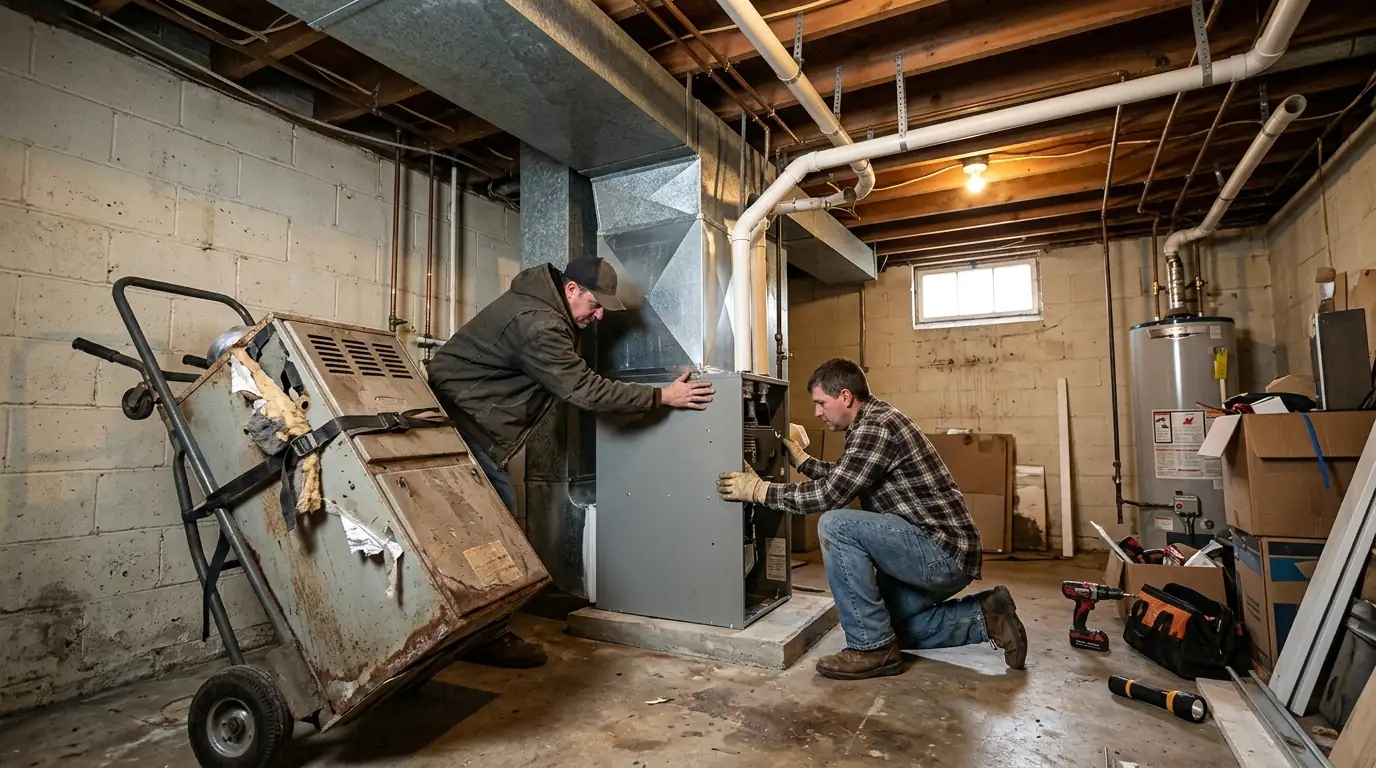
Furnace installation in Nashville should start with a load calculation, because many older furnaces were oversized for the house. The technician then picks an 80 percent or a 90-plus percent model, matches the venting and gas piping to it, and sets gas pressure and temperature rise before leaving. Call (615) 412-2815 at any hour.
How we size and plan a furnace replacement
Replacing a furnace is more than swapping a box. We run a room-by-room load calculation, check the duct sizes the blower will push air through, and confirm the gas line can carry the new burner input. A furnace that is too large heats in short bursts, wears its parts faster and leaves rooms uneven.
Then we pick the efficiency and the vent path together, because each decides the other. An 80 percent furnace vents up a metal flue; a 90-plus percent condensing furnace vents through plastic pipe and needs a condensate drain. You see the options and their prices before choosing.
High-efficiency furnace venting
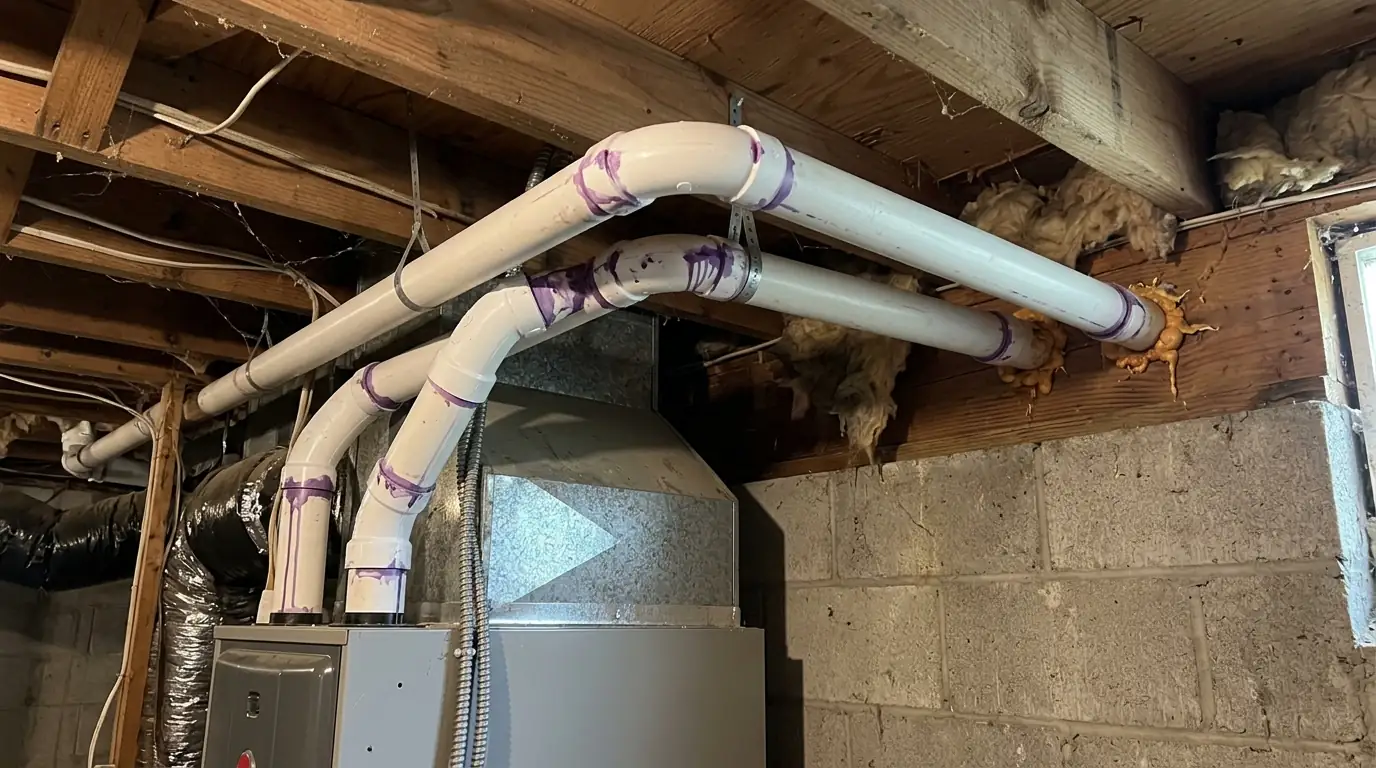
A 90-plus percent furnace pulls so much heat from its exhaust that the flue gas leaves cool and wet. It cannot share a masonry chimney or a metal vent with a water heater. It vents through plastic pipe out a sidewall or the roof, usually with a second pipe bringing in outdoor combustion air.
Pipe slope, clearances from windows and the condensate trap all matter. In Davidson County, Metro Codes now requires plastic vent pipe on these appliances to be listed to UL 1738 and joined with contrasting primer on projects starting after January 1, 2026. We plan the route around that rule from the first visit.
Replacing an 80 percent furnace
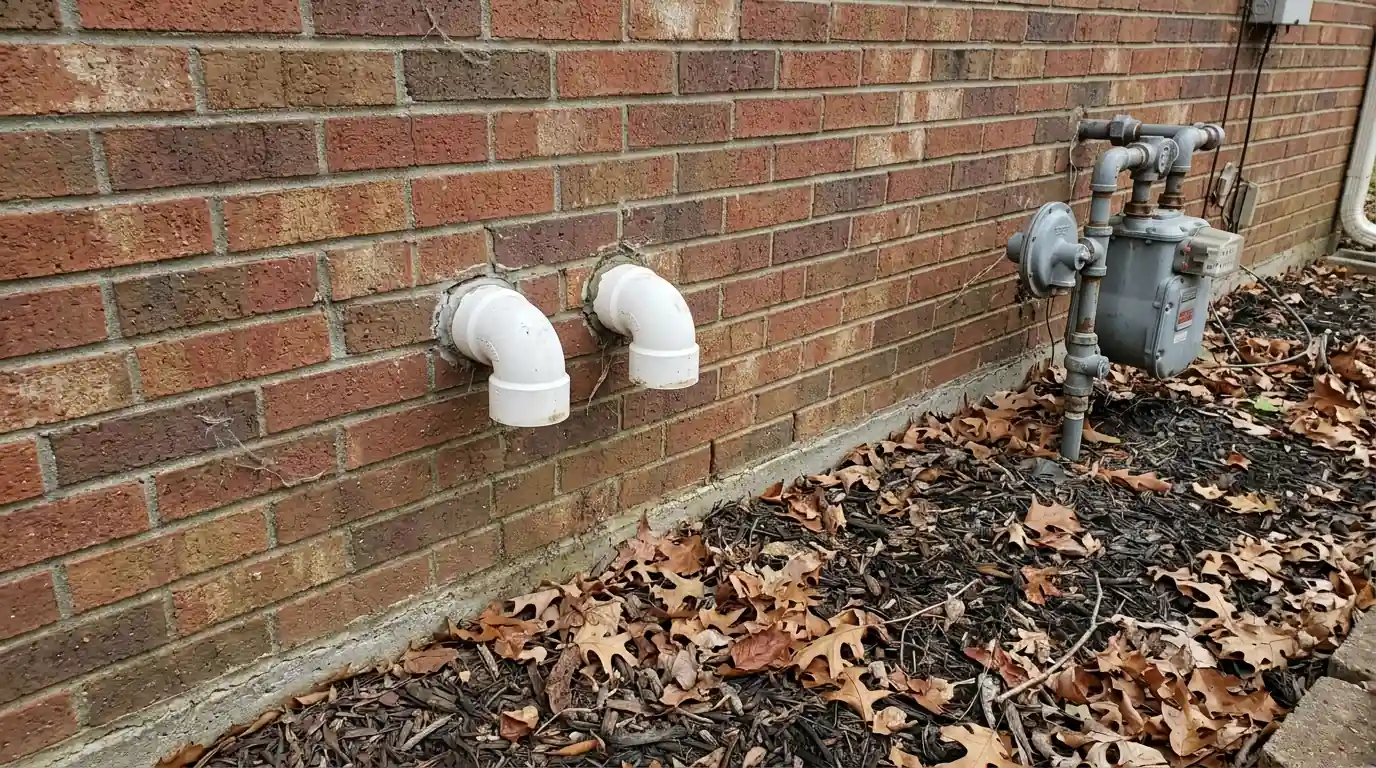
Many homes have an 80 percent furnace venting through a metal flue, often shared with a gas water heater. Replacing it with another 80 percent unit keeps that vent and is the simpler, lower-cost job, as long as the flue is the right size and in sound shape.
Moving to a condensing furnace changes more. With the furnace gone, the old flue can be oversized for the water heater left on it, so it may need a liner or resizing. HomeGuide lists furnace installation at $2,000 to $5,400, and the efficiency and vent work decide much of where a job lands in that range.
Choosing between an 80 percent and a 90-plus percent furnace
Both burn natural gas the same way. The difference is how much of the heat stays in the house and how the exhaust leaves.
| Feature | 80% AFUE furnace | 90%+ AFUE condensing furnace |
|---|---|---|
| Venting | Metal flue, often shared with a water heater | Plastic pipe out a wall or roof, no shared flue |
| Condensate drain | None | Yes, with a trap and a drain or pump |
| Heat lost up the vent | About 20 percent of the fuel | 10 percent or less of the fuel |
| Install work | Usually a like-for-like swap | New vent route and drain, more labor |
| Good fit | Light use and a sound existing flue | Long heating seasons or high gas bills |
What a new furnace costs and what drives it
Efficiency, size and the work around the furnace set the price more than the cabinet itself.
For planning, HomeGuide puts typical national pricing for this kind of job at $2,000 to $5,400 (HomeGuide, August 2025). That is a market range, not our quote; the figure for your home comes after we see the equipment.
- Efficiency rating. A 90-plus percent condensing furnace costs more than an 80 percent model and needs new venting.
- Staging and blower. Two-stage burners and variable-speed blowers run quieter and steadier but raise the equipment price.
- Venting and drain work. New plastic vent runs, a condensate pump or a liner for the water heater flue add parts and labor.
- Gas piping. A larger burner input or a relocated furnace may need a longer or larger gas line.
- Location. Attic and crawl space installs take more time than a basement or closet swap.
Floods, gas service and vent rules behind Nashville installs
In the May 2010 flood, 13.57 inches of rain fell at the Nashville airport, and furnaces in basements and crawl spaces across the area sat under water. A gas furnace that has been submerged should be replaced, not dried out, because its gas valve and controls are not safe to reuse. Natural gas here now comes from Spire Tennessee, which serves more than 200,000 Nashville-area customers. And in Davidson County, the UL 1738 venting rule above applies to every condensing furnace we put in.
What a furnace installation includes
- Load calculation for the house
- Gas piping and shutoff connection
- Vent and combustion air piping
- Condensate trap and drain on condensing models
- Gas pressure and temperature rise setup
- Thermostat hookup and a full heating test
How a furnace replacement runs from first visit to first heat
- 1
Measure the house
We run the load calculation and look at the ducts, flue, gas line and drain options.
- 2
Choose and price
You get the efficiency, size and vent options side by side with their prices.
- 3
Install and connect
The old furnace comes out, the new one goes in, and gas, vent, drain and wiring are connected.
- 4
Set up and test
We leak check the gas, set manifold pressure, measure temperature rise and run several heat cycles.
Brands we work on
We service and install equipment from the major manufacturers, including Carrier, Trane, Lennox, Rheem, Goodman, American Standard, Daikin, Mitsubishi Electric, Bryant, Ruud, York and Amana.
Furnace installation questions from Nashville homeowners
A load calculation based on the house, its insulation, windows and ducts tells you. Copying the old furnace size repeats any mistake made when it went in.
It depends on how much gas you burn and how hard the vent route is. Middle Tennessee winters are milder than the North's, so the payback is slower, and we price both so you can compare.
An 80 percent furnace often can, if the flue is sized and lined properly. A condensing furnace cannot and must vent through its own plastic pipe.
A like-for-like swap in a basement or closet usually takes most of a day. A change to a condensing furnace with new venting and a drain can take longer.
If the AC is near the end of its life, replacing both lets the furnace blower and cooling coil be matched. See full system replacement.
Yes, as long as there's safe access, room to service it, and a proper vent and drain route. These installs take more labor than a closet swap.