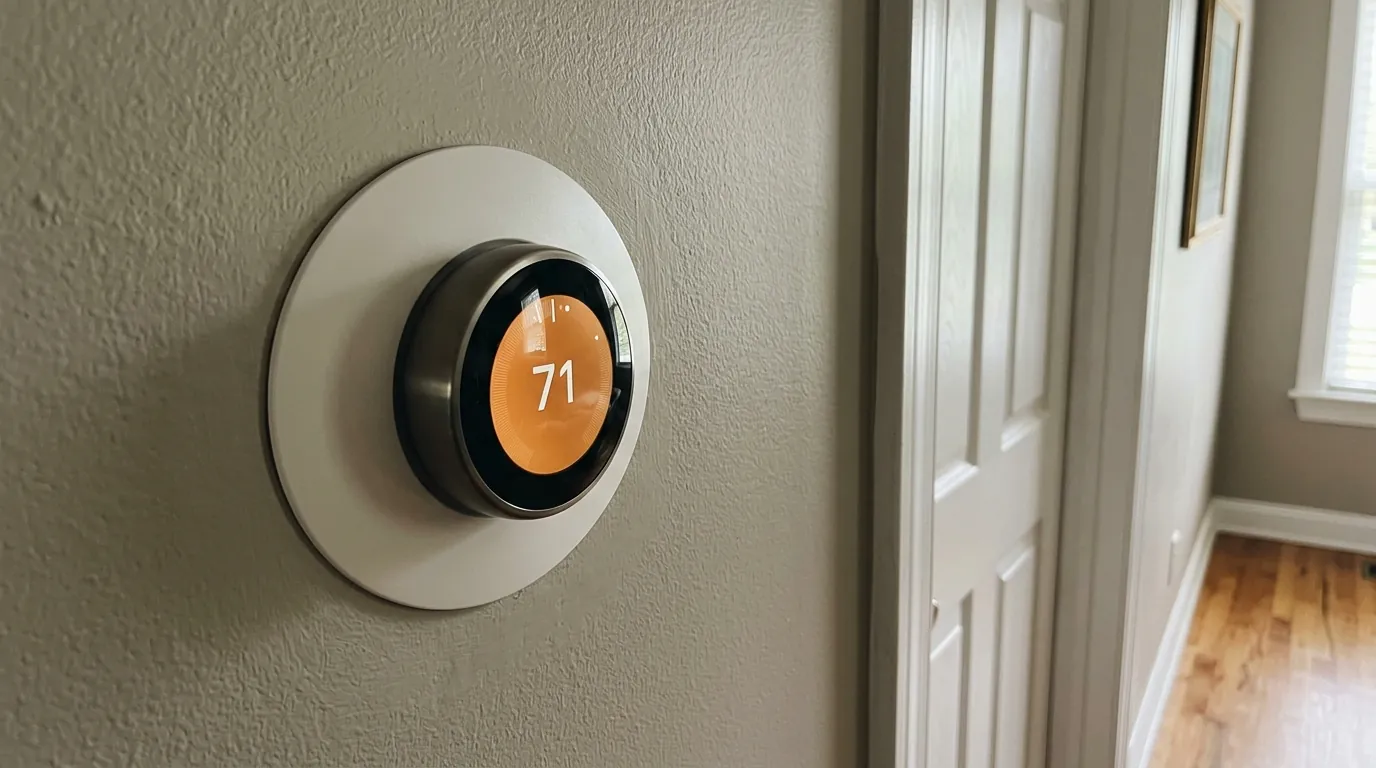
Smart thermostat installation in Nashville is mostly a wiring job: most smart models need a common wire for steady power, and heat pumps need the reversing valve, aux heat and emergency heat terminals set up correctly. A technician confirms the system type, adds a C-wire if needed, and tests every mode. Call (615) 412-2815 at any hour.
Getting the wiring and settings right
A thermostat swap looks simple until the old one comes off the wall. We identify the equipment, label each wire at both ends, and check for a common wire at the air handler or furnace.
Then we set the thermostat for the system it actually controls and run every mode before we leave. We'll set up the phone app too if you want it.
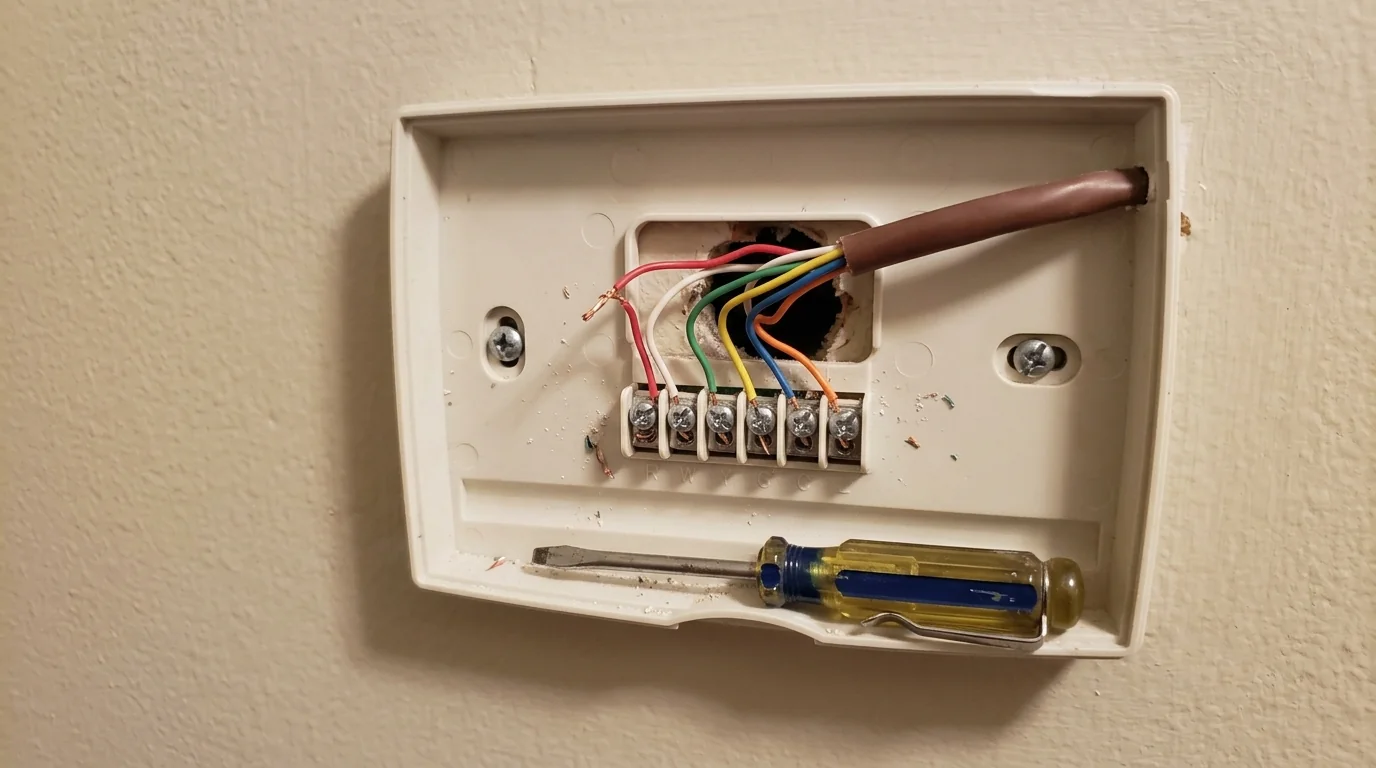
Heat pump thermostat wiring
A heat pump thermostat controls the reversing valve through an O or B terminal, plus aux heat and emergency heat. Most manufacturers energize O for cooling, while a few use B for heating. Set it backward and the system blows cool air on a heat call and warm air on a cool call.
We also set aux staging so the strips come on only when the heat pump falls behind. Some smart thermostats ship with staging that brings the strips on early, which shows up on the power bill.
Adding a C-wire
Most smart thermostats need a common wire, the C terminal, for steady 24-volt power. Without it, some borrow power through the heating or cooling circuit, which can make the system cycle on its own or drop Wi-Fi.
If the cable in the wall has a spare conductor, we connect it at both ends. If not, we either pull a new thermostat cable or fit an add-a-wire adapter at the air handler or furnace. A common wire is the reliable fix, and it's usually a short job in an accessible home.
Zoned thermostats
In a zoned house each thermostat wires to a zone control panel, not straight to the equipment. The panel opens and closes motorized dampers in the ducts and decides when to call the heat pump or furnace.
Swapping in smart thermostats on a zone system means matching each one to the panel terminals and checking that the dampers still respond. A room that always runs hot or cold may have a stuck damper rather than a bad thermostat, so we test the dampers too. For new zoning work, see HVAC zoning.
Programmable, smart or communicating thermostat?
| Compare | Programmable | Smart Wi-Fi | Communicating |
|---|---|---|---|
| Schedules | Set by hand on the unit | Learned or set from the app | Set from the wall control or app |
| Common wire | Often not needed | Usually needed | Uses the system data wires |
| Works with | Most single and two-stage systems | Most systems; check heat pump support | Only matching variable-speed equipment |
What changes the cost of a thermostat install
The wiring and the system type decide the labor more than the thermostat itself.
- Thermostat model. Smart and communicating models cost more than programmable ones.
- Common wire. A spare conductor is quick to connect, while a new cable or adapter takes longer.
- System type. Heat pumps and two-stage systems take more setup than a single-stage system.
- Zoning. Each zone adds wiring and testing time.
- Wall repair. A large old outline may need a trim plate.
Why thermostat setup matters in a Nashville house
Nashville homes ask one thermostat for a long cooling season and a real heating season, with damp air much of the year. Fan mode and cooling setpoints change how much humidity comes out in summer, and on a heat pump the aux staging decides how often the strips run in winter. A thermostat left on default settings can work and still cost more to run, so we set it for your equipment.
How a thermostat install runs
- 1
Identify the system
We confirm the equipment type, stages and any zoning.
- 2
Label and wire
Each wire is labeled and a common wire added if needed.
- 3
Configure
We set O/B, aux staging, fan behavior and schedules for your equipment.
- 4
Test every mode
Heat, cool, fan, aux and emergency heat each run before we leave.
What you can do yourself and what to leave to us
A simple system is a fair DIY swap. Heat pumps, missing common wires and zone panels are where installs go wrong.
| Task | Safe to do yourself | Leave to a technician |
|---|---|---|
| Old wiring | Photograph the terminals before removing anything. | Wires that do not match the new terminal labels. |
| Simple swap | Swap a thermostat on a basic heat and cool system with the power off. | Heat pumps with O/B, aux and emergency heat. |
| Common wire | Check for a spare wire tucked behind the plate. | Adding a C-wire at the air handler or furnace. |
Brands we work on
We service and install equipment from the major manufacturers, including Carrier, Trane, Lennox, Rheem, Goodman, American Standard, Daikin, Mitsubishi Electric, Bryant, Ruud, York and Amana.
Thermostat questions we hear
It is likely missing a common wire. Adding a C-wire fixes it.
The O/B setting is probably reversed. Changing that one setting in the installer menu usually fixes it.
It can, if schedules and heat pump staging are set well.
Most can if the model lists heat pump support with aux heat.
Yes. We wire each thermostat to the zone panel and test the dampers along with the new controls.