Mini-split cleaning in Nashville goes past rinsing the filters: the head is opened, and the coil, blower wheel and drain pan are washed while a bag catches the runoff, then the drain line is flushed. Heads that run all summer collect buildup on the blower wheel that no filter stops. A single wall head takes about an hour. Call (615) 412-2815 at any hour.
Why a mini-split needs more than a filter rinse
The washable filters behind the front panel catch dust, but not all of it. Moisture from the coil keeps the inside of the head damp through a humid summer, and dust that slips past the filter sticks to the blower wheel and the drain pan. Over time that film grows mold, smells sour and cuts airflow.
A deep cleaning takes the head apart far enough to reach those parts, then puts it back with the airflow checked.
What a mini-split deep cleaning covers
- Filters washed and reseated
- Front panel, louvers and cabinet cleaned
- Coil washed with a coil-safe cleaner
- Blower wheel cleaned in place or removed
- Drain pan scrubbed and drain line flushed
- Outdoor coil rinsed and the system run
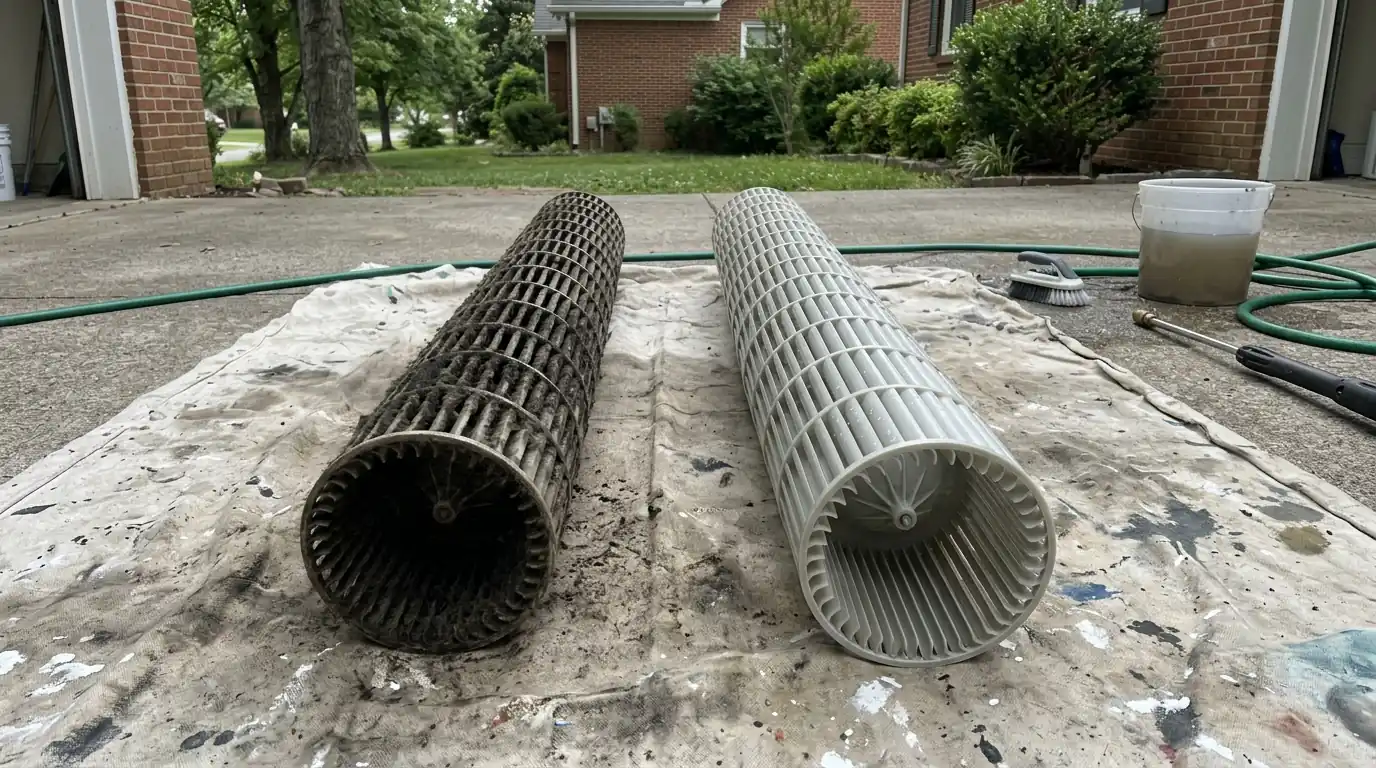
Blower wheel deep clean
The blower wheel is the long barrel fan across the bottom of the head. Its curved blades collect a sticky layer that turns black, and once it is thick enough you see specks blowing out of the louvers. A dirty wheel also moves less air, so the room cools slower and the coil can freeze.
On most wall heads we clean the wheel in place, with a bag hung under the unit to catch the runoff. When the buildup is heavy or the blades are cracked, we remove the wheel, wash it fully, and check the motor shaft and bearing before it goes back in.
Coil and drain pan cleaning
The coil sits behind the filters and stays wet whenever the head is cooling. Dust that lands on wet fins packs in, slows airflow and gives a musty smell at startup. Below it, the drain pan collects slime that eventually blocks the outlet, and that's when water runs down the wall.
We spray a coil-safe cleaner, rinse it through at low pressure so the fins are not bent, and let it run off into the bag. Then we scrub the pan, flush the drain line and pour water through to confirm it drains freely. If a condensate pump is fitted, we clean its reservoir too.
How Nashville humidity grows mold inside a mini-split
Nashville summers are long and humid, and a mini-split pulls water out of that air every hour it cools. The coil and drain pan stay wet from late spring into fall, and heads in a bonus room or sunroom often run most of the day. Damp metal and plastic inside a dark cabinet is where mold and slime start. A spring cleaning before the long cooling run, plus a filter rinse every few weeks, keeps most heads clear.
How a mini-split cleaning visit runs
- 1
Protect the room
Drop cloths go down and the furniture under the head is covered or moved.
- 2
Open the head
With the power off, we remove the filters, front panel and louvers and hang a cleaning bag.
- 3
Wash and flush
The coil, blower wheel and drain pan are cleaned and the drain line is flushed through.
- 4
Reassemble and test
We restore power, run the head and check airflow, drainage and the temperature split.
What sets the price of a mini-split cleaning
The number of heads and how far each one has to come apart set the price.
- Number of heads. Each indoor head is cleaned separately, so a four-zone system takes far longer than one.
- Head type. Ceiling cassettes and ducted heads take longer to open and protect than wall heads.
- Buildup level. A blower wheel that has to come out for washing adds time over an in-place cleaning.
- Mounting height. Heads high on a stairwell or vaulted wall need extra ladder work and protection.
- Drain condition. A fully blocked drain line or a failed condensate pump adds repair work to the visit.
How long a cleaning takes and how often to book it
A single wall head usually takes about an hour, a little longer when the blower wheel has to come out. A multi-zone system with four or five heads takes a good part of a day, so we plan it as one visit.
For most homes, once a year in spring is enough. Heads in a kitchen, a pet room or a space that runs all year collect buildup faster and often need it twice.
Mini-split cleaning questions from Nashville homeowners
Once a year for most homes, with filter rinses every few weeks in summer. Heads in kitchens, pet rooms or spaces that run all year may need two cleanings.
You can rinse the filters and wipe the cover. Spraying the coil or blower wheel without a catch bag risks water in the electronics, so leave the deep clean to a technician.
Mold and slime on the coil, blower wheel or drain pan. Sprays mask the smell for a day or two; cleaning those parts removes it.
They're usually flakes of buildup off the blower wheel, which needs cleaning.
A clean coil and wheel move more air, so the head reaches the set point with less run time. How much you save depends on how dirty it was.