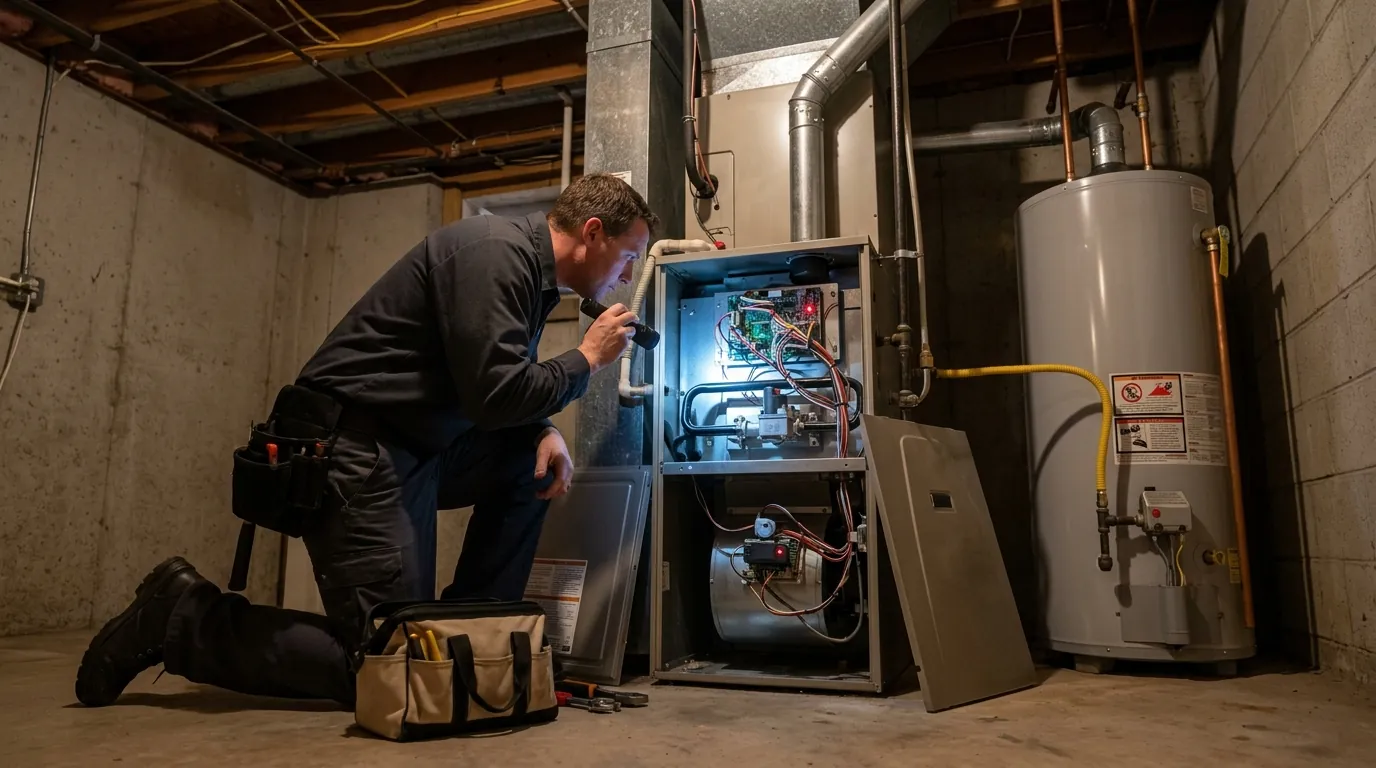
Most Nashville furnace repair calls trace to a dirty flame sensor, a cracked igniter, a stuck pressure switch, a tripped limit switch or a failed blower motor. The control board usually flashes a code that narrows it down, and a meter confirms the part before anything is replaced. Call (615) 412-2815 at any hour.
What a furnace repair visit tests first
A gas furnace lights in a fixed order: inducer, pressure switch, igniter, gas valve, then the flame sensor confirming the burners lit. When the sequence stops, the board records where. We read that code, then test the part it points to with a meter or a manometer.
You get the failed part and the price before the repair starts. On an old furnace with a bad heat exchanger or gas valve, we price replacement alongside it.
Signs your furnace needs a repair visit
The ignition sequence starts but the burners never light.
Burners catch for a few seconds and go out, often a flame sensor issue.
The blower runs while the burners stay off or locked out.
The control board is flashing a fault code through the blower door window.
Delayed ignition lets gas build up before it lights.
Healthy burner flames are mostly blue and steady; yellow tips mean poor combustion.
Furnace will not ignite
The thermostat calls for heat, the inducer hums, maybe you hear a click, and then nothing lights. After three tries most boards lock out for an hour. Usual causes: an igniter that no longer glows, a pressure switch held open by a blocked vent or trap, or a gas valve getting no signal.
We check the gas supply first, including whether the shutoff at the furnace is open. Then we test the igniter, watch the pressure switch with a manometer and confirm voltage at the valve. Each failure leaves a different reading.
Short cycling
The burners light, run two or three minutes, and shut off before the house warms. Often the culprit is the high limit switch, which opens when the heat exchanger gets too hot. That overheating nearly always comes from restricted airflow: a clogged filter, closed registers or a blower wheel caked with dust.
We measure temperature rise across the furnace and compare it with the range on the data plate, which tells us whether the problem is air, the limit or the controls.
Blower runs but no heat
Air moves through the registers but it is cold or barely warm. Sometimes the board has locked out the burners after failed starts and keeps the blower running. Other times the thermostat fan is simply set to on, not auto.
On a high-efficiency furnace, a clogged condensate line will trip the pressure switch and stop ignition while the blower keeps going. We read the fault history, clear the drain if that's the cause, and find out why the burners stopped rather than resetting the board and leaving.
Flame sensor and igniter faults
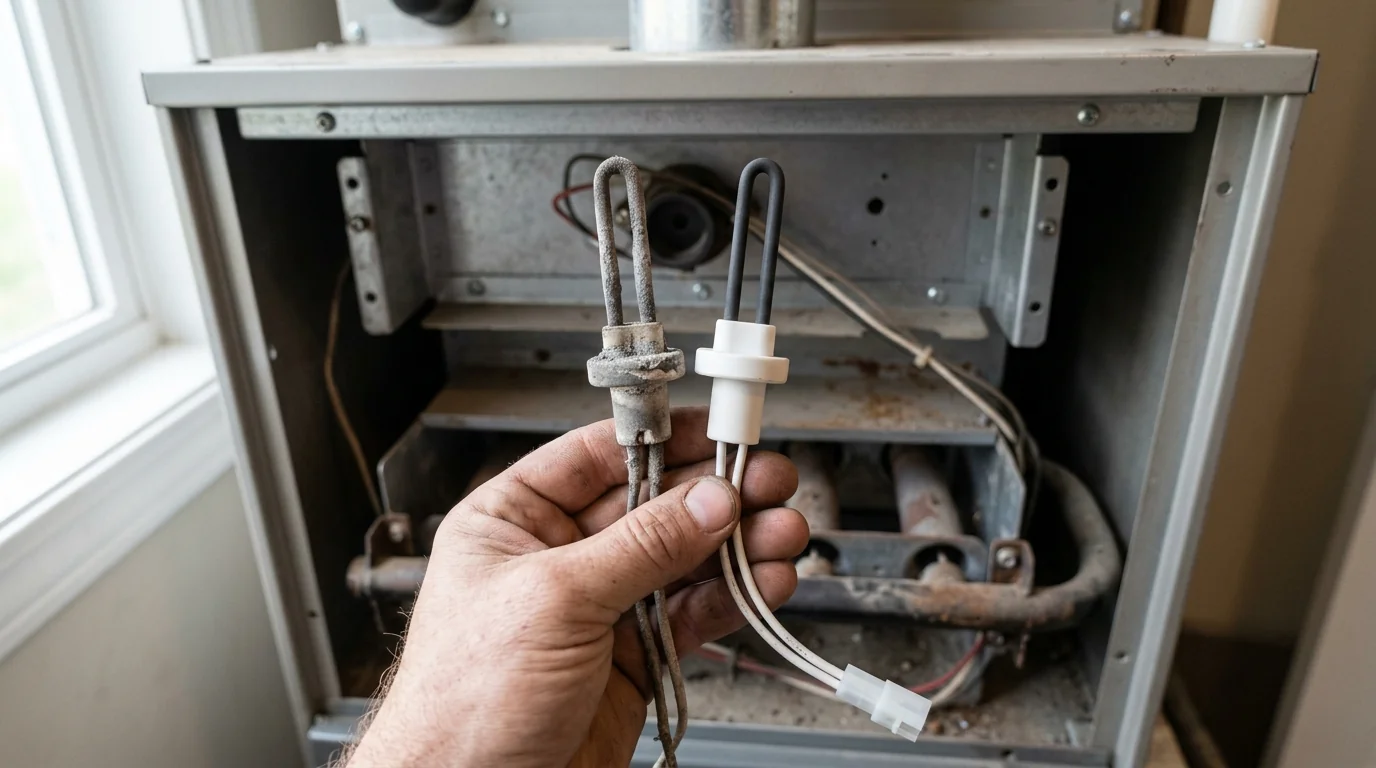
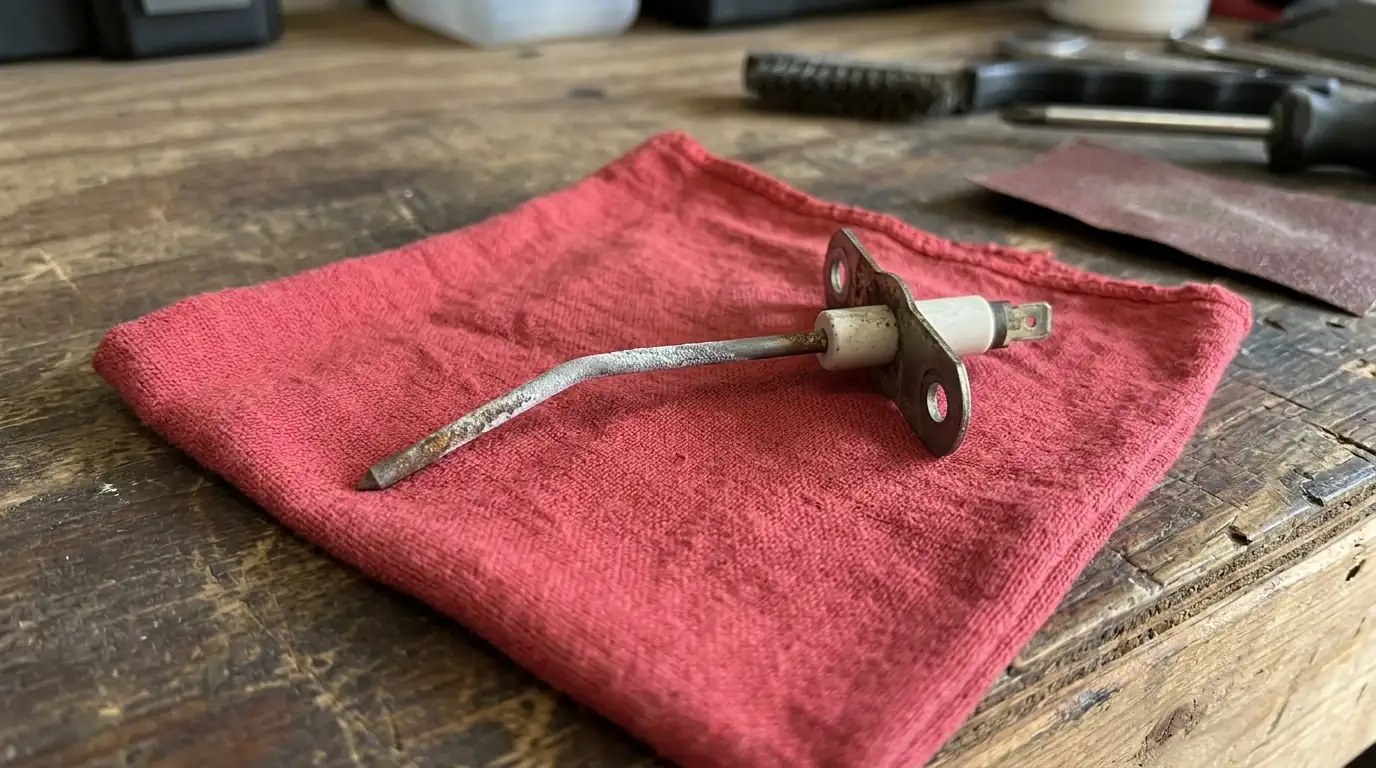
The flame sensor is a thin metal rod in the burner flame. It proves the fire is lit by passing a tiny current measured in microamps. As oxide builds on it the signal fades, and the furnace lights for a few seconds and then shuts the gas off. Cleaning the rod often restores it.
The hot surface igniter is a brittle ceramic part that glows orange to light the gas. It wears with every start and eventually cracks. We check its resistance and look for the hairline crack before replacing it.
How a no-heat call runs from the first ring to warm air
- 1
Tell us the pattern
Say whether it clicks, lights briefly, blows cold air or shows a blinking light.
- 2
Read the code and test
The technician reads the fault history, then checks gas pressure, igniter, flame current and draft.
- 3
Price first
You hear the failed part and the cost, plus a replacement option on an older furnace, before work starts.
- 4
Repair and run a full cycle
After the fix we run several heat calls and check temperature rise and flame current.
What the January 2024 freeze did to Nashville furnaces
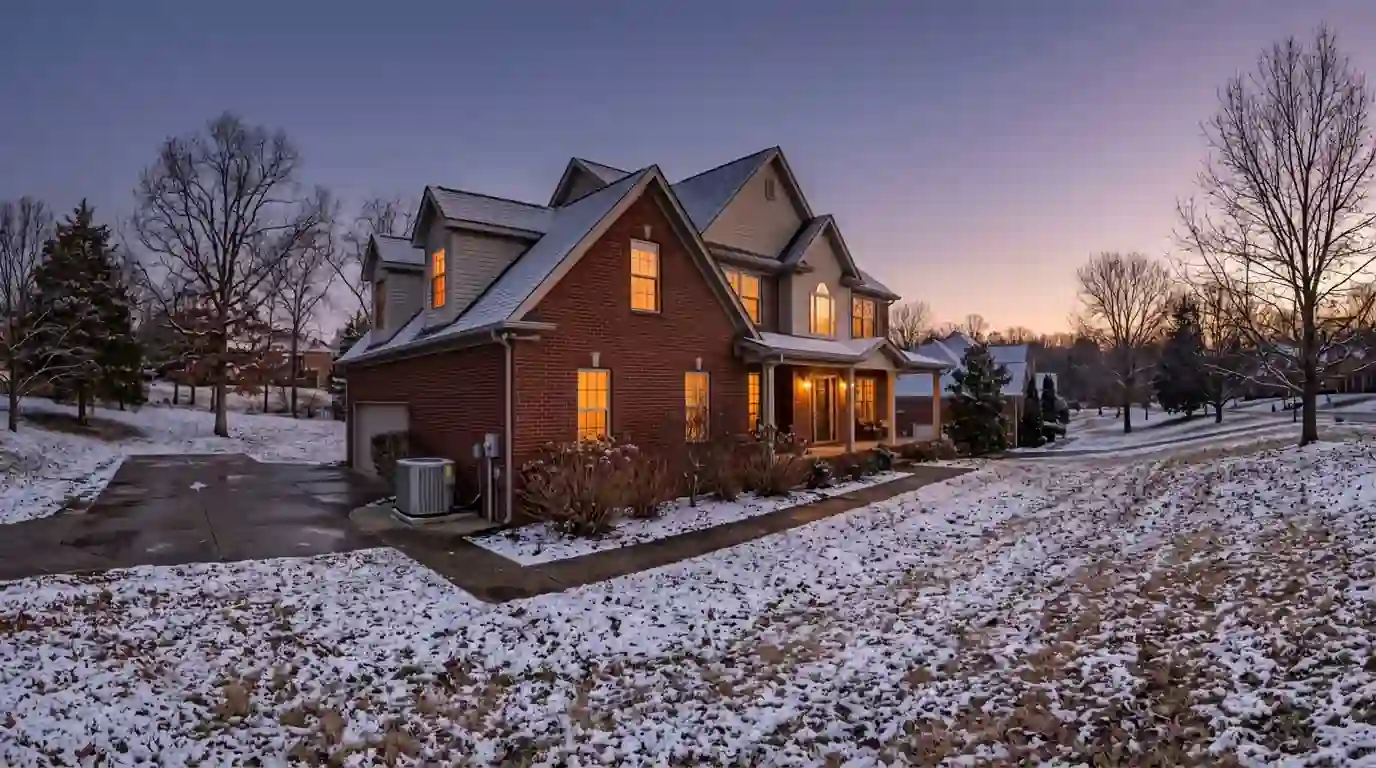
During the Arctic blast of January 14 to 21, 2024, the Nashville airport dropped to -1 F on January 17 and 7.6 inches of snow fell. A furnace sized for an ordinary Middle Tennessee winter runs almost nonstop in cold like that, so weak igniters, dirty flame sensors and tired inducers fail in the same week. Drifting snow can also cover a high-efficiency furnace's sidewall vent, which trips the pressure switch.
Checks that are safe to make before a technician arrives
Gas, wiring and venting wait for a technician, and any gas smell means leaving the house first.
| Task | Safe to do yourself | Leave to a technician |
|---|---|---|
| Air filter | Replace it if it is gray or clogged. | A limit switch that keeps tripping with a clean filter. |
| Thermostat | Confirm heat mode, a setting above room temperature and fresh batteries. | A blank display or loose wires. |
| Furnace switch and door | Check the service switch is on and the blower door is seated. | A board that locks out again after one reset. |
| Vent pipes outside | Clear snow or leaves from the intake and exhaust of a high-efficiency furnace. | Cracked, sagging or disconnected vent pipe. |
What a furnace repair costs and what moves the price
The bill depends mostly on which part failed and how long it takes to reach and test it.
- The failed part. Cleaning a flame sensor costs far less than an inducer motor, a control board or a gas valve.
- Furnace type. Condensing furnaces add drains, traps and plastic venting to check.
- Access. An attic or crawl space furnace takes more labor than one in a closet.
- Part availability. Boards for discontinued models cost more and take longer to source.
- Time of the call. Calls at night, on weekends or on holidays can carry a higher rate than a weekday visit.
Brands we work on
We service and install equipment from the major manufacturers, including Carrier, Trane, Lennox, Rheem, Goodman, American Standard, Daikin, Mitsubishi Electric, Bryant, Ruud, York and Amana.
Furnace repair questions from Nashville homeowners
If the igniter glows and nothing lights, the gas valve or supply is suspect. If it never glows, the igniter or pressure switch is the likely cause.
Leave the house right away without flipping switches or touching the thermostat, then call your gas utility or 911 from outside. Call us for the repair once the leak has been made safe.
Switching the furnace power off for 30 seconds clears a lockout once. If it locks out again, the fault is real, and repeated resets only hide the cause.
Yes. The phone is answered 24 hours a day, every day, including weekends and holidays.
A sensor, igniter or limit switch usually is worth fixing. A cracked heat exchanger or failed gas valve at that age usually points to a new furnace.