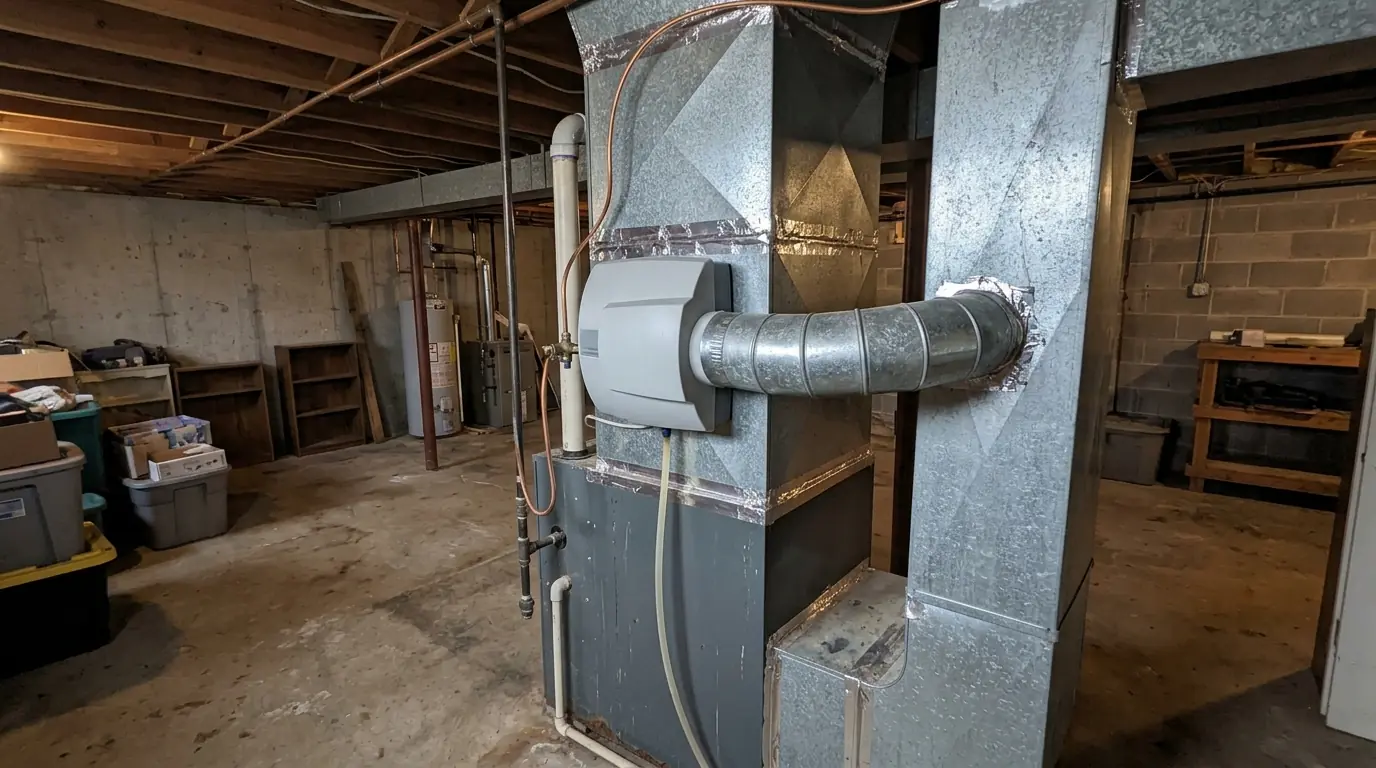
A whole-home humidifier in Nashville mounts on the furnace or air handler and adds moisture to heated air in winter, when indoor humidity drops low. Bypass models use the water supply and furnace heat; steam models make their own steam and suit heat pumps. A humidistat keeps levels low enough to avoid window condensation. Call (615) 412-2815 at any hour.
How a whole-home humidifier works with your heating
Cold outdoor air holds little moisture. Heat it to room temperature indoors and its relative humidity drops, so the house feels drier and cooler than the thermostat suggests. A whole-home humidifier puts water back into the air the furnace or heat pump is already moving, so every room gets it with no tanks to fill.
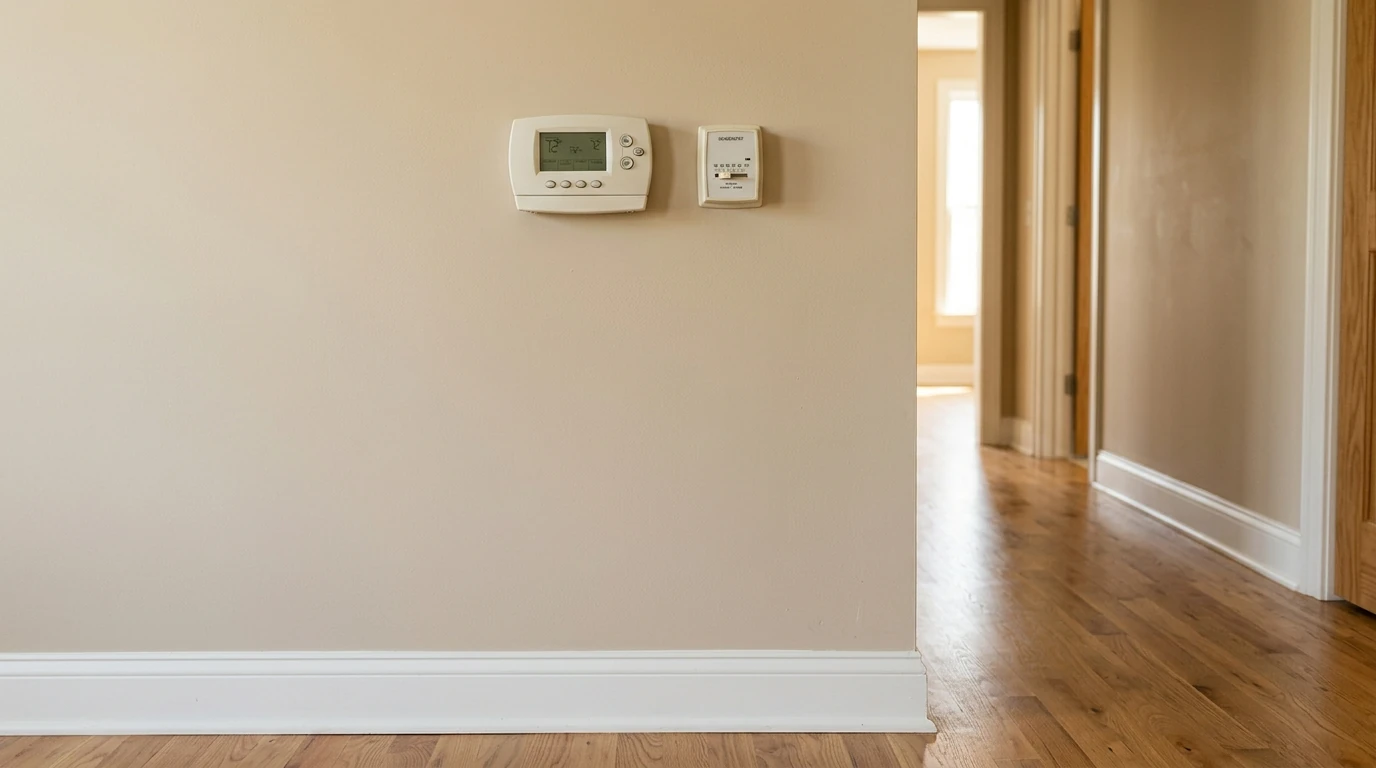
We tie it into a water supply, a drain where the model needs one and the system wiring, then set a humidistat. Many controls use an outdoor sensor to lower the target as it gets colder, which keeps condensation off the windows. It's a small add-on that changes how the whole house feels.
Bypass and steam humidifiers
A bypass humidifier sends some warm supply air through a wet water panel and back to the return. It has no motor of its own and works best with a gas furnace, since warmer air picks up more water. It drains a little water each cycle and needs a new panel about once a season.
A steam humidifier boils water in a canister and injects steam into the ductwork. It delivers a set amount no matter the air temperature, which suits heat pumps and larger homes. It costs more, draws electricity, and its canister or element needs periodic replacement depending on water hardness.
Bypass, fan-powered or steam: which fits your system
The right type depends on the heat source and how much moisture the house loses.
| Feature | Bypass | Fan-powered | Steam |
|---|---|---|---|
| How it works | Furnace air pushed through a wet panel | Built-in fan blows air through the panel | Electric canister boils water into the duct |
| Best match | Gas furnaces with room for a bypass duct | Tight spaces with no bypass duct | Heat pumps and larger homes |
| Output | Varies with supply air temperature | Somewhat steadier | Precise and steady |
| Upkeep | Water panel each season | Water panel each season | Canister or element as minerals build |
| Running cost | Water only | Water and a small fan | Water and electricity |
What sets the price of a whole-home humidifier
The type of humidifier and the plumbing and wiring needed to serve it drive most of the cost.
- Humidifier type. Steam units cost more than bypass or fan-powered models and need their own power supply.
- Water and drain. A long run to a water line or no nearby drain may call for a condensate pump.
- Duct layout. Bypass models need room for a duct between the supply and return plenums.
- Controls. An automatic humidistat with an outdoor sensor costs more than a manual dial.
- Electrical work. Steam units may need a dedicated circuit back to the panel.
Why Nashville homes dry out in heating season
Nashville winters are mild next to the upper Midwest, but cold snaps still bring dry air, and a furnace or heat pump running for days drives indoor humidity down fast. Older homes with loose windows and doors trade indoor air for dry outdoor air quickly, so they dry out first. Tighter, newer homes hold moisture better and need less added. That is why we size a humidifier to the house rather than fitting one model on every job in Middle Tennessee.
How a humidifier installation runs
- 1
Check the system
We look at the heat source, plenum space, water line and drain options.
- 2
Pick the type
You get bypass and steam options with prices that fit your system.
- 3
Mount and connect
The humidifier, water feed, drain, wiring and humidistat go in.
- 4
Set and test
We run a heat cycle, confirm water flow and drainage, and set the target humidity.
Signs the house needs added humidity
Frequent shocks from doorknobs and blankets mean very dry air.
Waking with a dry throat or nose all through the heating season.
Hardwood shrinks and seams open in winter, then close in summer.
Wood trim and chair joints loosen as they dry out.
Dry air feels cooler, so you keep raising the thermostat.
Small humidifiers need filling daily and still leave other rooms dry.
Brands we work on
We service and install equipment from the major manufacturers, including Carrier, Trane, Lennox, Rheem, Goodman, American Standard, Daikin, Mitsubishi Electric, Bryant, Ruud, York and Amana.
Humidifier questions from Nashville homeowners
Roughly 30 to 40 percent suits most homes, set lower on the coldest nights so the windows do not sweat.
Not when a humidistat controls it and it is set correctly. Problems come from over-humidifying, which shows up first as condensation on windows.
Yes, but a steam model is usually the better match. Heat pump supply air is cooler than furnace air, so it evaporates less water from a bypass panel.
Bypass and fan-powered units need a new water panel each season. Steam units need the canister or element replaced as minerals build up.
No. Shut the water off and close the bypass damper for cooling season; Nashville summers bring plenty of moisture. A whole-home dehumidifier handles that side.