A crawl space dehumidifier in Nashville works well only in a sealed crawl space, with the vents closed and a vapor barrier over the ground. The unit is sized to the floor area, set up off the ground and drained to daylight or through a pump. Standing water has to be fixed first, since no dehumidifier keeps up with a wet floor. Call (615) 412-2815 at any hour.
What goes wrong under a damp floor
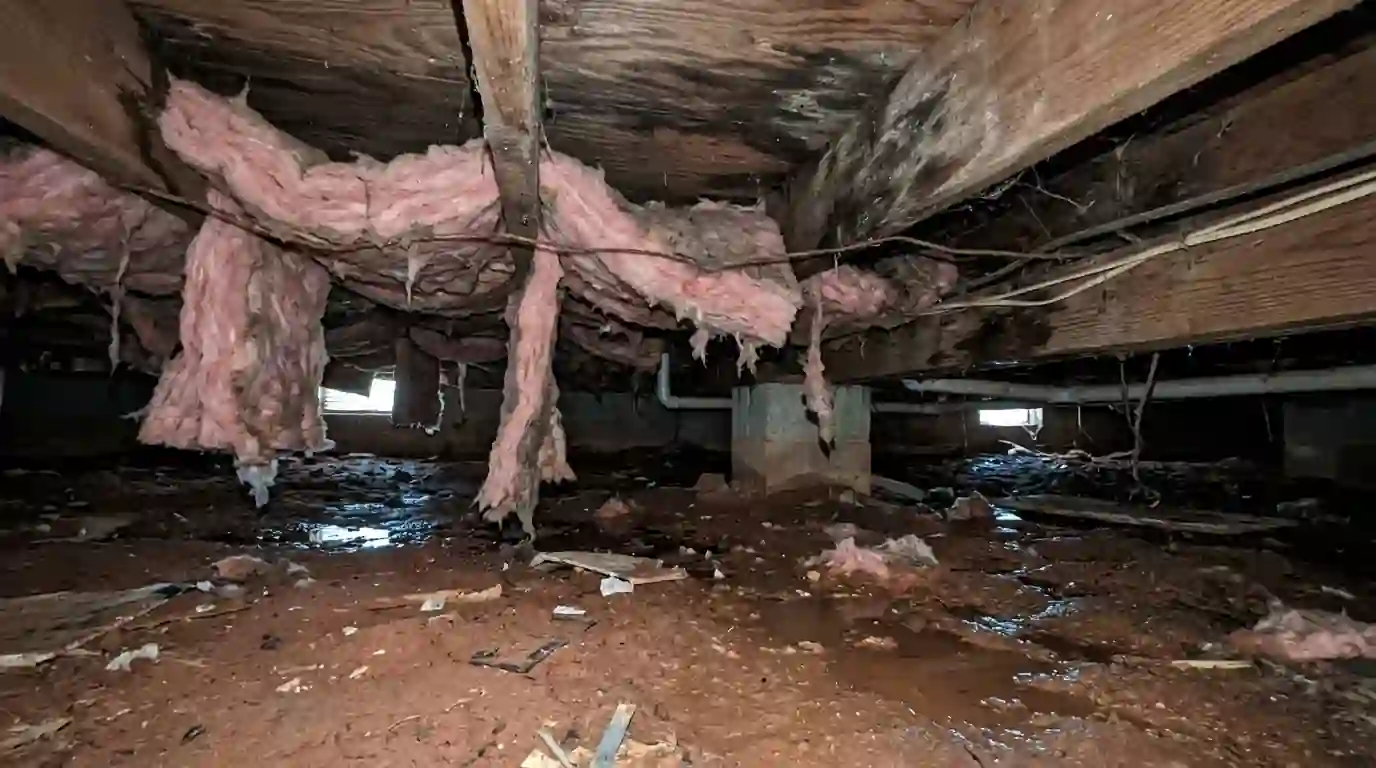
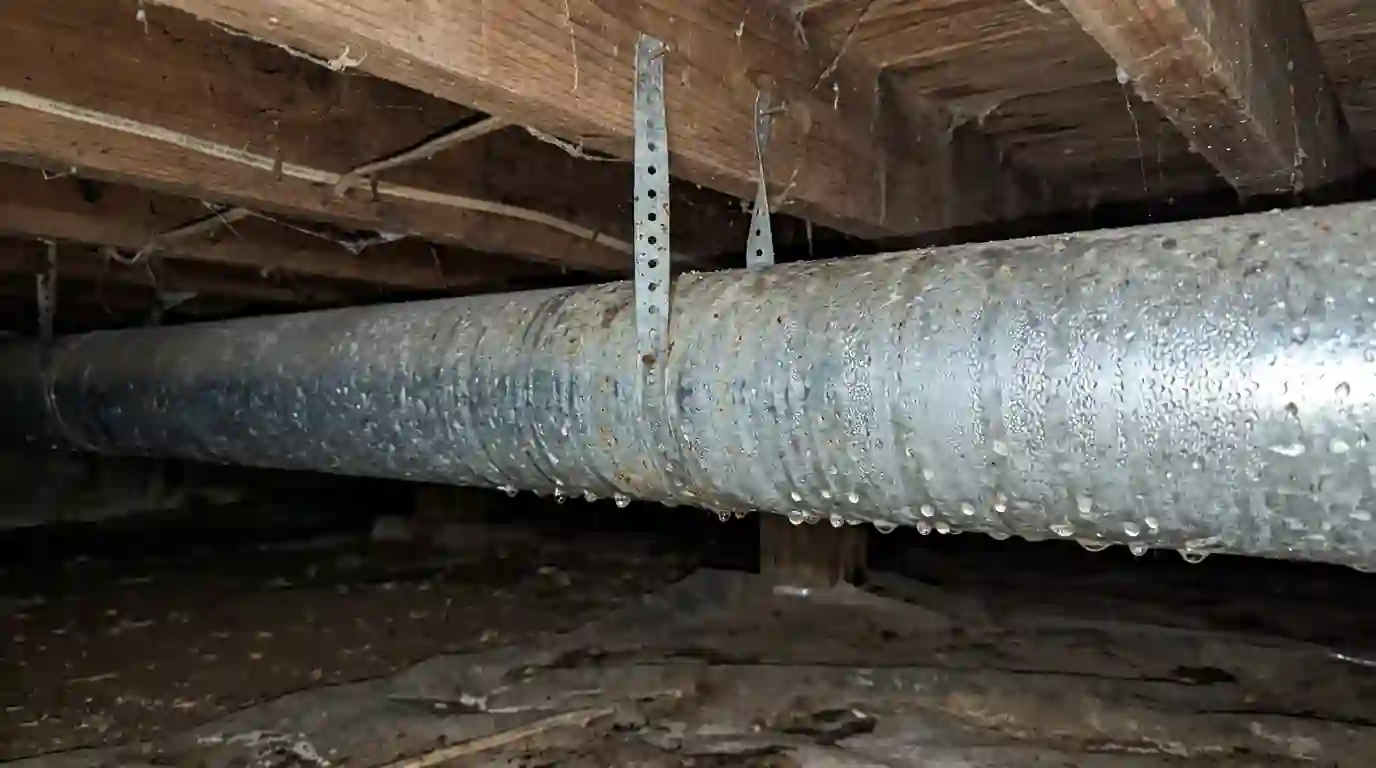
In a crawl space house, much of the ductwork runs under the floor, and in some homes the furnace or air handler sits down there too. When humid summer air gets in through open vents, it meets cool ground and cool metal ducts and gives up its water. That's how you get wet insulation, rusty duct straps and a smell that drifts up into the rooms.
A dehumidifier dries the air, not the ground. Before we size one, we look for gutters dumping at the foundation, grading that sends rain under the house and gaps in the vapor barrier. If the space isn't sealed yet, we tell you what has to change first. Once it is, we set the unit where it can move air across the whole crawl space and run its drain where the water can't come back.
Sealed crawl space units
Crawl space dehumidifiers are built low and compact to fit under floor joists, and they are made to keep working in cooler air than a household unit. We size the unit from the floor area and height of the space, then set it on blocks or hang it from the joists so it stays clear of any water on the barrier.
Placement matters as much as size. The unit should pull air from one end of the space and push it toward the other, not sit in a corner a foot from the wall. If the foundation has a divided section or a low bay, we may duct the outlet so dry air reaches both sides. The humidistat is set so the space stays dry without the unit running nonstop.
Drain and condensate setup
A crawl space unit can pull gallons of water a day in a humid stretch, and every bit of it has to leave the house. Where the ground outside slopes away, we run the condensate line through the rim joist or foundation to daylight with a steady fall.
When the unit sits low or the run is too flat, a condensate pump lifts the water out instead. We strap the line so it can't sag and hold water, keep the outlet clear of the foundation and pour water through the system to confirm it drains. A line that dumps beside the footing, or a pump with no overflow shutoff, just moves the problem a few feet.
What sets the cost of a crawl space dehumidifier
The size of the space and the route for the drain matter most.
- Crawl space size. A larger or taller space needs a higher-capacity unit.
- Access. Low clearance or a small entry hatch adds labor to set the unit and run lines.
- Drain route. A gravity drain to daylight costs less than a pump with an overflow switch.
- Power. Without a suitable outlet near the unit, one has to be added first.
- Ducting. A divided foundation may need a short duct run so dry air reaches every section.
What the 2010 flood showed about low ground in Nashville
In the May 2010 flood, 13.57 inches of rain fell at the Nashville airport and the Cumberland River crested twelve feet over flood stage. The Harpeth River at Bellevue rose about nine feet over its old record, Mill Creek at Antioch set a record crest, and Whites Creek at Bordeaux ran far out of its banks. Houses near creeks and on low ground can take water under the floor in a heavy rain, so before we size a unit there, we check the drainage around the foundation and where the condensate line will exit.
What a crawl space dehumidifier install includes
- Moisture readings on joists, ducts and air
- Unit sized to the crawl space floor area
- Unit set on blocks or hung from the joists
- Condensate line to daylight or a pump
- Humidistat set and tested
- A list of barrier or drainage fixes we found
How a crawl space unit goes in
- 1
Inspect the space
We check for standing water, barrier gaps, open vents and wet insulation with a moisture meter.
- 2
Fix the sources first
You get a list of what must change before a dehumidifier will work, plus the unit size and price.
- 3
Set and drain
We place the unit off the floor, run the condensate line or pump and set the humidistat.
- 4
Confirm it cycles
We run the unit, check the drain outlet outside and note the starting humidity reading.
Signs your crawl space is too wet
The odor is strongest in rooms over the crawl space and after rain.
Water beads on metal ducts or drips from the duct wrap.
Batts between the joists hang loose or fall to the ground.
Duct straps, nails and the air handler cabinet show orange rust.
A chalky film forms on the block foundation walls.
Wood floors above swell, cup or feel spongy in humid months.
Brands we work on
We service and install equipment from the major manufacturers, including Carrier, Trane, Lennox, Rheem, Goodman, American Standard, Daikin, Mitsubishi Electric, Bryant, Ruud, York and Amana.
Crawl space dehumidifier questions we hear
Not on its own. In a vented crawl space it tries to dry outdoor air all summer and rarely keeps up. It belongs in a sealed space.
Most household units are not built for low clearance or cool, damp air, and many need their bucket emptied. A crawl space model drains continuously and keeps working in cooler temperatures.
Most sealed crawl spaces are kept below about 60 percent. We set the humidistat after we see the first readings.
No. Pooling water needs gutters, grading or a sump pump fixed first. The dehumidifier handles moisture in the air once the floor stays dry.
Clean or change its filter a few times a year and check that the drain is flowing. We look at it whenever we are under the house for duct or furnace work.