Dual fuel installation in Nashville pairs a heat pump with a gas furnace and switches between them at a set outdoor temperature, called the balance point. The heat pump handles cooling and mild-weather heating, and the furnace takes over in deep cold. It suits homes that already have gas and a sound furnace. Call (615) 412-2815 at any hour.
How a heat pump and gas furnace share one house
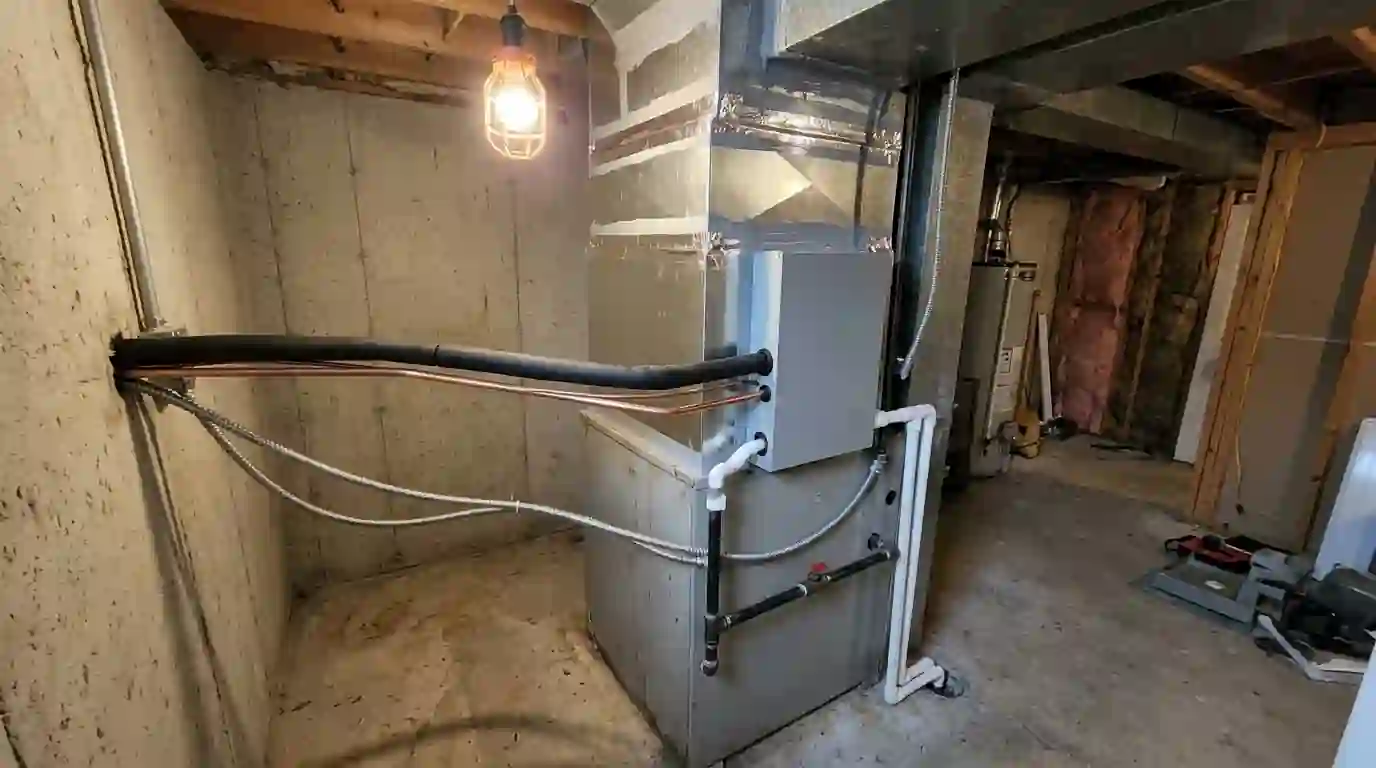
A dual fuel system is a heat pump outdoors, a gas furnace indoors, and a coil on top of the furnace that both share. One control decides which runs. Above the switchover temperature the heat pump heats the house; below it, the heat pump shuts down and the furnace burns gas instead. Outside of defrost cycles, they do not heat at the same time.
The install is mostly the same as an AC replacement, plus a thermostat or control kit that can lock out the heat pump, and a furnace check to make sure it is fit to stay.
Adding a heat pump to a gas furnace
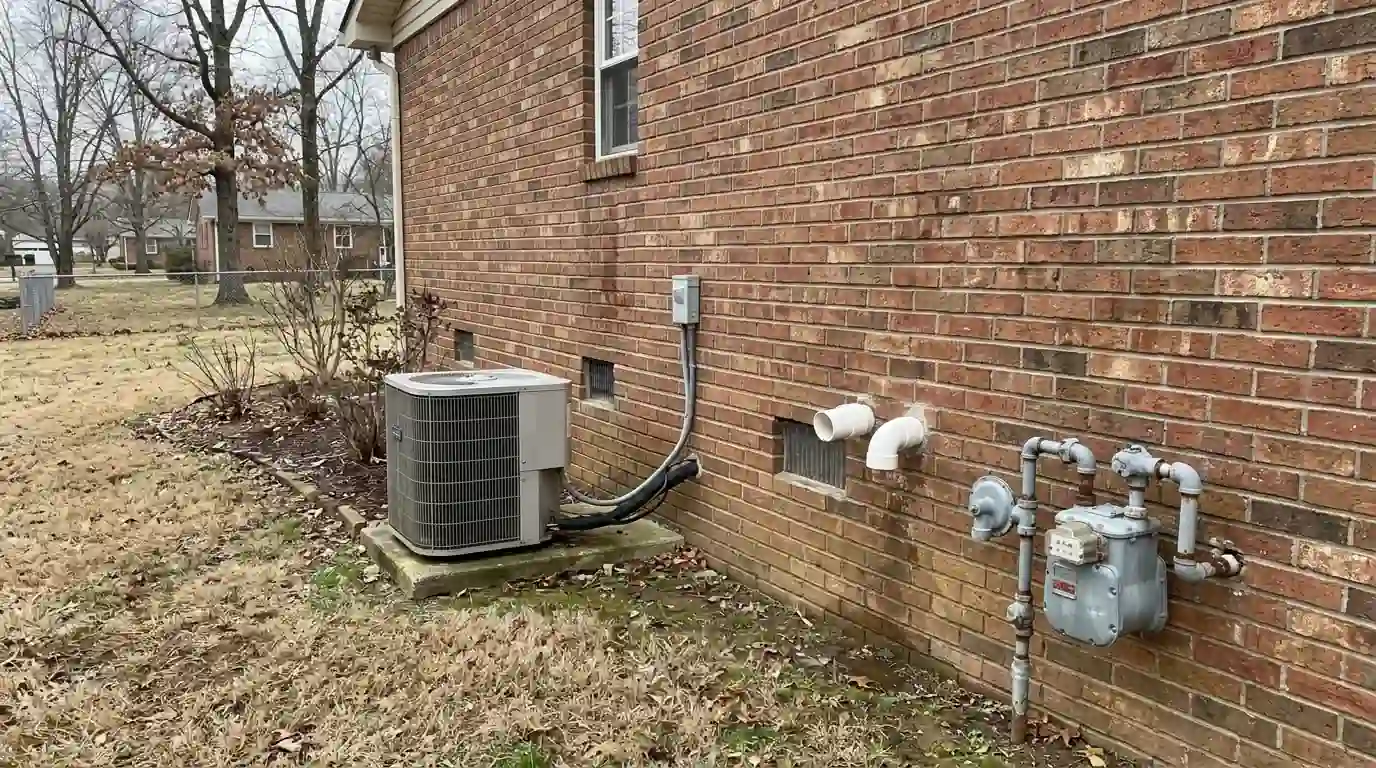
When the AC on a gas furnace system fails, the outdoor unit can be replaced with a heat pump instead. The furnace stays, a heat pump coil goes on top of it, and the thermostat or a fossil fuel kit decides which side heats.
We check the furnace first: heat exchanger, venting, blower and control board. The blower has to move enough air for the heat pump, and the furnace has to be in shape to cover the cold mornings. If the furnace is near the end of its life, we price replacing both so you're not paying for the indoor work twice.
Setting the balance point
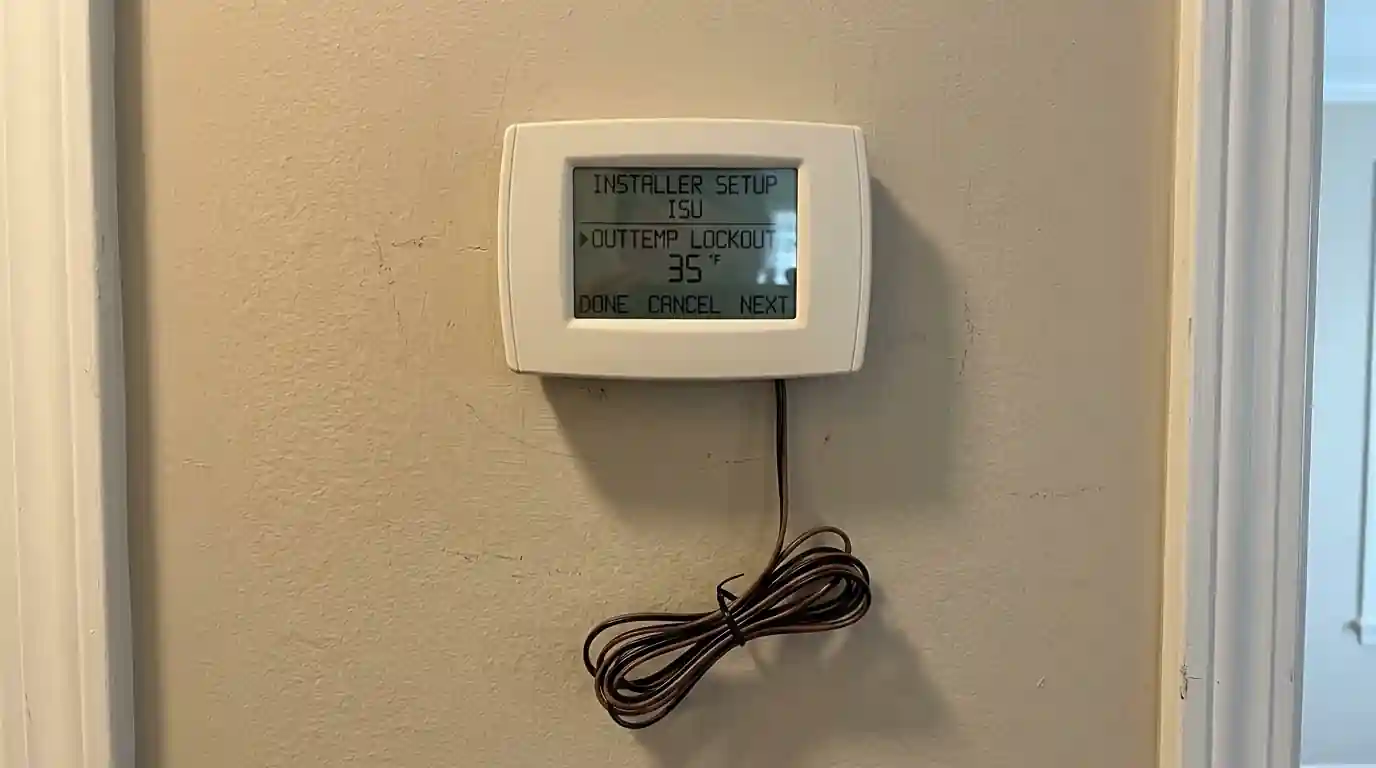
The balance point is the outdoor temperature where the heat pump stops and the furnace takes over. Set it too high and the furnace burns gas on days the heat pump could handle cheaply. Set it too low and the heat pump runs long cycles that blow lukewarm air.
The right number depends on the heat pump capacity, how the house holds heat and what you pay for electricity and gas. We work it out from the load calculation and the manufacturer capacity table, set it with an outdoor sensor, and show you how to adjust it if rates change.
Dual fuel compared with a heat pump or furnace alone
| Compare | Heat pump with strips | Gas furnace and AC | Dual fuel |
|---|---|---|---|
| Mild-weather heating | Heat pump, on electricity | Gas furnace | Heat pump, on electricity |
| Coldest mornings | Electric strips help | Gas furnace | Gas furnace |
| Cooling | Heat pump | Central AC | Heat pump |
| Fuel needed | Electric only | Gas and electric | Gas and electric |
What a dual fuel installation costs
The heat pump, the coil and the condition of the furnace you keep set most of the number.
For planning, Fixr puts typical national pricing for this kind of job at $7,500 to $12,000, about $9,500 on average (Fixr, January 2025). That is a market range, not our quote; the figure for your home comes after we see the equipment.
- Heat pump tier. Single-stage units cost less than two-stage or variable-speed models.
- Furnace kept or replaced. Keeping a sound furnace avoids the largest part of the cost.
- Coil and plenum work. A new coil may need sheet metal changes to fit the furnace cabinet.
- Controls. A dual fuel thermostat or fossil fuel kit and an outdoor sensor are part of every install.
- Line set and electrical. A new line set or heat pump circuit adds cost when the old ones do not suit.
Gas backup and the winter grid around Nashville
In EIA's 2020 survey about 52 percent of Tennessee homes heated mainly with a furnace and about 35 percent with a heat pump, so many Nashville houses already have the gas half of a dual fuel system. On December 23 and 24, 2022, TVA ordered rolling blackouts across Tennessee, with 10 to 30 minute cuts in bitter cold. A gas furnace still needs power for its blower, so dual fuel is no outage plan. It does move the coldest hours off electric strips and onto gas.
What a dual fuel installation includes
- Furnace inspection before we commit
- Load calculation and heat pump sizing
- Matched coil on the furnace
- Dual fuel thermostat or lockout kit
- Outdoor temperature sensor
- Balance point set and both modes tested
How a dual fuel install runs
- 1
Check the furnace
We inspect the heat exchanger, venting and blower to confirm the furnace can stay.
- 2
Size the heat pump
A load calculation sets the tonnage and the starting balance point.
- 3
Install and wire the controls
We set the coil, outdoor unit and line set, then wire the lockout control.
- 4
Test both fuels
We run the heat pump, force the switch to gas and confirm a clean handoff both ways.
Brands we work on
We service and install equipment from the major manufacturers, including Carrier, Trane, Lennox, Rheem, Goodman, American Standard, Daikin, Mitsubishi Electric, Bryant, Ruud, York and Amana.
Dual fuel questions from Nashville homeowners
It often is when the AC needs replacing and the furnace is sound. The heat pump covers mild days on electricity and the furnace covers the coldest ones.
No. The furnace blower, igniter and controls need electricity, so neither side runs without power unless a generator supplies the furnace.
It depends on the heat pump, the house and your utility rates. We set a starting point from the load calculation and adjust it with you.
Yes, if it passes inspection and the blower can move the airflow the heat pump needs.
It needs a thermostat or control kit that can lock out the heat pump below a set temperature, usually with an outdoor sensor.