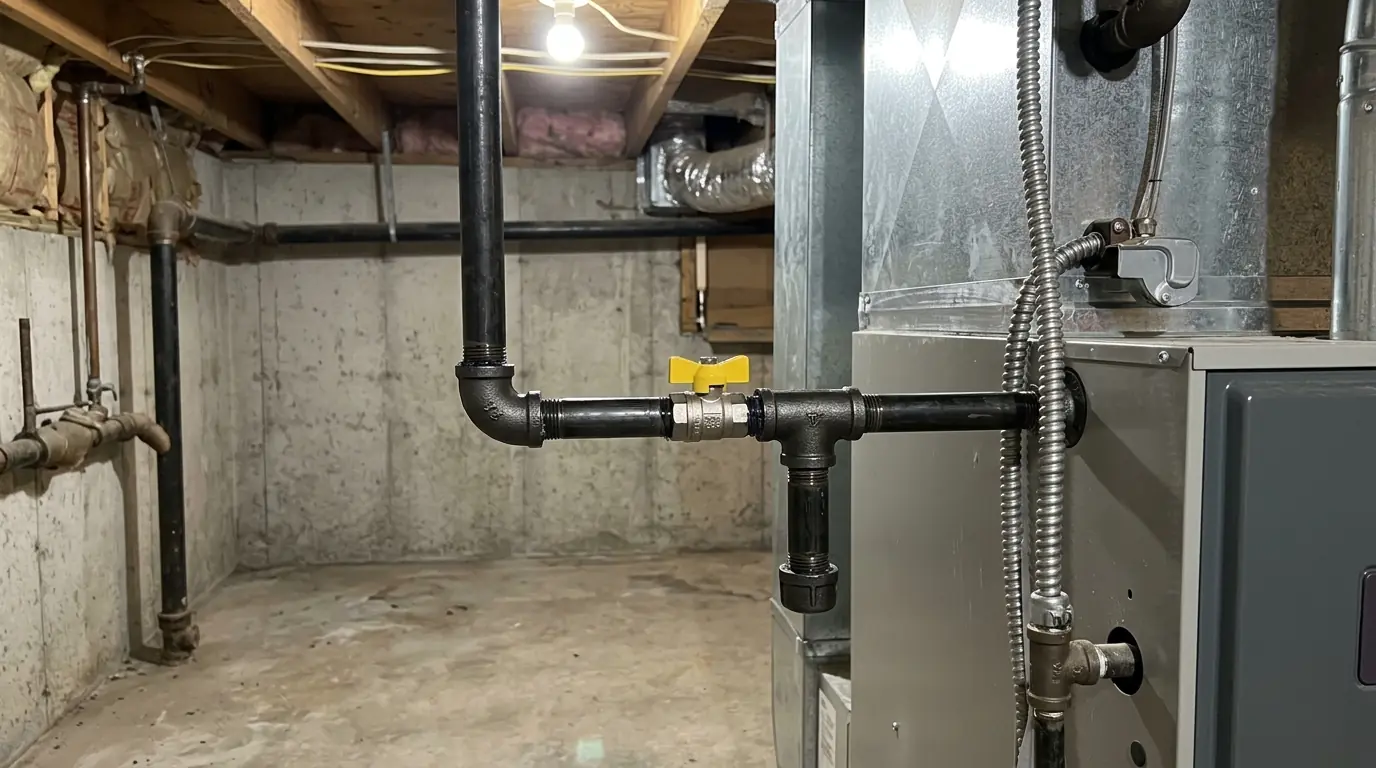
Gas line installation in Nashville starts with sizing: the pipe must carry the combined BTU load of every appliance on it over the length of the run. New piping is pressure tested before any appliance is connected, then leak checked at every joint. In Davidson County, gas piping falls under a Metro Codes trade permit. Call (615) 412-2815 at any hour.
How a new gas line is sized and routed
A gas line is sized like a duct: too small and the appliance at the end starves, especially when the furnace and water heater fire at once. We add up the BTU input of everything on the system, measure the longest run from the meter, and pick the pipe size from the fuel gas code tables.
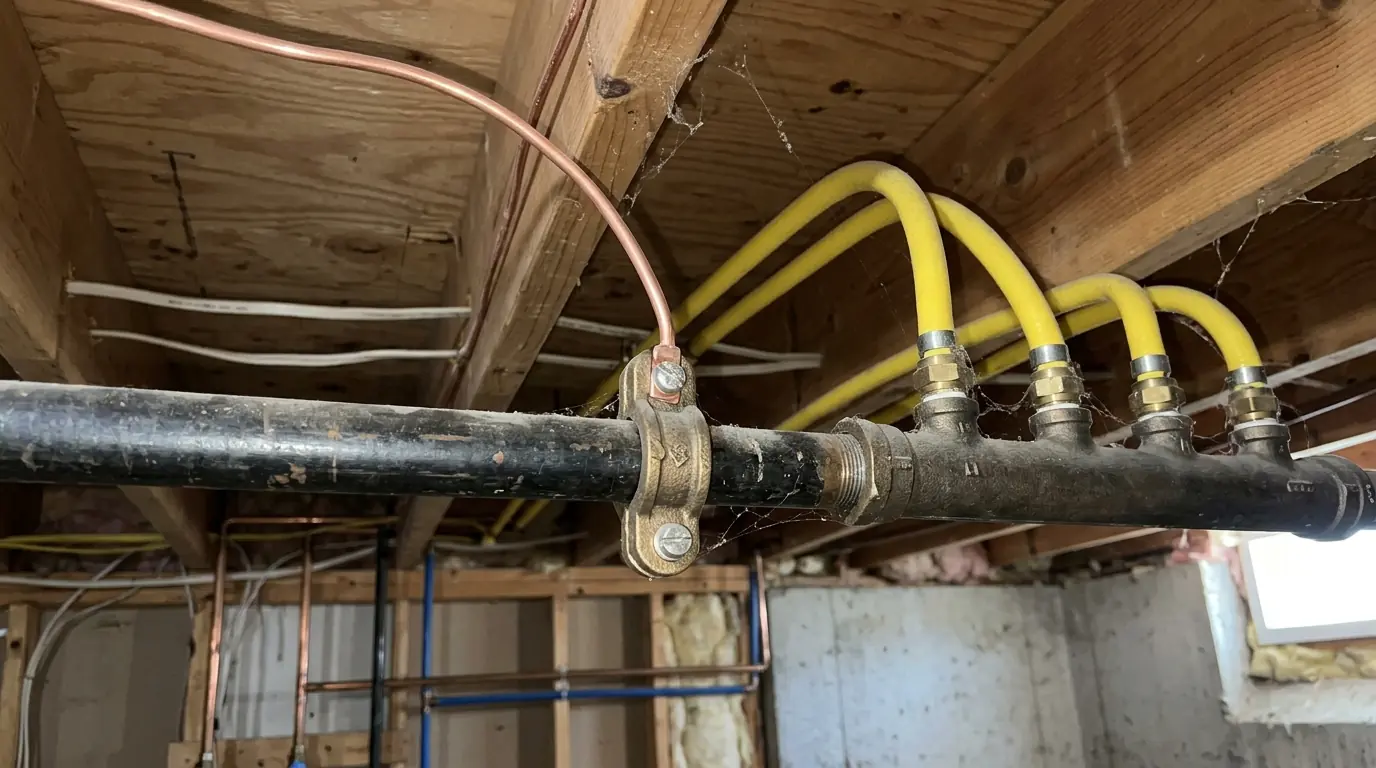
Pipe choice depends on the route. Black iron suits exposed runs in basements and utility rooms. Yellow-jacketed CSST snakes through walls and attics with fewer joints, and it needs a bonding clamp and wire tied to the home's electrical grounding to protect it from lightning damage.
Gas line for a new furnace
Converting from electric heat to gas, or moving the furnace, means bringing a properly sized line to it. A furnace needs its own shutoff valve within reach, a sediment trap (drip leg) to catch debris before the gas valve, and a union or listed connector so it can be serviced.
If the house already has gas, we check whether the existing piping can carry the added load. A new furnace on undersized pipe can starve the water heater when both run. Where the old line can't keep up, we run a new branch back toward the meter instead of tapping the nearest pipe.
Gas line for a range, dryer or generator
A gas range or dryer connects with a flexible appliance connector from a shutoff valve behind the unit; the line to that valve is what we install. A whole-house standby generator is a bigger load, often larger than the furnace, and it may need a larger line and sometimes a meter change from the gas utility.
Outdoor runs to a generator or grill go in approved materials with proper support and protection, with a shutoff at each appliance. Every new run is pressure tested before the appliance is connected, then checked at every joint once gas is on.
What changes the cost of a new gas line
Length, pipe material and how many walls and floors the run crosses decide most of the price.
- Length of the run. A short branch in an open basement costs far less than a run across the house.
- Pipe material. CSST goes in faster through finished walls; black iron suits open, exposed runs.
- Total load. Adding a generator or several appliances can require a larger main line.
- Access and finishes. Crawl spaces, finished ceilings and exterior wall penetrations add labor.
- Permit and meter changes. Permit fees and any meter change by the gas utility add to the total.
Spire Tennessee service and Metro Codes permits
Natural gas across the Nashville area now comes from Spire Tennessee, which completed its purchase of Piedmont Natural Gas's Tennessee business on March 31, 2026 and serves more than 200,000 local customers. A large new load such as a standby generator is a question for Spire about meter capacity before piping starts. In Davidson County, Metro Nashville Codes posts a gas/mechanical trade permit application, and contractors file trade permits through an e-permit account, so new gas piping there runs through that permit process.
What a gas line installation includes
- Load and pipe size calculation
- Black iron or CSST run to each appliance
- Shutoff valve and drip leg at each appliance
- CSST bonding where flexible tubing is used
- Pressure test before connection
- Leak check at every joint with gas on
How a gas line installation runs
- 1
Plan the load
List the appliances and their BTU ratings so the pipe can be sized.
- 2
Route and install
We run the new pipe, fit shutoffs and drip legs, and bond any CSST.
- 3
Pressure test
The new piping holds test pressure on a gauge before any appliance is connected.
- 4
Connect and leak check
With gas on, every joint is leak checked and each appliance is lit and checked.
Gas line jobs that are and are not yours
Gas piping is not a homeowner project, but a few checks are. If you smell gas at any point, leave the house and call the gas utility or 911 from outside.
| Task | Safe to do yourself | Leave to a technician |
|---|---|---|
| Appliance shutoffs | Learn where each shutoff valve is and keep it reachable. | A valve that is stiff, leaking or missing. |
| Range or dryer connector | Check that the flexible connector is not kinked or crushed behind the unit. | Replacing a connector or moving the valve. |
| Gas smell | Leave the house without switching anything on or off. | Finding and fixing the leak once it has been made safe. |
| New appliance plans | Note the BTU rating from the appliance spec sheet. | Sizing, routing and connecting the new line. |
Gas line questions from Nashville homeowners
Leave the house right away without flipping switches, using a phone inside or starting a car in the garage. From outside, call Spire Tennessee or 911.
Yes, when it is installed to the manufacturer instructions with its bonding wire in place. Bonding is what protects the thin tubing from a nearby lightning strike.
Sometimes. It depends on the pipe size, the length of the run and what else is on it, which is why we total the load before tapping in.
In Davidson County, gas piping falls under the Metro Codes gas/mechanical trade permit, which contractors file through an e-permit account.
Yes, in approved materials with proper support and protection, and with a shutoff at the appliance end. It shouldn't run where a mower or vehicle can hit it.