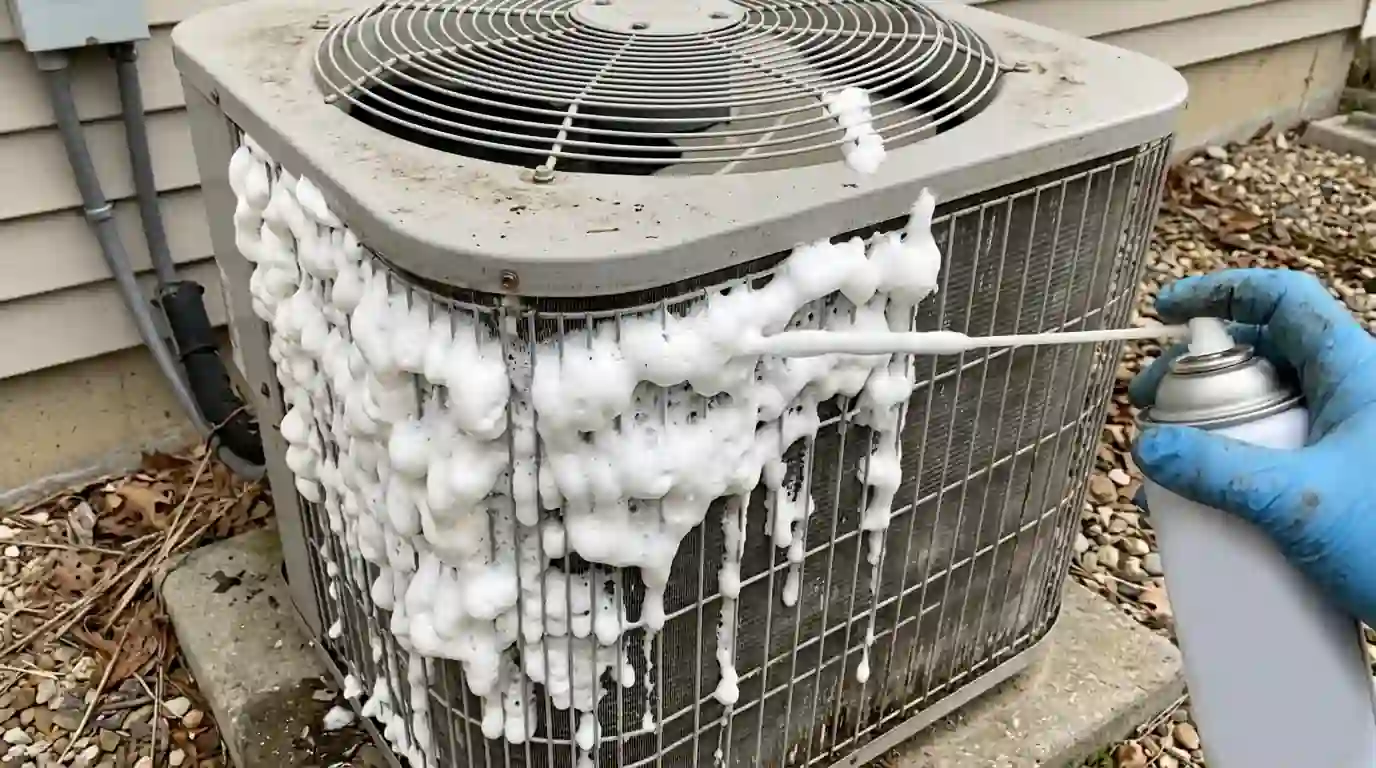
An AC tune-up in Nashville is best done in spring, before July highs near 91 degrees keep the system running for hours. The visit cleans the outdoor and indoor coils, checks the refrigerant charge, tests the capacitor and contactor and flushes the condensate drain. You get the readings, and any repair is priced before it is done. Call (615) 412-2815 at any hour.
What a real AC tune-up measures and cleans
A tune-up is a measured inspection with cleaning, not a quick look and a filter change. We wash the outdoor coil, inspect the indoor coil and blower, flush the drain and take electrical and refrigerant readings.
The point is to catch the parts that fail in the first heat wave: a capacitor reading under its rating, a contactor with pitted points, a drain with algae building in the trap. They're cheap fixes on a spring morning.
What every AC tune-up covers
- Outdoor coil washed from the inside out
- Indoor coil and blower inspected
- Condensate drain and trap flushed
- Capacitor and contactor tested
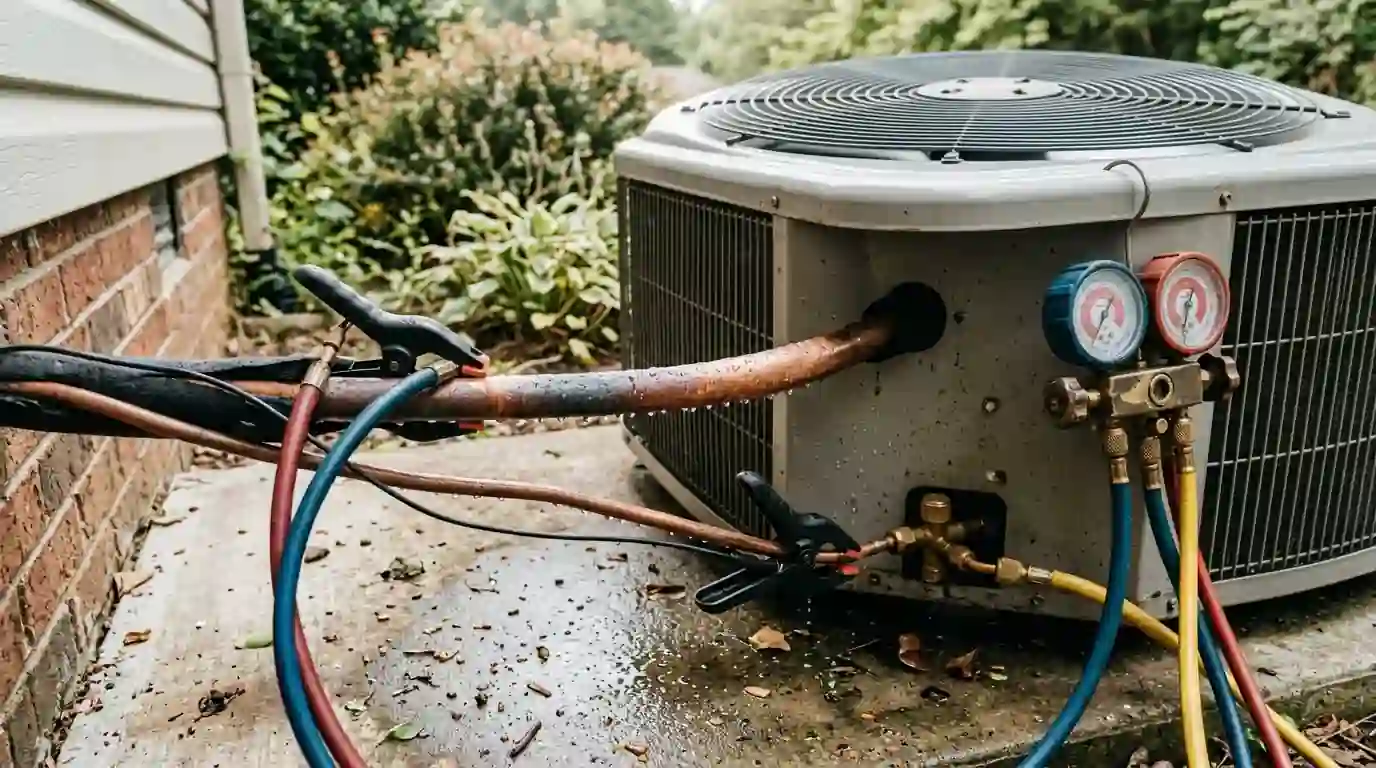
- Charge checked by superheat or subcooling
- Temperature split and amp draw recorded
Condenser and evaporator coil cleaning
The outdoor coil collects cottonwood fluff, grass clippings and dust, and the indoor coil catches whatever slips past the filter. A dirty condenser coil cannot shed heat, so pressure rises and the compressor works harder. A dirty evaporator coil chokes airflow and can freeze.
We shut off the power, lift the top of the condenser and wash the coil from the inside out with coil cleaner and low-pressure water. Indoors, we inspect the evaporator and clean what can be reached without pulling it.
Refrigerant charge check
A system can be a pound short and still blow cool air, just less of it and at a higher cost. We check the charge the way the maker specifies: superheat on a fixed metering device, subcooling on a system with a TXV. Readings are taken once the system has run steadily.
A low charge always means a leak, since refrigerant doesn't get used up. If we find one, we tell you and price a leak search and repair instead of topping it off year after year.
Capacitor and electrical test
The run capacitor and the contactor are the parts most likely to quit on a hot afternoon. We test the capacitor against the microfarad rating on its label, inspect the contactor points for pitting and burning, and tighten loose lugs at the disconnect and inside the unit.
We also measure compressor and fan motor amp draw against their nameplates. A motor pulling high amps is struggling, and finding it in spring lets you plan the repair instead of losing cooling in July.
Why spring is the right time in Nashville
Nashville's normal July high is about 91 degrees, and the city sees roughly 50 inches of rain a year. That pairing means long run-times in heavy, humid air, with the indoor coil pulling water out of the house all afternoon. A clean coil and a clear drain handle that load well. So spring is the time for a tune-up, after the system has sat through winter lows near 30 degrees and before the first hot week arrives.
What happens during a tune-up visit
- 1
Check the thermostat and filter
We confirm the thermostat calls for cooling and look at the filter.
- 2
Clean and clear
Both coils are cleaned and the condensate drain is flushed.
- 3
Take readings
We record voltage, amps, capacitor values, refrigerant readings and the temperature split.
- 4
Report and price
You get the readings and the price of any repair before anything is replaced.
What affects the price of a tune-up
A tune-up is priced as a set visit, and the total moves with what the inspection finds.
- Number of systems. A house with an upstairs and a downstairs unit needs two inspections.
- Coil condition. A matted outdoor coil takes more time and cleaner.
- Indoor access. An air handler in a cramped attic takes longer to inspect.
- Parts found weak. A capacitor or contactor replaced during the visit is priced separately, with your approval.
- Drain condition. A drain packed with algae may need clearing beyond a routine flush.
Upkeep you can handle between visits
These keep the system breathing. Refrigerant, wiring and the indoor coil wait for a technician.
| Task | Safe to do yourself | Leave to a technician |
|---|---|---|
| Air filter | Check it monthly in summer and replace it when gray. | A filter rack that lets air slip around the filter. |
| Around the condenser | Trim plants and clear leaves about two feet back. | Bent fins or a fan blade that wobbles. |
| Condensate drain | Pour a cup of vinegar into the drain access tee in early summer. | A drain that backs up or a float switch that trips. |
AC tune-up questions from Nashville homeowners
Once a year, ideally in spring. A heat pump that heats and cools benefits from a second visit in the fall.
No. A sealed system never needs more. A low charge means a leak, and we price fixing it.
Yes. Yearly coil cleaning and drain flushing are the cheapest way to keep a new system's efficiency where it started.
It can. A clean coil and a correct charge move the same heat in less run-time.
Change the filter on schedule, keep plants and leaves clear of the condenser, and pour a cup of vinegar into the drain access in early summer.