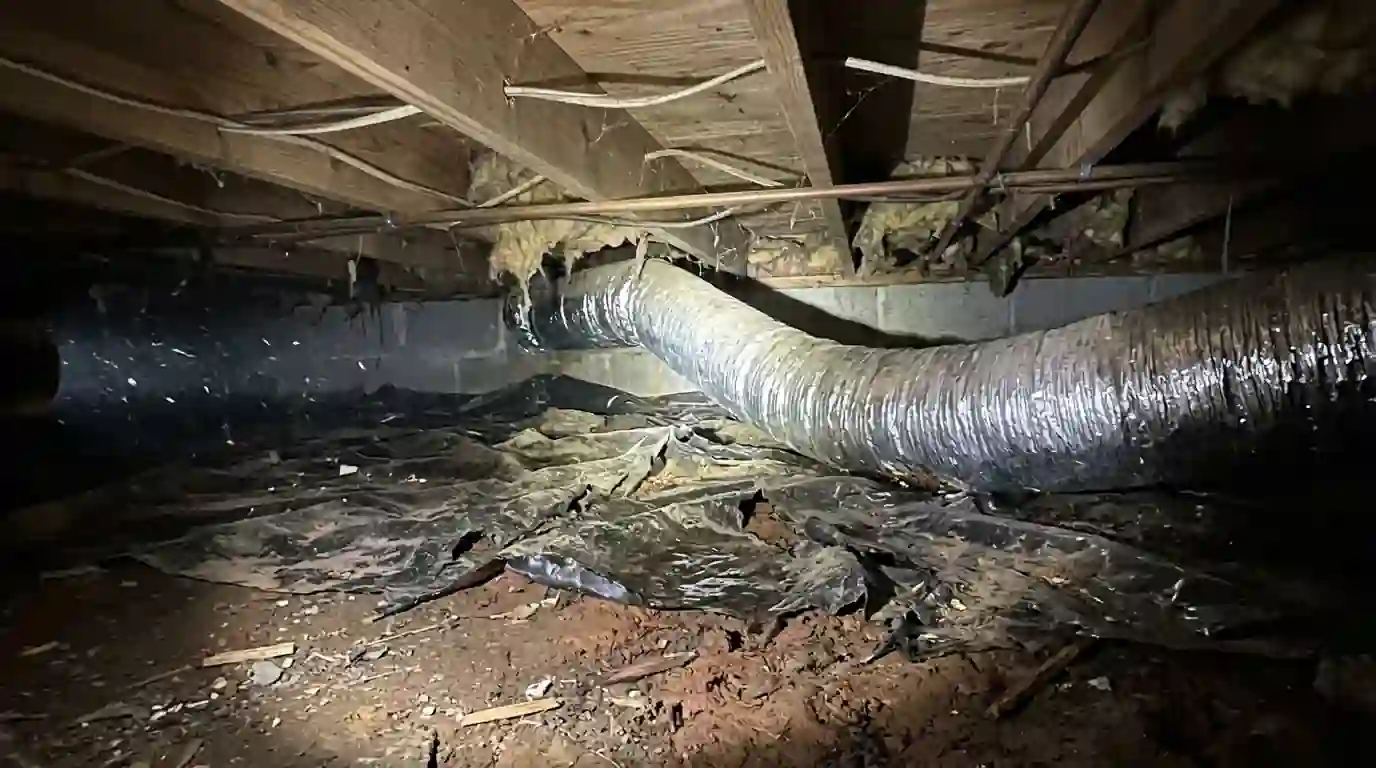
In older Nashville homes, crawl space ducts often sag, pull apart at the joints or sweat in summer humidity. A disconnected run can dump conditioned air under the house while one room stays hot or cold. A look from the access door with a flashlight tells you a lot. Call (615) 412-2815 at any hour.
How many Nashville houses are old enough for this
Point2Homes data puts the median home in Davidson County at 1986, with about 18 percent of units built before 1960 and about half of all units detached houses. Felix Homes describes Crieve Hall as mostly 1950s and 1960s brick ranch houses, and Nashville Home Guru dates most of Inglewood to the 1940s.
Ductwork in a house that age has usually been replaced at least once, often with flexible duct laid in quickly during an equipment change. In houses built over a crawl space, the trunk and branch runs hang under the floor. Heat, humidity, pests and the occasional plumber work on them for decades, and nobody notices until a bedroom stops keeping up.
Sagging and crushed flex duct
Flexible duct is meant to hang on wide straps at short intervals, pulled snug so the inner liner stays straight. Over time straps break or stretch, and the duct sags into a belly or drops onto the soil. Every sag and kink chokes the airflow to the room at the end of that run.
Duct lying on the ground also soaks up moisture, gets crushed by anyone who crawls over it, and gives rodents an easy place to chew in. A room that went from comfortable to stuffy over a few years, with nothing changed at the equipment, often has a run like this beneath it.
Disconnected joints and leaky seams
Joints are where crawl space duct fails most. Old cloth duct tape dries out and lets go, a clamp slips, or a boot pulls loose from the floor. A supply run that comes apart blows cooled or heated air straight into the crawl space while you pay to make it.
Leaks on the return side are worse in a different way. They pull damp, musty crawl space air and dust into the system and spread it through the house. Proper repairs use clamps on flex connections and mastic or foil tape rated for ducts, not cloth tape.
TVA EnergyRight lists duct sealing among the upgrades that qualify for its rebates, and a participating contractor files the claim. Our TVA rebate guide explains who handles the paperwork.
One room never keeps up and the ducts run under the floor? Call and we will look at what is down there.
Call (615) 412-2815Why metal ducts sweat in a Nashville summer
A supply duct carrying cooled air runs well below the dew point of a humid crawl space. Bare or poorly wrapped metal duct beads up with water the way a cold glass does, and it drips onto insulation, floor framing and soil all summer long.
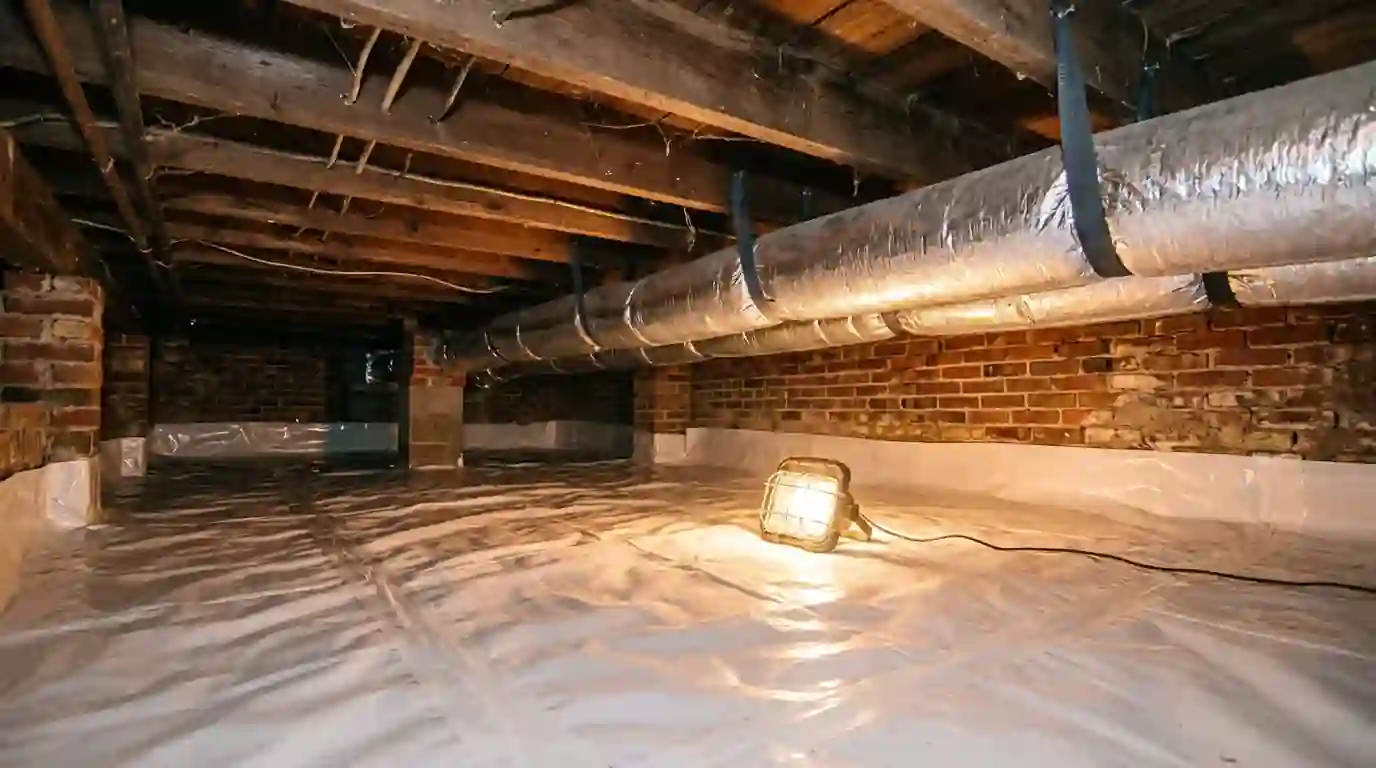
Nashville averages roughly 50 inches of rain a year, according to the National Weather Service, so crawl spaces here rarely stay dry. Wet insulation stops insulating, framing stays damp, and mold follows. The fix is duct insulation with an intact vapor jacket, a sound vapor barrier on the ground, and often a crawl space dehumidifier to bring the humidity down.
Ducts that sat in floodwater in 2010
The May 2010 flood put water under a lot of Nashville houses. The National Weather Service recorded 13.57 inches of rain at the airport over May 1 and 2, the Harpeth River at Bellevue rose about nine feet over its old record, and Mill Creek at Antioch set a record crest. Whites Creek at Bordeaux and Richland Creek also ran far out of their banks.
Ducts that held floodwater are not something to clean and reuse. Flex duct insulation stays wet for months, and the inner liner traps silt and contamination. If you own a house in a flood-prone part of the county and do not know what happened under it, a crawl space inspection is worth the time.
What you can check from the access door
You do not need to crawl the whole space to learn a lot. With a good flashlight from the access door, look for these:
- Ducts lying on the soil instead of hanging from straps.
- Open duct ends or a run that has pulled away from its boot or trunk.
- Standing water, or a vapor barrier that is torn, missing or wet on top.
- Insulation that drips, sags or looks dark and matted.
- Chewed insulation or droppings near the ducts.
Stay out if the space is wet and has wiring in it, or if you see signs of animals. Inside the house, compare airflow at each supply register. A room with noticeably weaker air than the others usually has its problem directly beneath it.
Write down what you see and take a few photos from the access door. When you call, that lets us judge whether the job is a reconnection, a sealing visit or a full look at the whole duct system.
Repair, seal or replace: what moves the cost
A few disconnected joints can be reattached and sealed in one visit. When most of the runs are sagging, crushed or flood damaged, ductwork replacement makes more sense. HomeGuide lists ductwork replacement at $1,400 to $5,600.
Where a job lands in or beyond that range depends on crawl space height, the number of runs, whether the main trunk is sound, and whether the system needs resizing. Very old duct wrap and tape can contain asbestos and must be tested before anyone disturbs it.
Crawl space duct questions
A room with weak airflow, a higher power bill and a musty smell from the vents are the usual clues. A flashlight from the crawl space door often shows the loose run.
It is common, but it is not harmless. Sweating means the duct needs better insulation and the crawl space needs its humidity brought down.
Cloth duct tape dries out and fails under a house within a few seasons. Flex connections need a clamp and duct mastic or foil tape rated for the job.
Yes. Supply ducts in a crawl space need insulation with an intact vapor jacket so they do not lose heat in winter or sweat in summer.
Yes. Lower humidity under the house means less condensation on the ducts and less damp air pulled in through return leaks.
Yes. Mobile homes run their ducts through the belly under the floor, and they pull apart and take on moisture the same way. See our mobile home HVAC page.