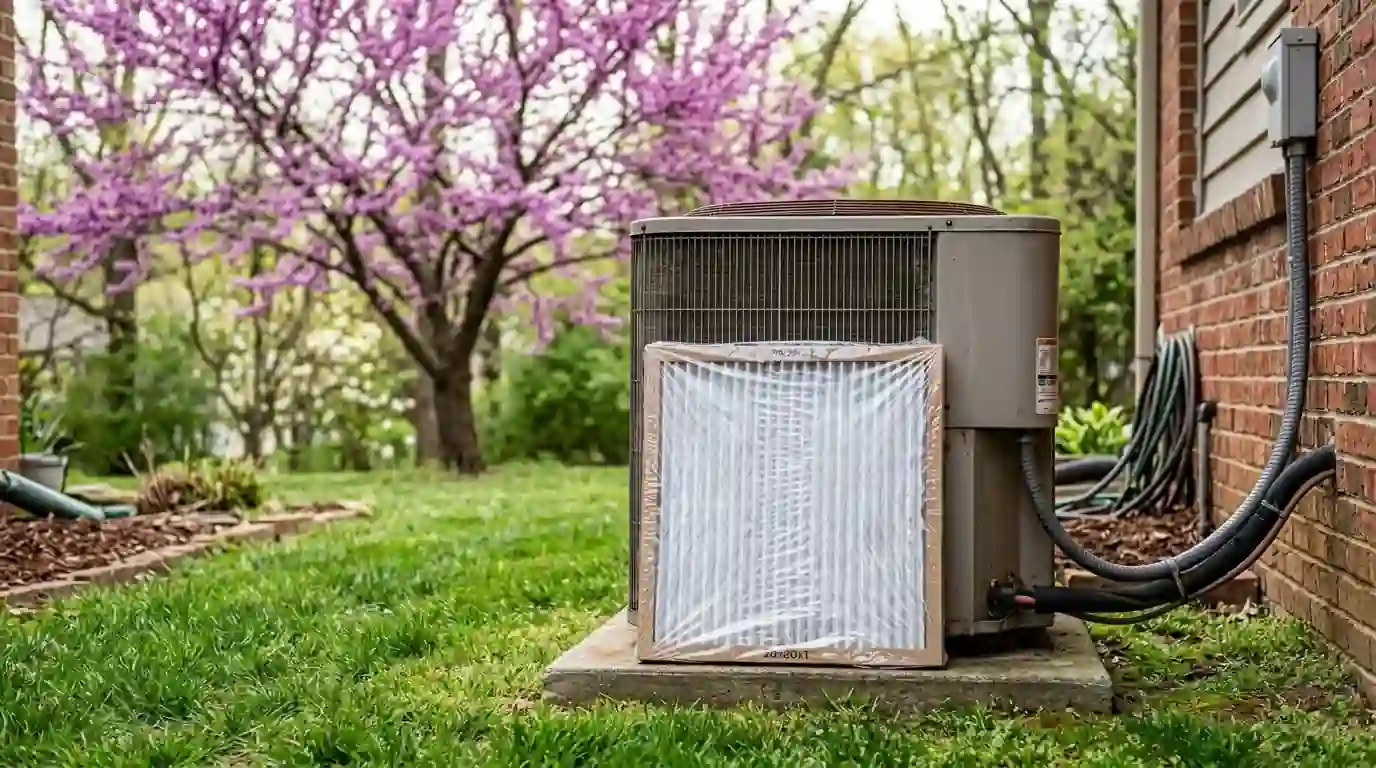
A Nashville HVAC checklist comes down to two tune-ups a year, cooling in spring and heating in fall, plus a filter change every one to three months and a few seasonal chores. The National Weather Service puts the normal July high near 91 degrees and the January low near 30, so both seasons count. Call (615) 412-2815 at any hour.
Why Nashville systems need two tune-ups, not one
Nashville's summers are long and its winters are short but sharp. The National Weather Service records a run of 34 straight days at 90 or hotter in 2007. It also recorded -1 degrees at the airport on January 17, 2024, during an Arctic blast that dropped 7.6 inches of snow. A system has to survive both.
In EIA's 2020 survey a heat pump was the main heating equipment in about 35 percent of Tennessee homes. A heat pump runs its compressor in both seasons, so it wears like two machines and deserves two checkups. A gas furnace with central air needs the same: one visit on the cooling side, one on the heating side.
Spring, March to May: get the cooling ready
- Change the filter, and write the date on its frame.
- Clear leaves, grass and shrubs back about two feet from the outdoor unit.
- With the power off at the disconnect, rinse the outdoor coil gently with a garden hose.
- Check that the condensate drain runs freely where it exits the house.
- Run the cooling on the first warm day to find problems before the heat arrives.
- Book the AC tune-up or heat pump tune-up before the summer rush.
Spring is the cheapest time to find a weak capacitor or a slow refrigerant leak. The same fault found in August usually means a hot house first. It also tends to come during the weeks when every HVAC phone in Middle Tennessee is ringing.
If your system is older or ran hard the summer before, ask during the spring visit how its readings compare with last year. A slow drop in capacity or a rising amp draw is easier to plan around than a breakdown.
Summer, June to August: protect the airflow
Long run-times load filters fast. Check the filter monthly through summer and change it whenever it looks gray. Keep furniture and rugs off the supply and return grilles, and keep the outdoor unit clear of lawn clippings after every mow.
Watch for water around the indoor unit, which usually means the drain is backing up. If the large copper line at the condenser shows frost, turn the cooling off and run the fan until it thaws. Our AC troubleshooting guide covers the safe checks in order.
Leaving town for a week? Raise the setting a few degrees instead of shutting the system off. That keeps humidity in check and stops a closed house from turning musty.
Ready to book the spring or fall checkup? Call and pick a time that works.
Call (615) 412-2815Fall, September to November: set up the heat
- Test the heat on a cool evening before the first real cold night.
- Book the furnace tune-up, or the heating half of a heat pump visit.
- Test every carbon monoxide alarm and replace its batteries.
- Look at the furnace vent pipe for loose joints or sagging sections.
- Move furniture and drapes off the floor registers.
Expect a short burning dust smell the first time the heat runs. Our furnace smells guide explains which smells are normal and which are not.
Fall is also the season to think about the coming winter. If the heat pump struggled last January or the furnace is near the end of its life, a fall visit leaves time to weigh repair against replacement before the first hard freeze.
Winter, December to February: ride out the cold snaps
A heat pump defrosts itself several times on cold, damp days. The fan stops, steam rises from the outdoor unit, and it starts again within minutes. That is normal. Keep snow and ice off the top and sides, and never chip ice off the coil with a tool.
Hold a steady setting rather than deep setbacks. A heat pump recovering from a big setback leans on its backup strips, which our aux heat guide explains. WSMV reported that TVA ordered rolling blackouts across Tennessee on December 23 and 24, 2022, so it helps to know the restart order after an outage before the next one.
What a tune-up visit actually covers
On the cooling side we test the capacitor against its rating, measure amp draw on the compressor and fan motor, check refrigerant pressures and the temperature split, clean the condenser, and flush the drain. On the heating side we inspect the burners and heat exchanger, test the igniter and flame sensor, measure draft and gas pressure, and check for carbon monoxide.
Heat pumps get the defrost controls and the reversing valve checked as well. TVA EnergyRight lists tune-ups among the upgrades that qualify for its rebates, and a participating contractor files the claim. Our TVA rebate guide covers the details.
Expect a cooling visit to take an hour or more on a typical home system. Have the filter size handy and clear a path to the indoor unit and the outdoor condenser before the technician arrives.
Jobs to leave for a technician
Some HVAC work looks simple but carries real risk. Leave these alone:
- Anything involving refrigerant, gauges or the copper lines.
- Wiring, capacitors and contactors, which hold a charge even with the power off.
- Opening the burner compartment or adjusting the gas valve.
- Cleaning the indoor coil, which sits inside a sealed cabinet.
- Repairing ducts in a wet or low crawl space.
The line between the two is simple. Filters, clearances, coil rinses with the power off and drain checks are homeowner jobs. Anything electrical, anything with gas and anything sealed inside a cabinet belongs to someone with the meters and gauges to test it afterward.
Seasonal maintenance questions
Most one-inch filters need changing every one to three months, and monthly during heavy summer use. Thicker media filters last longer, and homes with pets need changes sooner.
In spring, roughly March to May, before the first long run of hot days.
Yes. It runs its compressor for both heating and cooling, so it gets a check before each season.
Never cover a heat pump, because it runs all winter. A full wrap on a cooling-only unit traps moisture and invites rodents, so leave it open.
Closing one or two is fine. Closing many raises duct pressure and cuts airflow across the coil, which can cause freezing in summer.
Yes. The phone is answered 24 hours a day, every day, holidays included.