When an AC is not cooling in Nashville, check five things first: the thermostat setting, the air filter, the breakers, the outdoor coil and the condensate drain switch. Those cover a fair share of no-cooling calls. Ice on the copper line, a humming outdoor unit or a breaker that trips twice means shut it off and call (615) 412-2815.
How hard a Nashville summer pushes an air conditioner
The National Weather Service puts Nashville's normal July high at about 91 degrees. Its records show a run of 34 straight days at 90 or hotter from July 26 to August 28, 2007, and August 2007 alone logged 15 days of 100 or more. Weeks like that keep a condenser running nearly nonstop.
Most home systems are sized to hold the mid 70s on a typical hot afternoon, not 68. On a 100 degree day a healthy system may run all afternoon and still drift a degree or two above the setting. That is different from a system that is not cooling at all.
A kitchen thermometer gives you a quick test. Hold it at a return grille, then at a supply vent near the indoor unit. Air leaving the vent is usually about 15 to 20 degrees cooler than air going in. A split much smaller than that points to a real problem.
Check 1: Is the thermostat actually calling for cooling?
It sounds too simple, but it is the first thing we look at. Confirm the mode is set to cool and the setting sits a few degrees below the room temperature. A schedule or a power blink can quietly reset it.
Look at the fan setting too. With the fan on instead of auto, the blower keeps moving air between cooling cycles, and that air feels warm and damp. If the screen is blank or dim, replace the batteries before anything else. A thermostat that still shows nothing after fresh batteries needs a technician.
Check 2: A clogged filter starves the coil
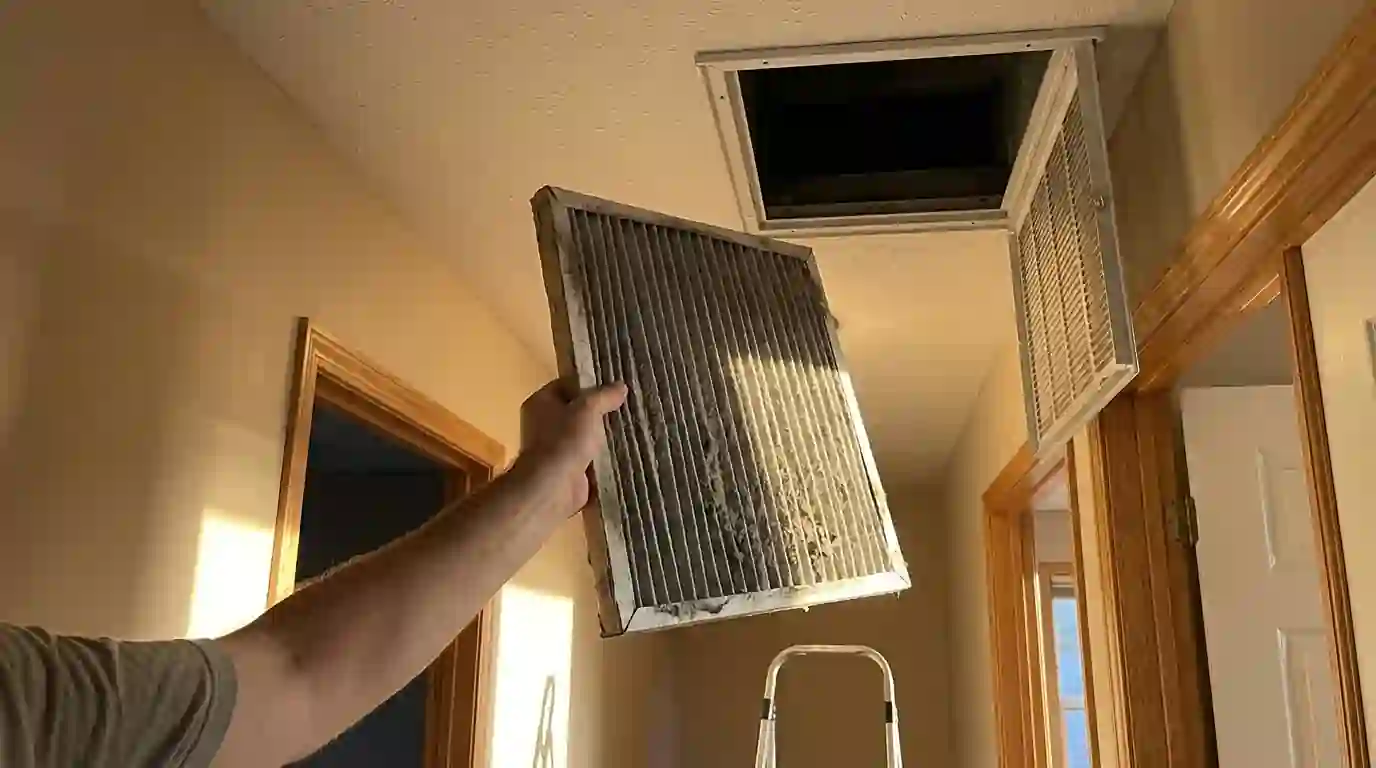
The filter sits at the return grille or in a slot at the furnace or air handler. When it fills with dust, the blower cannot pull enough air across the indoor coil. Cooling drops, the coil gets too cold, and it can freeze solid.
Pull the filter and hold it to a light. If you can't see light through it, replace it. Most one-inch filters need changing every one to three months, and sooner with pets or after a renovation. If the coil is already iced, set the thermostat to off and the fan to on so it thaws before anything else runs.
Tried the filter and thermostat and still getting warm air? Call and describe what the outdoor unit is doing.
Call (615) 412-2815Check 3: Breakers and the outdoor disconnect
A central system has two power circuits: one for the furnace or air handler inside and one for the condenser outside. If the indoor fan runs but the outdoor unit is silent, the outdoor breaker may have tripped.
Check both breakers at the panel, and look at the disconnect box mounted on the wall beside the condenser. Reset a tripped breaker once. If it trips again, leave it off. A breaker that keeps tripping is protecting a motor, compressor or wire that is drawing too much current, and resetting it repeatedly can turn a small repair into a large one.
While you are at the panel, notice whether the outdoor unit makes any sound when the thermostat calls for cooling. A click with no hum, a steady hum with no fan, or total silence each point to a different part, and that detail helps the technician start in the right place.
Check 4: A dirty or blocked outdoor coil
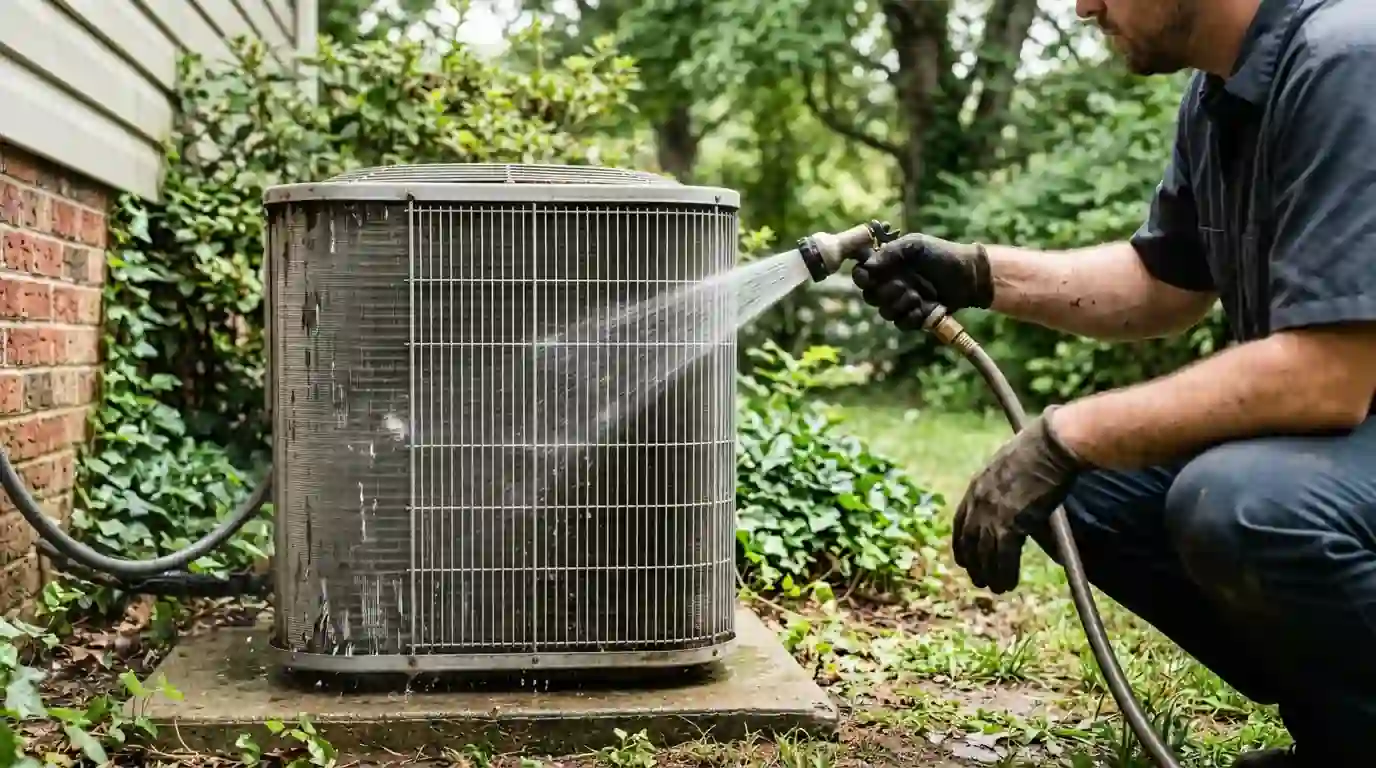
The outdoor unit sheds the heat it pulls out of your house. Grass clippings, cottonwood fluff, leaves and dryer lint clog its fins, and the system loses capacity on exactly the days you need it.
Shut the power off at the outdoor disconnect first. Clear anything within about two feet of the unit, then rinse the fins gently with a garden hose. Never use a pressure washer, which flattens the fins. If the fins are badly bent or you see oily stains on the copper, leave it for a technician.
Check 5: The condensate drain and its float switch
An air conditioner pulls gallons of water out of humid Nashville air every day. That water drains through a small pipe, and algae and sludge grow in it through the summer. Many indoor units have a float switch that shuts the system off when the drain backs up.
If the system stopped cooling and there's water in the pan under the indoor unit, a clogged drain is a likely cause. Some homeowners clear the outdoor end of the line with a wet and dry vacuum. HomeGuide lists a professional drain line flush at $75 to $250. Water dripping through a ceiling means turn the system off right away.
When to stop checking and shut the system off
Turn the thermostat to off and call if you notice any of these:
- Ice on the large copper line or on the indoor coil.
- A humming outdoor unit with a fan that will not spin.
- A breaker that trips again after one reset.
- A burning or electrical smell from either unit.
- Hissing or bubbling near the coil, which can mean a refrigerant leak.
HomeGuide's AC repair cost guide lists $150 to $650 for most repairs, about $360 on average. A failed capacitor sits at the low end. A refrigerant leak needs finding before anyone adds refrigerant, which our leak repair page explains.
No-cooling questions from Nashville homeowners
On the hottest afternoons a healthy system may run constantly and still trail the setting by a degree or two. If it trails by more, or the vents blow warm air, check the filter and outdoor coil, then call.
Supply air is usually about 15 to 20 degrees cooler than the air entering the return. A much smaller difference points to low airflow, low refrigerant or a failing part.
Yes, with the power off at the disconnect and a gentle stream from a garden hose. Never use a pressure washer on the fins.
Ice usually comes from low airflow, such as a clogged filter, or from low refrigerant caused by a leak. Turn the cooling off and run the fan alone until it thaws.
No. Refrigerant handling falls under federal rules, and a system that is low has a leak that needs finding and fixing first.
Yes. The phone is answered 24 hours a day, every day, including weekends and holidays.