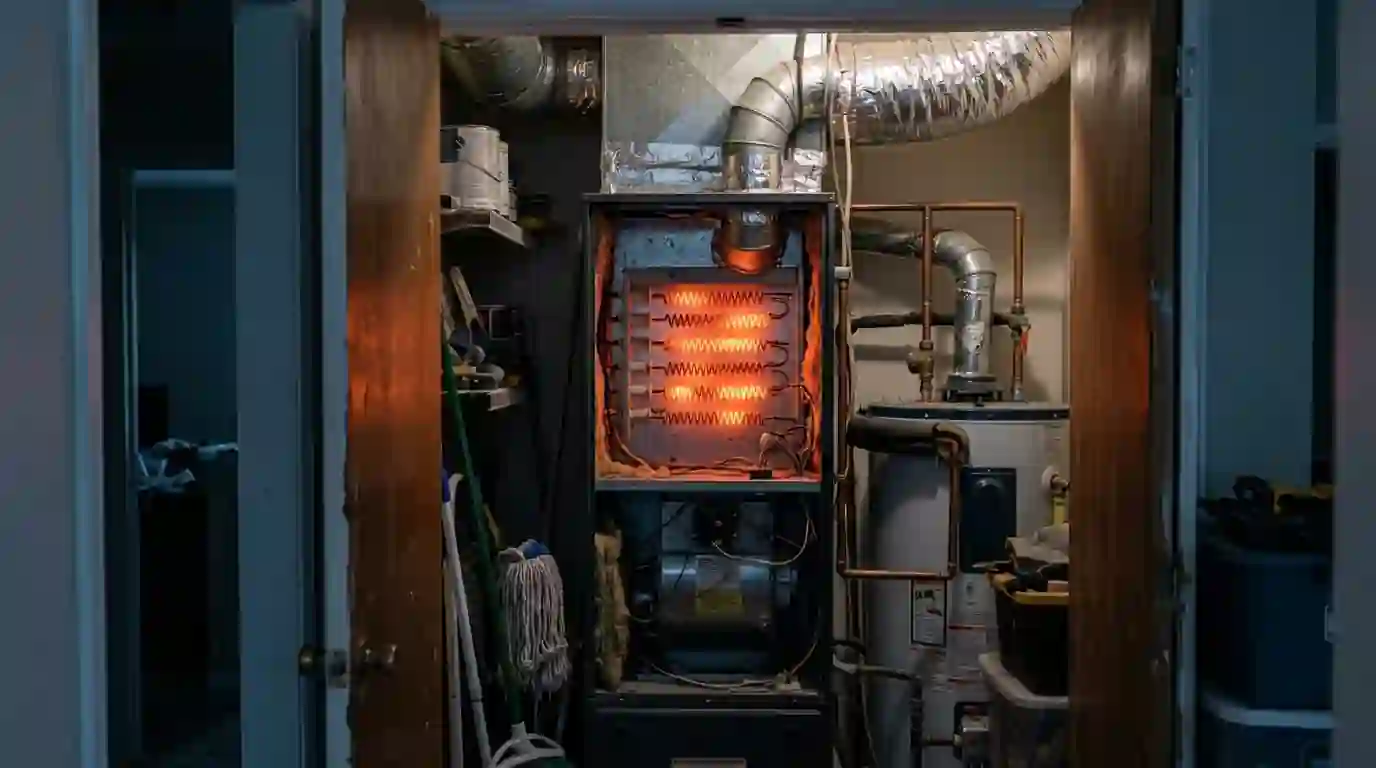
A heat pump showing aux heat in Nashville is often normal: the electric strips help during defrost, on nights near the 30-degree January low the National Weather Service lists, and when you raise the setpoint several degrees. Aux heat running all day in mild weather points to a fault worth a visit. Call (615) 412-2815 at any hour.
What aux heat actually is
Most heat pumps in Middle Tennessee have electric resistance heat strips inside the air handler, the same idea as the coils in a toaster. When the heat pump alone cannot meet the thermostat, the thermostat calls for a second stage and the strips switch on. The display shows that as aux heat.
Emergency heat is different. It is a setting you choose that shuts the outdoor unit off and runs the strips alone. It is meant for a heat pump that has failed, not for cold weather in general.
Four times aux heat is perfectly normal
- Defrost. In cold, damp weather the outdoor coil frosts. The heat pump reverses briefly to melt it, and the strips keep the supply air from turning cold.
- Below the balance point. On the coldest nights the heat pump cannot match the heat the house loses, and the strips make up the rest.
- Recovery after a setback. Raising the setpoint three or four degrees at once often brings the strips on to close the gap.
- Startup after a long off period. A cold house after an outage or a vacation may need both stages for a while, and the strips switch off once the heat pump catches up.
If any of those fit, the aux heat light isn't a fault. It will clear once the house is at temperature or the defrost ends.
Nashville cold snaps and the balance point
The National Weather Service lists the normal January low in Nashville at about 30 degrees. Most heat pumps carry the house through nights like that with only brief help from the strips.
Arctic outbreaks are another matter. During the January 2024 cold wave the Nashville airport fell to -1 degree on January 17, the wind chill reached -7 on January 20 and 7.6 inches of snow fell, according to the National Weather Service. A heat pump on nights like those will lean on aux heat for hours, and that is expected.
The balance point is different for every house. Insulation, air leaks, the size of the heat pump and the duct layout all move it. In a tight house with a well-sized unit the strips may hardly run all winter, while a drafty house with an undersized unit can call them every cold evening. A heat pump tune-up before winter checks the defrost controls and the strip circuits, so the cold snap is not the first test of the season.
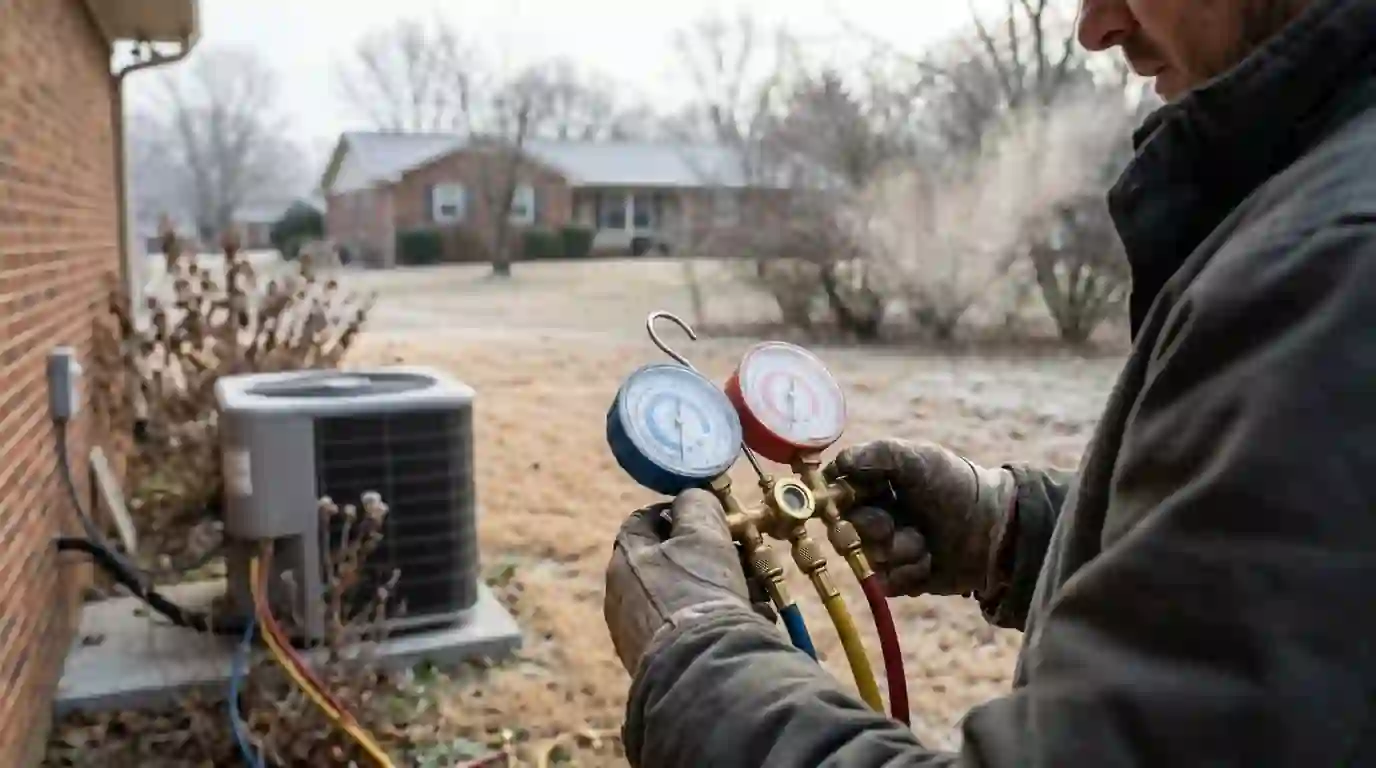
Aux heat running on a mild day? Call and tell us what the outdoor unit is doing.
Call (615) 412-2815When aux heat points to a real problem
Aux heat that runs all day when it is 45 or 50 degrees outside is a warning. So is an outdoor unit that sits silent while the strips glow, or a house that feels warm while the bill keeps climbing. The usual causes:
- A failed outdoor fan motor, capacitor or contactor that stops the heat pump from running.
- A reversing valve stuck in cooling mode.
- Low refrigerant from a leak, which cuts heating capacity.
- An outdoor coil packed with ice that never fully defrosts.
- A thermostat wired or set up so it calls the strips too early.
Angi lists heat pump repairs at $161 to $661, about $410 on average. Most of the causes above fall in that span, and catching them early keeps the strips from running up the bill. See heat pump repair for what a visit checks.
Why the power bill jumps when the strips run
A heat pump moves heat, so each unit of electricity brings in several units of heat on a mild day. Resistance strips turn each unit of electricity into exactly one unit of heat. When they run for long hours, the house uses far more power for the same warmth.
That's why a heat pump stuck on aux heat shows up on the next bill before anyone notices it in the house. The rooms stay warm, so nothing seems wrong until the statement arrives.
Some thermostats show how many hours each stage ran over the past day or week. If yours does, compare a mild week with a cold one. Strip hours that climb on mild days are the clearest sign that something is wrong with the heat pump itself.
Checks you can make before calling
- Replace a dirty air filter; low airflow trips the heat pump and brings on the strips.
- Look at the outdoor unit. Is the fan turning, and is the coil clear of leaves or snow?
- Make sure the thermostat is set to heat, not emergency heat.
- Raise the setpoint in small steps rather than all at once.
Leave refrigerant, wiring and the reversing valve to a technician. If the outdoor unit is solid ice or makes grinding noises, switch to emergency heat and call.
When dual fuel takes the strips out of the picture
In the EIA 2020 survey, a heat pump was the main heating equipment in about 35 percent of Tennessee homes. In some of those houses a gas furnace can replace the strips as backup, so the coldest nights run on gas instead of resistance heat. Fixr lists a dual fuel setup at $7,500 to $12,000, about $9,500 on average. It fits best where gas already reaches the house. Our heat pump or gas furnace guide weighs the two.
Questions readers ask
Not on cold nights, during defrost or after raising the setpoint. All-day aux heat in mild weather points to a fault.
Aux heat is automatic and runs alongside the heat pump. Emergency heat is a manual setting that shuts the heat pump off and runs only the strips.
It is probably in defrost. The system reverses briefly to melt frost from the outdoor coil, then returns to heating.
Only if the outdoor unit has failed. In normal cold weather, leave the thermostat on heat and let it bring on aux heat when needed.
Long hours on resistance heat use far more power than the heat pump. A stuck reversing valve, low refrigerant or a failed outdoor fan can cause it.
A thermostat with an outdoor sensor and correct staging can hold the strips back until they are needed.